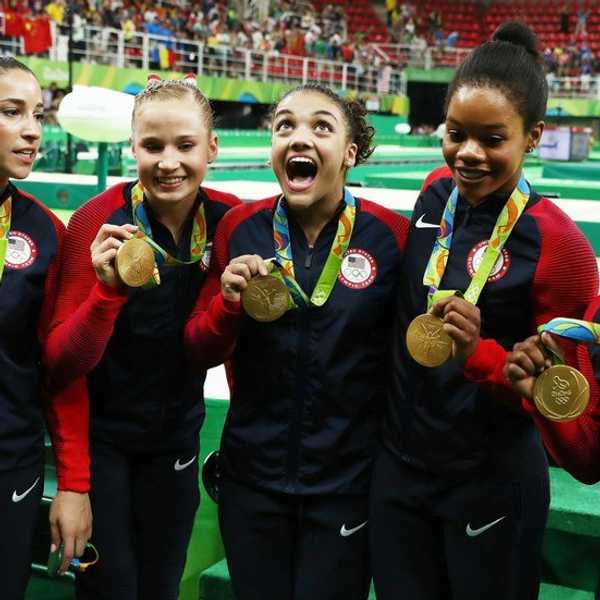
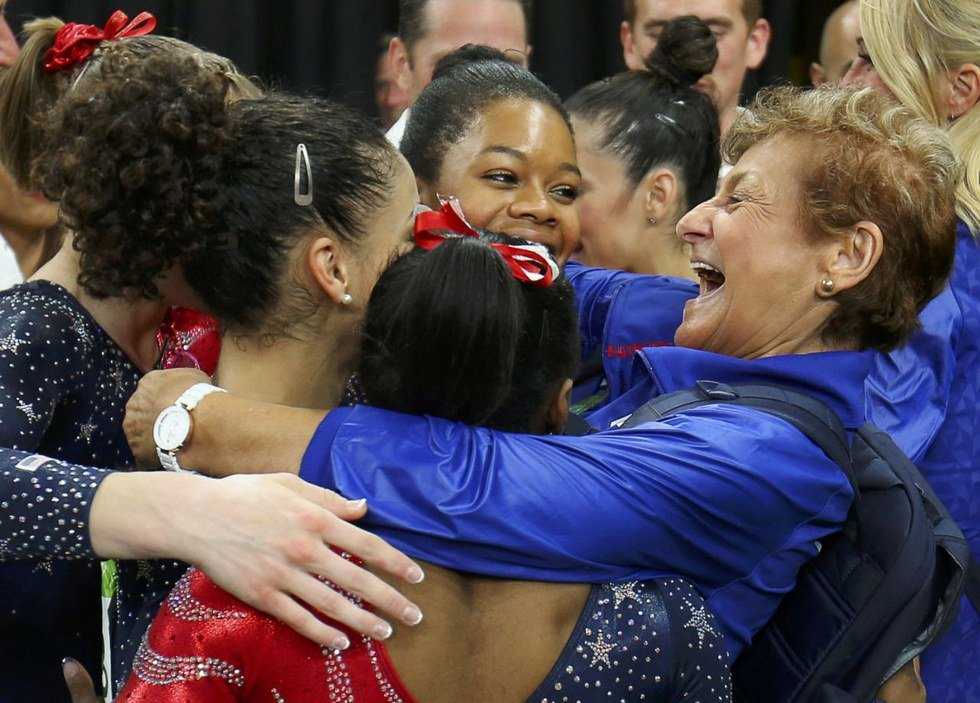
After nine days of competition, gymnastics is now a thing of the past at the Olympic Games taking place in Rio de Janeiro, Brazil. For the United States, this year was just as memorable as it was forgettable. Despite Simone Biles' dominance on nearly every event, the men's team received a frustrating total of only three medals, none of them being gold. As we look back at the last week and a half of endless giants, flips, and vaults of death, it's important for Team USA to not only improve on their strengths, but also target their weaknesses and eliminate them as quickly and as efficiently as possible.
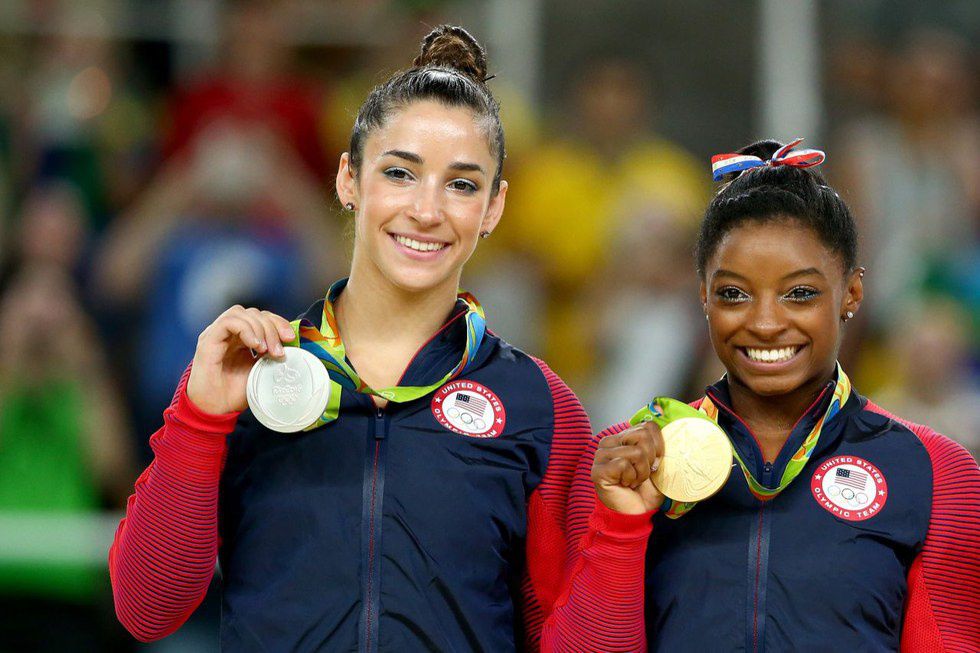
The star of the Olympics shined brighter than anyone ever expected. Simone Biles, three-time world champion, exerted her dominance early in the competition Despite this being her first Olympic games, she has the power of someone twice her size and she completes every skill as if she were invincible. But what makes her so good? Some people do attribute her success to the dominant attitude that she exudes, while others credit her fearlessness to raise the degree of difficulty of her routines. She might not stick every landing, and she might not always point her toes, but her level of captivation is unmatchable to any gymnast that has ever set foot on Olympic soil. If she focuses most of her time practicing on the uneven bars, then there is a possibility that she could win all six gold medals in Tokyo.
Aly Raisman is one of the best captains Team USA has ever elected. Her selflessness motivates the rest of her teammates to perform their absolute best. Raisman took a nearly two-year break following her fourth place all-around finish in 2012, and this year she came back with a vengeance. She performs her first tumbling pass on the floor exercise continuously without flaw (and somehow she always stays in bounds). Will we see her in 2020? I doubt it. Gymnasts rarely compete in two Olympics, let alone three, and with the team size decreasing to four members, Aly must perform even better than she did this year.
Gabby Douglas was a pleasant surprise. During the Olympic Trials, Douglas appeared to be unhappy and borderline frustrated. She didn't place in the top five all-around, but coach Marta Karolyi had enough faith in her to put her on team. And Marta was right. Gabby's performance improved exponentially in a matter of three weeks. Despite her less than stellar uneven bars routine in the event finals, she shined during qualification and team finals, and Team USA would not have been as dominant as they were without her. Don't expect to see her in Tokyo, but expect to see her legacy live on.
What kind of team should we expect to see in 2020? We should expect to see more or less what we saw this year. The women's dominance is unmatchable to any team from any country from any year. I believe that the four person squad will be led undoubtedly by Simone Biles. Competing for second place in the all-around will be Laurie Hernandez, who competed in all but one of the events this year. Maybe we'll see Madison Kocian again due to her exceptionality on the uneven bars (a.k.a. Simone Bile's only weakness). Rounding out the group could be Ragan Smith, who I believe would have made the team if Gabby Douglas didn't, or we could see a newcomer - specifically with a strength in the vault.
The men, on the other hand, did disappoint. While no one expected them to best Japan, Russia, or even Brazil, most people did anticipate that they would perform better than they had in London, and in a way, they did, with three medals earned this year compared to 2012's lone accolade. However, the men's team hasn't seen a gold medal since Paul Hamm's all-around win in 2004, and the sheer excitement surrounding this year's squad caused Americans to believe that they would end the drought this year.
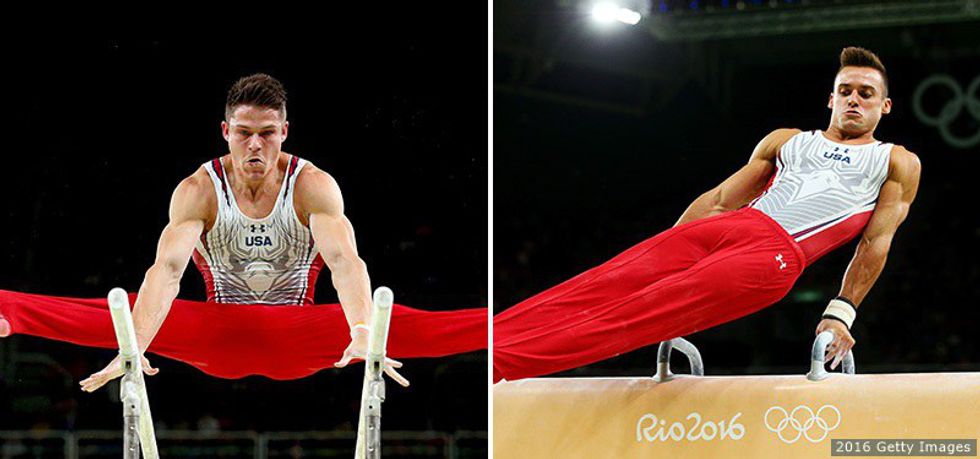
Most of that hype was directed towards this year's team captain, Sam Mikulak. Remember him from 2012? Neither do I. Out shined by the likes of Jonathan Thorton, Danell Leyva, Jake Dalton, and John Orozco, Mikulak entered the Olympics this year as the American favorite. And sure, he performed greatly during the qualification and finished seventh in the all-around standings. But when it mattered the most, he flustered. He was unable to improve in his placement in the all-around finals and went from qualifying first to finishing last in the the floor exercise final.
Only two men on the team of five performed to the standards of the American population. Alex Naddour qualified this year after being named an alternate for the team four years ago. Despite only qualifying for the pommel horse, Naddour improved his score from a 15.366 to a 15.700, which was a good enough score to earn him the bronze medal!
But Danell Leyva, who let's keep in mind was only on the team because John Orozco tore his anterior cruciate ligament (ACL), was the men's saving grace. Leyva qualified for both the horizontal bar final and the parallel bars final, and in less than an hour and a half, he earned two silver medals for his incredibly controlled and unique routines. Had Orozco not been injured, would the results have been different?
What kind of team should we expect to see in 2020? It's a flip of the coin as to what can happen. Gymnasts likely to retire before Tokyo include Danell Leyva, John Orozco, and Chris Brooks. Sam Mikulak could return and he has a great opportunity to perfect his skills (and he could even medal in the all-around finals). We can also expect to see current alternates Akash Modi and Donnell Whittenburg. Rounding out the team will be someone brand new to Team USA. He likely hasn't even entered college yet, but whoever it is could be the next Simone Biles, or he could be a repeat of Sam Mikulak.
Despite the men's underwhelming finish at the Rio Olympics, they did improve from four years ago. And with a heavier focus on all-around in future Olympics, we can expect to see a stronger and more well-rounded effort. The women, however, have the exact opposite situation to worry about. This is the strongest they have ever been, and although there is some room for improvement, it's likely they've hit their peak. Team USA knows what they need to do for Tokyo, now it's just a matter of getting it done.