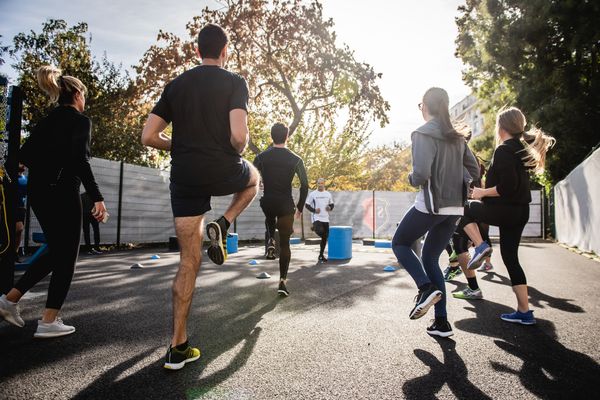

Whether you are a gym rat looking for a new cardio workout or looking to learn how to defend yourself, kickboxing can be the answer. Kickboxing is a group of stand-up combat sports based on kicking and punching, historically developed from Karate, Muay Thai and Western boxing. Kickboxing is practiced for self-defense, general fitness or as a contact sport. Before jumping right into a kickboxing class near you, take time to research the different types of kickboxing.
If you are into fitness and exercise, cardio kickboxing is more for you. It's the general concept of kickboxing, with throwing punches and kicking, but it's in a gym setting and repeating different moves. There is no sparring or martial arts that you will be practicing, but it's an excellent workout that will increase your physical fitness.
If you want sparring but aren't sure if you are up for the challenge, start with semi-contact kickboxing. In this type of kickboxing, opponents make clean movements to make light contact with the other person. After each successful move, referees interrupt and reset both players in the starting position. This kickboxing is to help the student develop to a more advanced stage.
Light-contact kickboxing is the same as semi-contact but with longer rounds of sparring and allows more realism of a full contact fight. This type of kickboxing combines the cardio aspect, as well as the sparring of others.
Full contact kickboxing resembles regular boxing and is taken by those who are very serious about kickboxing. Students are sparring in order to knock the other person out. Students who join these classes have a few years of martial arts training behind them.
Once you have figured out which type of kickboxing is for you, find the right instructor/gym. If joining a class or gym, sit in on a lesson and see if this the type you really want to join. Also, ask if you need to buy the gear and gloves or if they will be provided.
Fueling up before class is important. Start with long-lasting carbs such as beans, brown rice or sweet potatoes for lunch before the class. Thirty minutes to an hour before the lesson, drink juice or eat fast absorbing carbs such as fruits and vegetables to fuel up on energy. While eating carbohydrates is a smart move before a kickboxing lesson, be sure to drink plenty of water as you will be guaranteed to sweat.
The most important take-away to kickboxing is to remember this isn't a tournament. Students in the lessons are there to learn a new skill, get in shape, and have fun. If you're curious about kickboxing but don't think you are ready for a lesson with others, try this kickboxing circuit at home.
Repeat circuit four times with a one minute rest between each circuit. (Do each exercise for 30 seconds each).
Criss-cross jumping jack - 30 seconds
Knee-ups - 30 seconds
Split squat jumps - 30 seconds
Squats into front kicks or jump front kicks - 30 seconds
Burpees - 30 seconds
Mountain climbers - 30 seconds
Spider-man push-ups - 30 seconds