
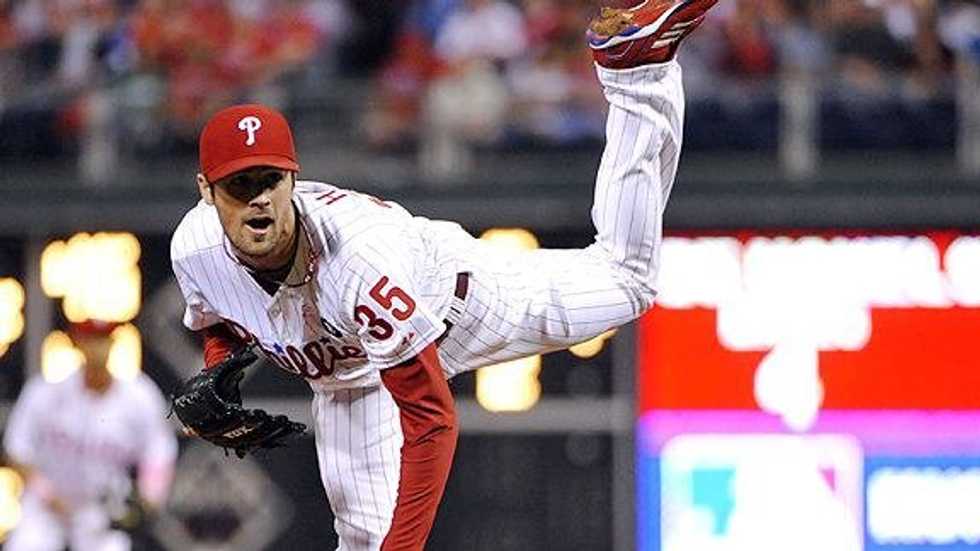
In a four-sport city with a fan base known for their intense passion – if you’re from out of state, just insert your favorite Philly-fans-are-despicable anecdote; I’d suggest launching snowballs (and boos) at Santa, or throwing batteries at J.D. Drew, a timeless classic – a championship drought of biblical proportions shrouded Philadelphia for a generation.
One hundred trophy-less professional seasons had come and gone as the Flyers were ousted from the 2008 Eastern Conference Finals by the hated cross-state rival Pittsburgh Penguins in five games. Even Smarty Jones, born an hour west of the city, finished second in the final leg of his Triple Crown bid at the 2004 Belmont Stakes.
In a 2013 ode to Smarty Jones, New York Times blogger Jeff Dietz wrote the horse “had become a Philadelphia icon, a blue-collar overachiever from Philadelphia Park ready to take his place alongside the 1974 Stanley Cup-winning Flyers and Rocky Balboa in Philadelphia Lore. A ticker-tape parade down Broad Street for Smarty Jones had already been planned.”
That’s how bad it was; even the horses lost by a nose.
The city was beyond desperate. Yet, there was a light at the end of the tunnel, a reward for undying patience and faith in the title-less town. But if not for the best homegrown pitching prospect the Phillies have seen in a half-century, that 25-year drought would now total 32 years and 128 consecutive seasons.
Go East Young Man
Phillies General Manager Ruben Amaro Jr., now affectionately known as Ruin Tomorrow Jr., was handed the keys to the kingdom following the Phillies 2008 World Series victory, headlined by the longhaired, SoCal 24-year-old ace and Series MVP, Colbert Michael Hamels. Yes, Colbert.
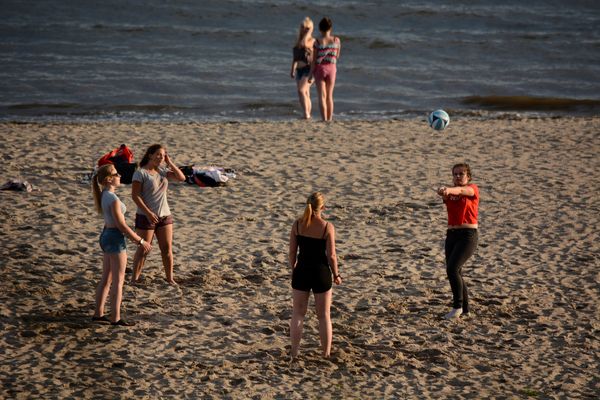
The San Diegan pitcher lived the Cali-lifestyle. In Ben Reiter’s Sports Illustrated cover story on Hamels, his childhood friend boasted, “Cole and I were probably the most killer two-on-two beach volleyball combo ever to hit Del Mar.”
You can almost picture the young left-hander, shades on, t-shirt off, flying around the sand pit in perfect Maverick/Goose vs. Iceman/Slider fashion.
An all-around athlete, Hamels attended Rancho Bernardo High School, referred to in Michael Lewis’ Moneyball as “The Factory” for its ability to pump out talented ballplayers.
In the summer leading to his junior year in high school, he injured his arm playing pick-up football. Attempting to hide the injury, he told no one and pitched in a summer league game that evening. A handful of innings in, his arm snapped mid-pitch between his shoulder and elbow as the ball, and potentially his pitching career, sailed aimlessly over the backstop.
From the beginning, he got the professional treatment. San Diego Padres team doctors operated on his golden left arm, inserting two rods into his bone marrow to which they would fuse the fractured pieces of his humerus. After the surgery he began working with pitching guru Tom House, considered by many to be the “father of modern pitching mechanics.”
In Nolan Ryan’s Hall of Fame induction speech, he thanked his former pitching coach and longtime friend House for adding years onto his career. He pitched until he was 46.
In addition to founding the National Pitching Association, House’s horizons have widened to include work with prominent NFL quarterbacks – the list includes Tom Brady, Drew Brees and Carson Palmer.
Hamels’ change-up, which he says began to move more after his surgery, is modeled after that of hometown hero Trevor Hoffman. He also revered Braves lefty-hurler Tom Glavine who, despite not having overpowering stuff and topping out around 93 mph early in his career, remained effective despite slowly losing velocity. In high school, Hamels could crank it up to 94.
A bounce-back senior year following yearlong rehab paid dividends as he tossed 71 innings, struck out 130 batters – 61 percent of his recorded outs – while posting a 0.39 earned run average.
Drafted 17th overall by the Phillies in the 2002, he excelled in A-ball at Lakewood for the first portion of 2003 going 6-1 with an ERA under one. The club named him a non-roster invitee to spring training the following year.
Fresh out of the frying pan and into the fire, Hamels debuted against the New York Yankees that spring, greeting surefire future Hall of Famers Derek Jeter and Alex Rodriguez with back-to-back strikeouts, both at the mercy of his signature change-up.
The following spring training, locals picked a fight with Hamels and some minor league players outside a club. Hamels, the designated driver, broke his hand in the fight, apparently ignoring Crash Davis’ sage advice of never throwing a punch with your pitching hand. His spring training invitation was immediately revoked.
An assortment of ailments – strained elbows, back spasms and his self-inflicted broken hand – led Baseball Prospectus to liken him to, “Fabergé eggs, china dolls and ice sculptures.”
Battling through his injuries, the fourth-year top prospect forced the Phillies hand with brilliant work on the mound. He earned a promotion, shining in his major league debut allowing a single hit and striking out seven. As quickly as it began, injuries again sidelined the young hurler’s promising career. A strained shoulder shelved Hamels for nearly three weeks, though it proved to be the biggest hiccup of his rookie season, not one that would derail it.
He would come back to throw 121 innings, striking out 133 batters and posting a 9-8 record. The following season, the Phillies provided fans with the closest thing they’d felt to championship fever since the 2004 Super Bowl loss to New England.
Seven games behind the New York Mets with 17 games left to play, Jimmy Rollins and the boys of summer cashed in on his winter comments stating the Phils were “the team to beat in the NL East.”
Hamels registered the third most starts (28) on a staff consisting of a 44-year-old Jamie Moyer (33 starts), Adam Eaton (30 starts), Kyle Kendrick (20 starts) and a 37-year-old Jon Lieber (12 starts). Three days before the season’s close, Hamels earned his fifteenth win tossing eight brilliant innings of six-hit shutout ball. He struck out 13.
Two days later on the season’s final day, Hamels’ childhood idol – Glavine, then pitching for the Mets – threw one of the worst games of his career, allowing seven runs, retiring just one batter and cementing the Metropolitans’ collapse in futility folklore. The Fightins’ won 13 of their last 17, clinching their first playoff birth in 14 years. New York dropped 12 of their last 17.
All of a sudden, a kid from San Diego and his MLB idol had swapped roles, with the younger of the two, already an all-star, a year from receiving the highest honor on the game’s brightest stage.
It Only Takes One
Twelve starts into the 2008 season Hamels was 5-4 with a 3.73 ERA. Despite a chronic lack of run support – which would plague him for the entirety of his time in Philadelphia – he tossed his last 107 1/3 innings in the regular season with an earned run average of 2.77, striking out almost four and a half times as many batters as he walked.
The heroics continued in the postseason, only magnified by the ever-brightening spotlight. In his five starts, the Phillies provided a total of 18 runs or 3.6 per game.
Well versed in the art of pitching with minimal run support, Hamels allowed just seven runs over 35 innings. If not for some stormy Philadelphia weather, he may have become the first starter in history to win five starts in one postseason.
Taking care of the Brewers in divisional play in four games, Hamels was available to start the National League Championship Series opener against the 100-win Los Angeles Dodgers. He surrendered three earned runs total in two seven-inning starts, both wins, as the Phils disposed of the Dodgers in five games. He was awarded the NLCS MVP.
In his first World Series start, he posted another seven innings of work allowing just two runs in a 3-2 winning effort. With the all-time single-postseason wins record in sight, his stature on the mound was equal parts Hollywood Hamels and King Cole; he was devastatingly dominant, and he looked damn good doing it. His final start in a rainy Game 5 was cut short when play was suspended after the sixth inning, just 75 pitches into another stellar performance – one poised to set a record.
Having thrown between 101-105 pitches in each of his four starts that postseason, he undoubtedly had more in the tank. When the game was halted, Philly’s ace had thrown six innings and the score was deadlocked 2-2. The only way to preserve his chance at becoming the first starter ever to win five-of-five starts in one postseason rested in the lap of his offense.
They delivered.
When the game concluded two nights later due to more severe weather, Geoff Jenkins led off with a double and was ultimately brought home by Jayson Werth. Colbert Michael Hamels was, however improbably, still the pitcher of record needing three shutdown innings from his second-ranked bullpen – boasting Brad Lidge, perfect in 47 soon-to-be 48 save opportunities – to solidify his fifth win and bring the city a championship. They went one for two.
After posting a team-low 3.05 ERA on the year, Ryan “The Bridge to Lidge” Madson allowed a solo homer in the seventh tying the game at three. Hamels’ chance at five postseason wins was over. The chance to forever change a city, however, wasn’t. To the joy of their cold, screaming fans, the Phillies would score the game’s winning run in the home-half of the seventh. It was a run that would break the 25-year streak that was just seven months older than its conquerer.
Was Hamels born a savior? A ghost of Robin Roberts past? A Philadelphian Messiah?
No. He was a World Series MVP.
A Silent Protector, a Watchful Guardian
When you reach the summit, the pinnacle of success in any given event, you have two options. You can gracefully descend, gaining a deeper appreciation along the way for how high up you truly were, or you can topple head over heels hitting every stray branch, rock and tree on the way down. Ruben Amaro Jr. took the second option.
Handed a team crafted by the mastermind Pat Gillick, Amaro steadily drove Philadelphia into the ground. He jumped at the championship window and over-committed to the organization’s homegrown stars in unfathomable financial proportions, simultaneously ravaging his own farm system in blockbuster deals – see Roy Halladay, Roy Oswalt, Cliff Lee (once via trade, once via free agency) and Hunter Pence among others.
Amaro desperately scratched and clawed at that window doing whatever he could keep it open, only to have it come helplessly crashing down on his hands.
The year following the world championship they would repeat as the National League pennant winners but fall to the Yankees in the World Series. In 2010, year two under Amaro, they would lose in the NLCS. The following season brought with it 102 wins and one of the most dominant pitching staffs in history. Yet, Philadelphia lost to the eventual champion St. Louis Cardinals in the NLDS. Declining each season, they have not been over .500 or reached the postseason since.
Which brings us to today, almost seven years removed from that World Series run. The Phillies have won 45 percent of their games since their last postseason appearance in 2011, and Hamels has been the lone bright spot on a team that quickly turned desperate.
In his final performance as a Phillie he tossed a no-hit gem, a beautifully fitting example of poetry in baseball. It was a perfect crescendo, a sheer display of overall dominance that would, if only for a moment, overshadow the abysmal state of the team that currently holds the league’s worst record despite winning 11 of their first 13 after the all-star break.
His California-cool captivated a Midwest audience at Wrigley and an entire city of fans at home, who for one final time saw him toe the slab donning their beloved red and white spinning an absolute gem.
Teamed with homegrown prospects scattered across the infield in Rollins, Utley and Howard, Hamels led a team to the promised land in storybook fashion – even if only for one sacred year.
He brought the opportunity to call a World Series title to the man who deserved it most, just six months before he passed away in April 2009. MLB broadcast rules prohibited Harry Kalas, and all local stations, from broadcasting World Series games during the Phils last title run in 1980.
Kalas’ soothing, grandfatherly pipes and bread-and-butter bellow of “Outtaa Heeeere” cut through the humidity of Philadelphia summers and weekends at the Jersey Shore, providing the soundtrack to modern Phillies baseball. In 2008, he, and the Phillies, were champions of the world.
There’s no secret recipe to being loved in Philadelphia. Instead the city attaches itself to effort and passion. Hamels, despite the revolving door of hired guns with bigger pedigrees and better accolades, strapped on his hard hat and went to work every day in true, Philadelphian blue-collar fashion.
What he did will go down in Philadelphia history with the Broad Street Bullies and Rocky Balboa. Change the LOVE statue in JFK Plaza to instead read, COLE, turn the Schuylkill Expressway into Hamels Highway; it may just be another 100 seasons until the city clutches another trophy.
Cole Hamels was Philadelphia’s Dark Knight; he was the hero the city deserved, and a handful of years later, not the one it needs right now.
Enjoy the remainder of your career, Cole, may you be blessed with the run support we couldn’t provide and an ageless arm.
You will forever be the man who brought a title to a desperate town, a rainmaker who, armed with a shoulder-high leg kick, showered Philadelphia in championship glory from the clouds above, washing away the generation-long drought below.