

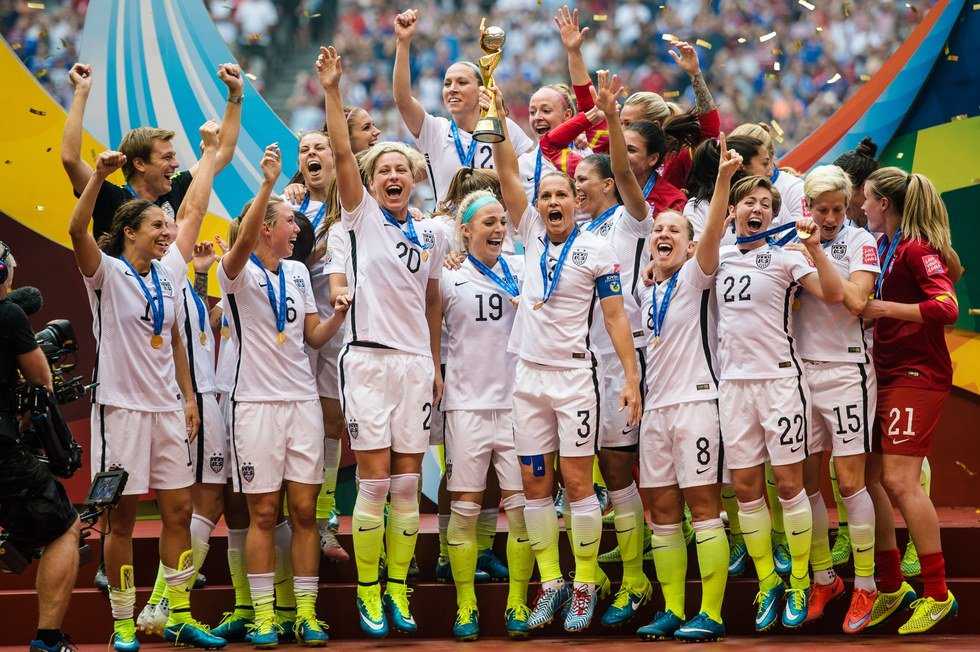
This past summer, much of the nation watched in awe as the United States women's soccer team won the women's World Cup in Canada. Many referred to that weekend as the most patriotic of the summer, as the 4th of July was that Saturday, and the championship, against the defending champion, Japan, was the next day. The team received tons of praise from around the nation, including a ceremony in Los Angeles, parade in New York City, and Victory Tour games at several locations throughout the nation. Despite this, the team receives significantly less payment than their men's counterpart.
The US women's national team generated nearly $20 million more than the US men's national team, but are only paid about a quarter of the men's salary. Many believed that the success of the women's team would lessen this wage gap. However, it has become clear that the US Soccer Federation has no intention of providing equal pay for the men's and women's national teams. Given this information, five USWNT members, including stars Hope Solo, Carli Lloyd, and Alex Morgan, filed a wage-discrimination action against the U.S. Soccer Federation with the Equal Employment Opportunity Commission.
This is not the first time that wage-discrimination has caused a problem in the soccer world. Just following the women's World Cup, there was discussion regarding the awards given to the teams. When Germany's men's soccer team won the World Cup in 2014, the team received a $35 million award from FIFA. The USWNT received $2 million following their win, more than had been awarded to previous women's World Cup champions.
Additionally, the money given to nation's by FIFA to develop and promote the game is typically to be split between the men's and women's programs. However, more money is often given to the men's team. The members of men's teams also have the ability to play professionally in their home country. Many women do not have this opportunity. Women who play for their national team in many countries have to work a full time job, in addition to being a professional soccer player.
This wage-discrimination act has the potential to change the world of women's soccer. Should members of the USWNT receive greater pay, there is a possibility that FIFA will also allocate more money to the women's game, further expanding it, especially in underdeveloped nations. The competition in the women's game would also increase, and inevitably, so would the revenue. These women work just as hard as their male counterpart and deserve the credit and prizes they have earned.