

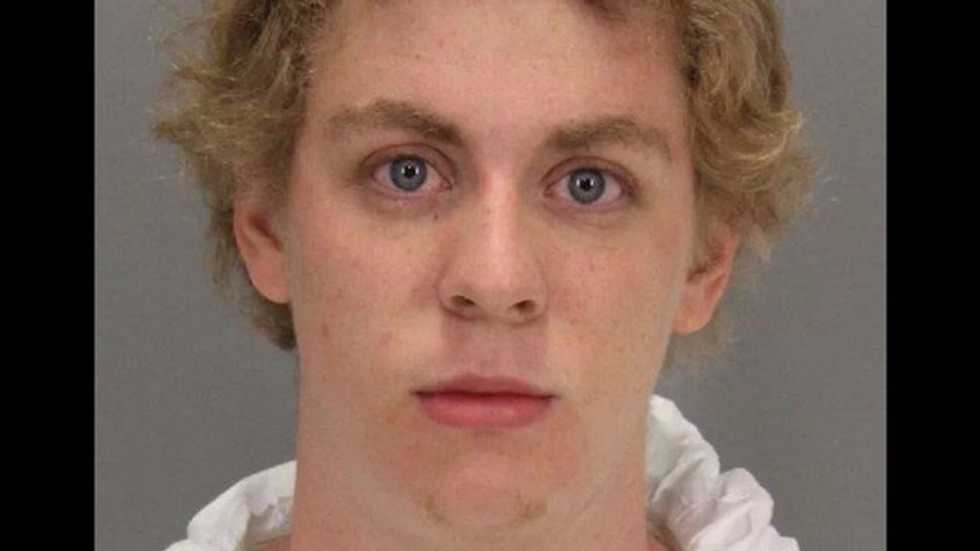
On the night of Jan. 17. 2015, 20-year-old Stanford student Brock Turner sexually assaulted an unconscious woman on the ground behind a dumpster. Two bystanders saw Turner over a clearly unresponsive woman and pulled him off of her, chasing him down and holding him until the police came when he attempted to run. Turner took the case to court, pleading innocent of the accusations of rape he was charged with. Turner was convicted of three felonies: assault with intent to rape an intoxicated person, sexually penetrating an intoxicated person with a foreign object, and sexually penetrating an unconscious person with a foreign object.
On March 30, 2016, 12 jurors unanimously convicted Brock Turner. His culpability is no longer a debatable subject. He is a convicted rapist. However, his sentencing on June 2, 2016, by judge Aaron Persky does not even remotely reflect his crime. Aaron Persky, a Stanford alumnus himself, sentenced the rapist to six months in county jail and three years probation. Turner could even get out of jail in three months for good behavior. This punishment does not come close to the maximum sentence for the crimes Turner committed: 14 years in state prison.
This absurdly lenient sentencing of this Stanford swimmer rapist has outraged the country. This piece will summarize the events of Jan. 17 as dictated in court, statements of the victim and other persons related to the case, and the responses and analyses of individuals in the wake of the sentencing.
On the night of Jan. 17, Swedish Stanford graduate students Peter Jonsson and Carl-Fredrik Arnt were biking by a fraternity house when they witnessed the assault. They could have continued on their way, but they saw even from a distance that something was not right. This woman was unconscious and clearly unable to consent, but the man above her did not seem to care. Jonsson and Arnt decided to stop and save her, following the rapist as he ran and tackling him to the ground to stay until police came. When the police did arrive, Jonsson broke down in tears as he described what he had seen. The sight that so deeply upset him was that of a woman lying behind a dumpster, her dress pulled up about her torso and her underwear missing, with her entire pubic region exposed. According to the case documents, the victim was found “Completely unresponsive and partially clothed, with a blood-alcohol level three times the legal limit.”
In my humble opinion, you can tell when someone is that drunk. When they are. Not. Moving. In addition, not to delegitimize any other circumstance or setting for rape, but on the ground behind a dumpster is about as clichéd as such a horrifying scene can get. And yet, even with witnesses to the abhorrent crime, there was still a case. How far can our denial go? Even when an innocent woman is raped while unconscious behind a dumpster, and the criminal is apprehended by witnesses, our society still found ways to protect the rapist and blame the victim.
Thanks to the victim’s courageous and extensive letter to her attacker, we have some insight as to what her experience was like after the assault occurred. The statement was over 12 pages long and is one of the most powerful and heartbreaking pieces of prose I’ve read. Here are some excerpts that describe how her life continued after being sexually assaulted. She starts off with an incredible line, addressing Brock Turner, “You don’t know me, but you’ve been inside me.”
Jane Doe (her name has not been released to the public to preserve her privacy) was visiting her younger sister at college the weekend of the assault. She says she didn’t even plan on going out, but decided to go and have fun with her sister. She wore a beige sweater to the fraternity party. Victims of rape should not be blamed for their choice of clothing regardless, but if the defense had wanted to use that argument (and I have a sickening feeling they would have), they couldn’t! Jane Doe said that her alcohol tolerance had significantly lowered since she’d graduated from college. I think it is important to note, here, that she does not need to explain herself or her alcohol intake, because she was the victim of sexual assault, but she does anyway.
She describes waking up in the hospital after Turner’s assault and not knowing what she was doing there, and the slow realization that something terrible had happened to her.
When I was finally allowed to use the restroom, I pulled down the hospital pants they had given me, went to pull down my underwear, and felt nothing. I still remember the feeling of my hands touching my skin and grabbing nothing. I looked down and there was nothing. The thin piece of fabric, the only thing between my vagina and anything else, was missing and everything inside me was silenced. I still don’t have words for that feeling. In order to keep breathing, I thought maybe the policemen used scissors to cut them off for evidence. Then, I felt pine needles scratching the back of my neck and started pulling them out of my hair. I thought maybe, the pine needles had fallen from a tree onto my head. My brain was talking my gut into not collapsing. Because my gut was saying, help me, help me.
…
I had multiple swabs inserted into my vagina and anus, needles for shots, pills, had a Nikon pointed right into my spread legs. I had long, pointed beaks inside me and had my vagina smeared with cold, blue paint to check for abrasions. After a few hours of this, they let me shower. I stood there examining my body beneath the stream of water and decided, I don’t want my body anymore. I was terrified of it, I didn’t know what had been in it, if it had been contaminated, who had touched it. I wanted to take off my body like a jacket and leave it at the hospital with everything else.
She couldn’t originally bring herself to tell her boyfriend or her parents, because then it would be even more real. She then describes how she actually figured out what happened to her that night.
One day, I was at work, scrolling through the news on my phone, and came across an article. In it, I read and learned for the first time about how I was found unconscious, with my hair disheveled, long necklace wrapped around my neck, bra pulled out of my dress, dress pulled off over my shoulders and pulled up above my waist, that I was butt naked all the way down to my boots, legs spread apart, and had been penetrated by a foreign object by someone I did not recognize. This was how I learned what happened to me, sitting at my desk reading the news at work. I learned what happened to me the same time everyone else in the world learned what happened to me. That’s when the pine needles in my hair made sense, they didn’t fall from a tree. He had taken off my underwear, his fingers had been inside of me. I don’t even know this person. I still don’t know this person. When I read about me like this, I said, this can’t be me. This can’t be me. I could not digest or accept any of this information. I could not imagine my family having to read about this online. I kept reading. In the next paragraph, I read something that I will never forgive; I read that according to him, I liked it. I liked it. Again, I do not have words for these feelings.
…
At the bottom of the article, after I learned about the graphic details of my own sexual assault, the article listed his swimming times. She was found breathing, unresponsive with her underwear six inches away from her bare stomach curled in fetal position. By the way, he’s really good at swimming.
…
The night the news came out I sat my parents down and told them that I had been assaulted, to not look at the news because it’s upsetting, just know that I’m okay, I’m right here, and I’m okay. But halfway through telling them, my mom had to hold me because I could no longer stand up. I was not okay.
Jane Doe then makes an incredibly astute statement, one I think is incredibly relevant to not only the case, but also Judge Persky’s assessment and sentencing of Turner. She describes how it is clear Brock Turner wanted to hook up with someone that night. He had earlier tried to kiss other girls at the party, including her own sister. Other accounts were brought forward in court from college girls who had experienced Turner’s “flirting,” but felt uncomfortable with its persistence.
One such account states: She described the Defendant as being flirtatious. He put his hat on her and she took it off. He then started to dance behind her and tried to turn her around to face him. She felt uncomfortable and tried to turn her body away so he would not be directly behind her. He became really ‘touchy’ and put his hands on her waist and stomach. He even put his hands on her upper thighs. She felt more and more uncomfortable and got down off the table.
“She said the Defendant ‘creeped’ her out because of his persistence. The sister of Turner’s victim also reported a similar experience, telling police that he had attempted to kiss her and acted aggressively on the night of the rape. Turner had claimed to have been talking with and kissing the victim herself – a statement later derided as ‘lies’ by prosecutor Alaleh Kianierci. Writing in a sentencing memo to Judge Persky, she added: ‘Despite his lies that there was some sort of ‘flirtation’ between himself and [the victim’s sister] both at trial and in his statement to probation, it was abundantly clear from Jane Doe 2’s [the victim’s sister] testimony that she was caught completely off guard by his multiple attempts to kiss her that night.
‘She even had to get away from him after he grabbed her waist, and she alerted her friend Colleen to his behavior. She concluded: ‘Even though he was twice rejected by [the victim’s sister], he felt it was acceptable to pursue [the victim] later that night when she was alone and inebriated. He purposefully took her to an isolated area, away from all the party goers, to an area that was dimly lit, and assaulted her on the ground next to a dumpster.”
Jane Doe reflected on the tragedy she had experienced, and if it could’ve been prevented, in this potent excerpt: Sometimes I think, if I hadn’t gone, then this never would’ve happened. But then I realized, it would have happened, just to somebody else.
In this article, I’d hoped to tear Brock Turner’s defense down piece by piece, but the victim has already done so impeccably. She goes on to describe how Brock Turner could not have possibly been granted her consent that night, despite his feeble excuses and claims that she had. She acknowledges that he said she rubbed his back, instead of voicing consent, and therefore she liked it. Jane Doe’s skilled rhetoric makes it clear that a back rub could not possibly stand in for consent, but she also does not ponder what else it could have meant. A back rub, in my mind, could have been a nearly unconscious woman’s last attempt to flail any limb to fight off her attacker. A futile endeavor to pull his shirt so he could lift himself off her, a weak punch at his back. But, because she doesn’t remember, Brock Turner got to write the story, and in it this back rub is passionate and romantic. She describes the helplessness she felt when she found out her lack of memory would be used against her. Brock Turner changed his story for the court once he learned she could not remember.
One more time, in public news, I learned that my ass and vagina were completely exposed outside, my breasts had been groped, fingers had been jabbed inside me along with pine needles and debris, my bare skin and head had been rubbing against the ground behind a dumpster, while an erect freshman was humping my half naked, unconscious body. But I don’t remember, so how do I prove I didn’t like it.
…
I thought there’s no way this is going to trial; there were witnesses, there was dirt in my body, he ran but was caught. He’s going to settle, formally apologize, and we will both move on. Instead, I was told he hired a powerful attorney, expert witnesses, private investigators who were going to try and find details about my personal life to use against me, find loopholes in my story to invalidate me and my sister, in order to show that this sexual assault was in fact a misunderstanding.
She then describes being attacked verbally in court, as the defense tried to break down her sense of self and her testimony. She lists a long list of clearly irrelevant questions that she was bombarded with:
How old are you? How much do you weigh? What did you eat that day? Well what did you have for dinner? Who made dinner? Did you drink with dinner? No, not even water? When did you drink? How much did you drink? What container did you drink out of? Who gave you the drink? How much do you usually drink? Who dropped you off at this party? At what time? But where exactly? What were you wearing? Why were you going to this party? What’d you do when you got there? Are you sure you did that? But what time did you do that? What does this text mean? Who were you texting? When did you urinate? Where did you urinate? With whom did you urinate outside? Was your phone on silent when your sister called? Do you remember silencing it? Really because on page 53 I’d like to point out that you said it was set to ring. Did you drink in college? You said you were a party animal? How many times did you black out? Did you party at frats? Are you serious with your boyfriend? Are you sexually active with him? When did you start dating? Would you ever cheat? Do you have a history of cheating? What do you mean when you said you wanted to reward him? Do you remember what time you woke up? Were you wearing your cardigan? What color was your cardigan? Do you remember any more from that night? No? Okay, we’ll let Brock fill it in.
…
After a physical assault, I was assaulted with questions designed to attack me, to say see, her facts don’t line up, she’s out of her mind, she’s practically an alcoholic, she probably wanted to hook up, he’s like an athlete right, they were both drunk, whatever, the hospital stuff she remembers is after the fact, why take it into account, Brock has a lot at stake so he’s having a really hard time right now.
She also makes a beautiful, definitive explanation of how consent works.
Future reference, if you are confused about whether a girl can consent, see if she can speak an entire sentence. … According to him, the only reason we were on the ground was because I fell down. Note; if a girl falls help her get back up. If she is too drunk to even walk and falls, do not mount her, hump her, take off her underwear, and insert your hand inside her vagina. If a girl falls, help her up. If she is wearing a cardigan over her dress don't take it off so that you can touch her breasts. Maybe she is cold, maybe that's why she wore the cardigan. If her bare ass and legs are rubbing the pinecones and needles while the weight of you pushes into her, get off her.
She then flawlessly tears down Brock Turner’s explanation for his flight on foot after the two graduate students approached. He claimed that he was running because he thought he was being attacked, but she points out the absurdity of the story whichever way he chose to spin it. If he thought he was being attacked, and he wasn’t running because he knew he’d been caught, even then he was leaving a half-naked, unconscious woman that he’d just been having “consensual” sex with on the ground behind a dumpster to defend herself.
Regarding her state of consciousness and therefore ability to give consent, Jane Doe recalls Turner’s words:
Brock stated, “At no time did I see that she was not responding. If at any time I thought she was not responding, I would have stopped immediately.” Here’s the thing; if your plan was to stop only when I was literally unresponsive, then you still do not understand. You didn’t even stop when I was unconscious anyway! Someone else stopped you. Two guys on bikes noticed I wasn’t moving in the dark and had to tackle you. How did you not notice while on top of me?
She describes all the horrors she has endured as a consequence of Turner’s actions, and how they cannot be undone.
My family had to see pictures of my head strapped to a gurney full of pine needles, of my body in the dirt with my eyes closed, dress hiked up, limbs limp in the dark. And then even after that, my family had to listen to your attorney say the pictures were after the fact, we can dismiss them. To say, yes her nurse confirmed there was redness and abrasions inside her, but that’s what happens when you finger someone, and he’s already admitted to that. To listen to him use my own sister against me. To listen to him attempt to paint a picture of me, the seductive party animal, as if somehow that would make it so that I had this coming for me. To listen to him say I sounded drunk on the phone because I’m silly and that’s my goofy way of speaking. To point out that in the voicemail, I said I would reward my boyfriend and we all know what I was thinking. I assure you my rewards program is non-transferable, especially to any nameless man that approaches me.
…
All the crying, the hurting you have imposed on me, I can take it. But when I see my younger sister hurting, when she is unable to keep up in school, when she is deprived of joy, when she is not sleeping, when she is crying so hard on the phone she is barely breathing, telling me over and over she is sorry for leaving me alone that night, sorry sorry sorry, when she feels more guilt than you, then I do not forgive you. That night I had called her to try and find her, but you found me first. Your attorney's closing statement began, "My sister said she was fine and who knows her better than her sister." You tried to use my own sister against me. Your points of attack were so weak, so low, it was almost embarrassing. You do not touch her.
…
My independence, natural joy, gentleness, and steady lifestyle I had been enjoying became distorted beyond recognition. I became closed off, angry, self-deprecating, tired, irritable, empty. The isolation at times was unbearable. You cannot give me back the life I had before that night either. While you worry about your shattered reputation, I refrigerated spoons every night so when I woke up, and my eyes were puffy from crying, I would hold the spoons to my eyes to lessen the swelling so that I could see. I showed up an hour late to work every morning, excused myself to cry in the stairwells, I can tell you all the best places in that building to cry where no one can hear you, the pain became so bad that I had to tell my boss I was leaving, I needed time because continuing day to day was not possible. I used my savings to go as far away as I could possibly be. I can’t sleep alone at night without having a light on, like a 5-year-old, because I have nightmares of being touched where I cannot wake up, I did this thing where I waited until the sun came up and I felt safe enough to sleep. For three months, I went to bed at six o’clock in the morning. I used to pride myself on my independence, now I am afraid to go on walks in the evening, to attend social events with drinking among friends where I should be comfortable being. I have become a little barnacle always needing to be at someone’s side, to have my boyfriend standing next to me, sleeping beside me, protecting me. It is embarrassing how feeble I feel.
In response to Brock Turner’s testimony, she points out that alcohol is a factor, but not an excuse. His crime was not drinking, but raping. Everyone else at that party was drinking, but not everyone else was sexually assaulting her. Sure, alcohol can lower your inhibitions a bit, and sometimes we make decisions we regret the next morning, but alcohol does not turn people into rapists. That is why Turner’s intent to “speak out against the college campus drinking culture and the sexual promiscuity that goes along with that” is complete and utter BS (my words, not hers; she was much more poetic). Sexual promiscuity is having sex with multiple people, or having sex with strangers, all consensually. Sexual promiscuity is not inserting your fingers into an unconscious woman’s vagina behind a dumpster so roughly her insides were lacerated and filled with dirt and pine needles. That, Brock Turner, is rape.
Police even believe, although this was not proven in court, that Brock in addition to the sexual assault took a picture of the victim’s breasts and sent them to his friends on the swim team, which was deleted after the arrest. Court documents reveal that Turner received a message via GroupMe very soon after the arrest that said: “Who’s tit is that?” The message came from fellow Stanford swimmer Justin Buck. Detectives were unable to access the photo sent by Turner, and they assume it was deleted after the recipients heard about the arrest.
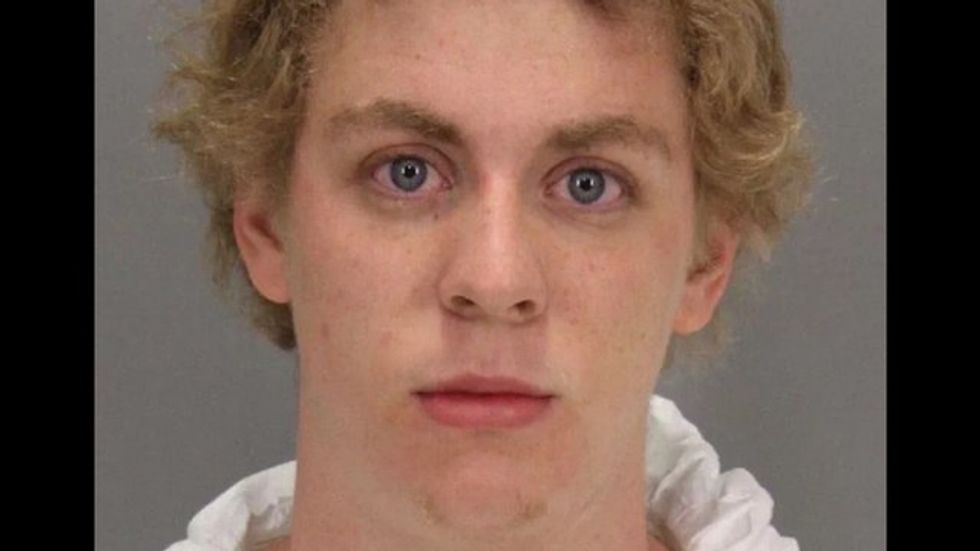
Even despite Brock Turner’s obvious and heinous crimes, the court and the media protected him throughout the trial. Instead of releasing his mugshot like they would any other criminal, any other rapist, all that was shown on the news was his college swimming headshot, depicting a good boy smiling into the camera who would never do such a thing. Only after the sentencing was the actual mugshot released, a picture that does not make it too difficult to imagine Turner committing the crime for which he was convicted.

Then, after the unanimous conviction, came the ridiculous sentencing. Most credit this turn of fortune for Brock Turner to his father. Mr. Turner said,
Brock’s life has been deeply altered forever by the events of Jan. 17th and 18th. He will never be his happy go lucky self with that easy going personality and welcoming smile. His every waking minute is consumed with anxiety, fear, and depression.
The events he speaks of include the rape his son committed.
And I truly wonder, regarding the “anxiety and fear,” what are you afraid of, Brock Turner? That upon entering the world you will be seen as the predator you are? Or maybe you’re afraid you’ll be raped again — oh wait, that’s your victim’s fear.
Mr. Turner then stated that such a young individual like his son should not be punished for 20 minutes out of his 20 years of life. Not to mention that those 20 minutes completely ruined the life of another innocent human being. But regardless of that fact, what does the time period have to do with anything? How long does it take to murder someone? Five seconds? Thirty, depending on the weapon of choice? And yet you don’t see murderers getting released back into society because, well, the whole thing was like the blink of an eye!
Brock Turner’s father also stated how his son would have to register as a sex offender for the rest of his life, and that was certainly severe enough, if not more so. This would alter his son’s life. Mr. Turner, why should your son not receive the punishment that every other rapist does?
Mr. Turner then concludes that his son has never been violent, including that night. So now, for those of you who don’t follow, according to this logic sexually assaulting an unconscious girl behind a dumpster is not violent.
A pastor's response to Brock Turner’s father eloquently explains how unjust Mr. Turner’s words were. The pastor explains how he too has a son whom he loves. “You love your son and you should, but love him enough to teach him to own the terrible decisions he’s made.” The pastor explains that Brock is not the victim. If his life is altered, as Mr. Turner moans, “It is because he has horribly altered another human being.” This event will stay with her much longer, the pastor notes. “This is why so many men believe they can do whatever they please to a woman’s body without accountability. This is the reason so many victims of sexual assault never step forward.” Lastly, the pastor implores Brock Turner’s father to do better so that “We may teach our children to do better.”
Mr. Turner’s plea seemed to make sense to Judge Persky, who stated upon giving the sentence that “A prison sentence would have a severe impact on him. I think he will not be a danger to others.” Judge Persky, prison is supposed to have a severe, hopefully reformative, impact on criminals. And even if Turner won’t be a danger to others in the future, does he not deserve a greater punishment for the woman’s life he destroyed? The judge also noted Turner’s young age and lack of criminal history to justify his decision. Now I ask, should we let everyone off on their first crime because they haven’t done anything like it before? That’s not how it works. And I ask everyone to imagine a man of the same age and with the same conviction, but different race, socioeconomic status, and education level. Would this man be let off mercifully? Jane Doe also pointed out that Brock Turner is also above the age where he could go to war and fight for our country; why is he not old enough to be fairly sentenced for a crime he committed?
Jane Doe addressed the short sentencing by referring to both Brock Turner’s testimony and Judge Persky’s reasoning. Brock Turner said after the trial, “During the trial I didn’t want to victimize her at all. That was just my attorney and his way of approaching the case.” Jane Doe pointed out that your attorney represents you. Brock Turner could have absolutely told his attorney not to go about the trial in a certain way, and if the attorney insisted, Brock could have fired him! He did none of this.
I told the probation officer I do not want Brock to rot away in prison. I did not say he does not deserve to be behind bars. The probation officer’s recommendation of a year or less in county jail is a soft timeout, a mockery of the seriousness of his assaults, and of the consequences of the pain I have been forced to endure. I also told the probation officer that what I truly wanted was for Brock to get it, to understand and admit to his wrongdoing.
She does not think Brock gets it.
A year has gone by and he has had lots of time on his hands. Has he been seeing a psychologist? What has he done in this past year to show he’s been progressing? If he says he wants to implement programs, what has he done to show for it?
The Probation Officer has stated that this case, when compared to other crimes of similar nature, may be considered less serious due to the defendant’s level of intoxication. It felt serious. That’s all I’m going to say.
District Attorney Jeff Rosen agreed with Jane Doe and the outraged citizens watching at home, “The punishment does not fit the crime. The sentence does not factor in the true seriousness of this sexual assault, or the victim’s ongoing trauma. Campus rape is no different than off-campus rape. Rape is rape.”
Here is the petition to have Judge Aaron Persky recalled for such a clear miscarriage of justice.
Jane Doe is still forgiving, though. In her letter she urges Brock Turner to do great things upon his release and build his life back up. She says, “I fully support your journey to healing, to rebuilding your life, because that is the only way you’ll begin to help others.”
After the conviction, USA Swimming banned Brock Turner, making him ineligible to be a member. Turner is not allowed to compete in any USA Swimming sanctioned events, including Olympic trials. Even if his illustrious swimming career saved him in court, it will not be a part of his future.
This ban comes on account of Turner’s violation of the USA Swimming’s Code of Conduct Policy.
USA Swimming spokesman Scott Leightman said, "Brock Turner's membership with USA Swimming expired at the end of the calendar year 2014. He was not a member at the time of his crime or since then. USA Swimming doesn't have any jurisdiction over non-members. Brock Turner is not a member of USA Swimming and, should he apply, he would not be eligible for membership. ... Had he been a member, he would be subject to the USA Swimming Code of Conduct. USA Swimming strictly prohibits and has zero tolerance for sexual misconduct, with firm Code of Conduct policies in place, and severe penalties, including a permanent ban of membership, for those who violate our Code of Conduct.”
This horrifying event, trial, and sentencing has sparked debate about the concept of rape culture. Rape culture is the normalization of sexual violence against women, the trivialization of rape. The media, be it fashion, music, or video games, bombards us every day with images and lyrics suggesting sexual violence against women, so much so that we have become desensitized. We ignore it or joke about it. “Man, I raped that chem test!” Another example is when Ceelo Green tweeted, “Women who have really been raped REMEMBER!!!” Nearly 1/5 of women in the USA have reported being raped or sexually assaulted. Only 40 percent of rapes, however, even get reported. Only 10 percent lead to an arrest, and out of every 100 rapes, only three rapists will ever spend a single day in prison. An instance similar to that of Brock Turner occurred in Steubenville, Ohio, in 2012. Two high school football players raped a 16-year-old girl who had passed out from too much alcohol consumption. In the trial she received a lot of the blame for drinking too much. Both rapists were convicted and served jail time, but one is already back on the football team. Some things are just more important than others, I guess. Sports over women, for example.
We no longer see rape for the horrible, inexcusable act that it is. Perhaps this is why Judge Persky let Brock Turner off so easy; the victim wasn’t even in his mind! Rape doesn’t really matter anymore.
Vice President Joe Biden wrote an open letter to the Stanford rape survivor. Before elaborating on Biden’s words, however, I’d like to pay attention to the title of the article. Stanford Rape Survivor. Jane Doe could have died that night, or later as a result of the rape. A decent percentage of rapes end in murder, but she was saved. Even if Brock Turner was not willing to go to those lengths, if he had not been stopped, having his way with her and then leaving her behind that dumpster, she could have died of her alcohol consumption anyway. Anyone handling this unconscious woman without the extreme care she clearly needed, AKA Brock Turner, was endangering her further. Instead of helping her, he chose to have a little fun for himself. Lastly, Jane Doe suffered severe depression after the assault, and could easily have chosen to end her life. She did not simply endure, or experience. She survived.
Joe Biden notes the victim’s courage, and said her statement should be required reading for men and women of all ages. He said our culture is broken, and that he now knows “Heroes ride bicycles.”
Elizabeth Ruddy also reflected on the case and a discussion she had with her coworker. Her coworker said the victim is at least partially to blame for not being responsible with her alcohol intake. She thought, “Hey, just so you know, you don’t need to play devil’s advocate – he’s already got one. And he’s good enough to get him off with only six months.” Her rhetoric beautifully describes the type of life women lead in order to escape the fate of Brock Turner’s victim.
I am sick to my stomach, like, stranger groping my ass in a crowded train kind of sick to my stomach…
But I knew that any response of mine would be sharp, like car keys between knuckles sharp…
I should’ve remembered that my retreating back [from the conversation] is an open invitation …
Like I don’t think about it when I go for a run after work and instead of using a timer, my personal best is just running faster than anyone who’s following me …
Like I don’t think about it when I leave the headphones at home on my way to pick up milk because I need to hear if anyone’s coming up behind me …
Like I don’t think about it when I pick an outfit from my closet and look at it like a piece of evidence. “If I get raped when I’m wearing this tonight, how guilty would it make me?” Like maybe they should mark it on the tag: 60% cotton, 40% her fault .
Ruddy mentions her sister asking for her approval on pictures she posts to Facebook to make sure they’re appropriate, and girls in middle school being sent home because their tank top-clad torsos were too distracting for the boys. She points out how women are referred to as sisters, mothers, and daughters, only in relation to men. I think asking someone to think of his own loved one suffering a similar fate is powerful, but Ruddy’s point makes me think about how a man would feel if he were imagining himself in the situation, getting raped. Would he want a sentence less brutal for his attacker?
Now, after each of us has let the injustice, rage, and sadness wash over us like tidal waves in the weeks following Brock Turner’s sentencing, it is time for us to spread the word. Spread the word so that this does not continue to happen, so that convicted rapists do not continue to walk our streets. It is time for us to think of Turner’s victim, to pray for her, her family, and all other women who have suffered her same fate. It is time to reform our society, step by step, so that the criminal does not always emerge victorious while the victim’s life is left in shreds. It is time.