
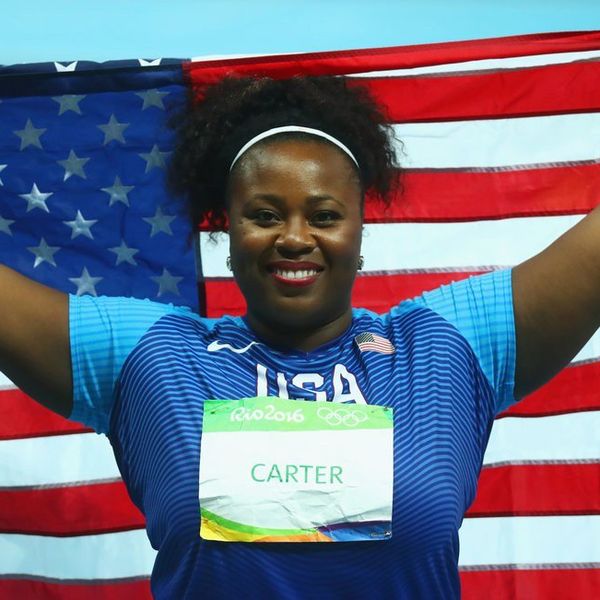
The 2016 Summer Olympics in Rio de Janeiro, Brazil, is only several days away. The Olympics has always brought together the best athletes in the world and, in turn, produced some of the most memorable moments in history. Both famous and infamous happenings have captivated a global audience for numerous decades. Often in the present, we must reflect on the past. Here are ten moments in Summer Olympics history in order to get you ready for the Rio games.
1. Jesse Owens's Four Gold Medals - Berlin, 1936

1936 saw Germany under the rule of Adolf Hitler, who intended to use the Games as a propaganda tool for his eventual Nazi regime and racial supremacy, by initially banning Jewish athletes from competing. Hitler's discrimination toward foreign ethnicities was made apparent as he would only shake hands with the German medalists, despite warnings from the Olympic committee. Owens defied expectations by winning four gold medals in the 100 meter race, 200 meter race, long jump, and the 4 x 100 meter relay. Reportedly, the only contact Owens had with Hitler was before the 100 meter medal ceremony as the men waved at each other as Hitler was leaving the stadium. Owens disappeared into a relatively quiet life after the Berlin Games and the gold medals were the only ones he ever won.
2. The Black Power Salute - Mexico City, 1968

African-American athletes Tommie Smith and John Carlos finished first and third, respectively, in the men's 200 meter race and were awaiting the medal ceremony at Olympic Stadium in Mexico City. As of one of the most turbulent years in history, 1968 signified a turning point in the Civil Rights Movement with the assassination of Dr. Martin Luther King, Jr. In solidarity with the fight for racial unity, Smith and Carlos carried out their plan and it became one of the most famous political statements of all-time. Australian silver medalist Peter Norman supported Smith and Carlos by wearing a human rights badge with them. The two athletes delivered the salute during the playing of The Star-Spangled Banner and the crowd subsequently booed them as it was seen as politicizing the Olympics at the time.
3. The Munich Massacre - Munich, 1972

In one of the most tragic incidents not only in Olympics history, but history itself, eleven Israeli athletes and coaches were taken hostage by the Palestinian terrorist group Black September. The terrorists demanded the release of Palestinian and non-Arab prisoners in Israel as its motive. Israel gave an absolute response that the country would not negotiate with terrorists due to government policy at the time. German officials stepped in and tried to free the hostages through offers and a failed rescue attempt, but all hostages were eventually killed. ABC sportscaster Jim McKay first broke the news to an American audience saying, "Our worst fears have been realized tonight. They've now said that there were eleven hostages. Two were killed in their rooms yesterday morning, nine were killed at the airport tonight. They're all gone."
4. Nadia Comaneci's Perfect 10 - Montreal, 1976

Nobody had scored a perfect 10 in an Olympics gymnastics event before the 1976 Games in Montreal. At the age of 14, Romanian gymnast Nadia Comaneci achieved a perfect score on the uneven bars, which propelled her to win the gold for that event. Since the scoreboards did not contain four digits due to the high improbability of a perfect score, the score initially read "1.00," and was quickly clarified to the crowd who gave a rousing ovation. Comaneci won three more medals, two gold and one bronze, in all-around, balance beam, and floor exercise, respectively in the Montreal Games. Famed gymnast coach Bela Karolyi was Comaneci's coach at the time.
5. The Dream Team - Barcelona, 1992

The 1992 Olympics Games in Barcelona marked the first time that professional athletes could compete in basketball. The United States capitalized on the rule change and created perhaps the greatest basketball team ever assembled. NBA legends such as Michael Jordan, Larry Bird, and Earvin "Magic" Johnson guided the national team as it cruised its way to the gold medal. The average margin of victory for the U.S. was 44 points during Olympics competition! Today, it would be considered a failure if the United States does not win the gold medal at basketball due to the expectations set by "The Dream Team."
6. Derek Redmond and His Father - Barcelona, 1992
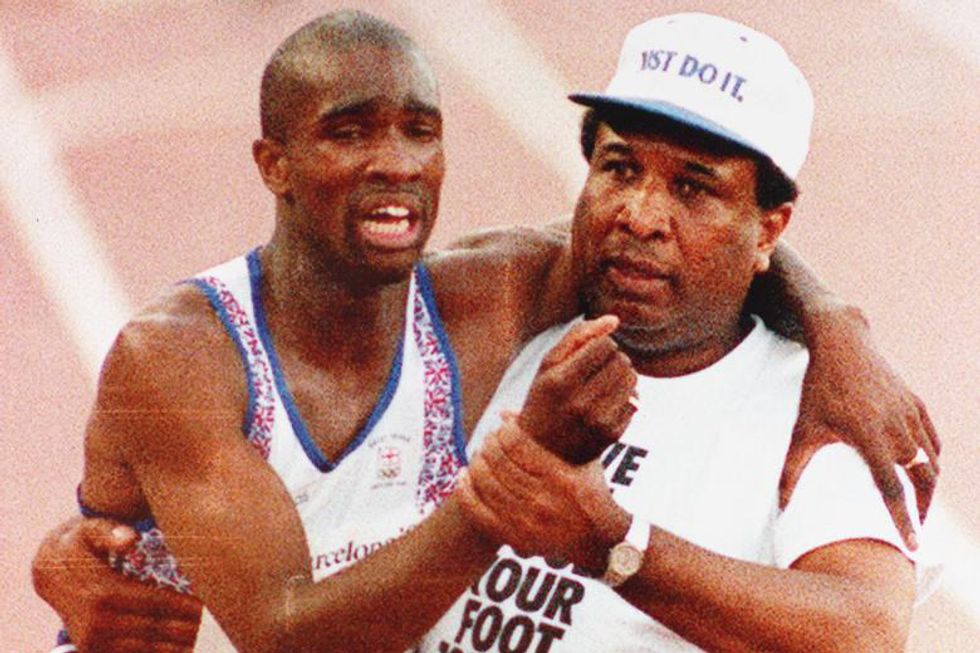
British athlete Derek Redmond won three gold medals and one silver medal at other international competitions prior to competing in Barcelona. His track record (no pun intended) made him among the favorites to win the gold medal at the 400 meters sprint. However, during the semifinal race, Redmond tore his hamstring, yet continued to race limping. His father, Jim Redmond, rushed past security and helped his son to finish the race. Since his father helped Redmond finish the race, he was officially disqualified from the event and Olympics records stated his position as "Did Not Finish," yet the moment illustrated the will and determination of finishing what was started.
7. Muhammad Ali Lights the Olympic Cauldron - Atlanta, 1996

Muhammad Ali was considered one of the greatest athletes not only in boxing, but in sports history. During the early 1990s, Ali suffered from early onset of Parkinson's disease, yet managed to be present for the 1996 Summer Olympics in Atlanta. He had the distinct honor of being the final Olympic torchbearer to light the Olympic cauldron in order officially start competition. His appearance garnered much applause and praise, which became one of the most memorable moments in opening ceremony history. His recent death on June 3, 2016 saddened the sports world, and this moment helped cement his legacy.
8. Kerri Strug's Vault Performance - Atlanta, 1996

Bela Karolyi makes another appearance on the list as he coached Kerri Strug of the 1996 United States gymnastics team, known as "The Magnificent Seven." Strug's vault performances are considered as some of the best Olympics moments of all-time due to the events that transpired. On her first vault attempt, Strug injured her ankle and received a low score as a result. After words of encouragement from Karolyi, her final vault attempt went more smoothly, but caused more damage to her ankle due to her landing on her good foot which caused much force to transfer to it. Her final score helped the Americans to win the gold medal for team all-around and Karolyi carried Strug to the podium for her to accept her medal and became one of the most enduring moments during the Atlanta Games.
9. Michael Phelps Wins Eight Gold Medals - Beijing, 2008

No Olympic athlete had won eight gold medals at a single Olympic Games. The fact stood true until Michael Phelps won eight gold medals in swimming competitions in the 2008 Beijing Games, beating fellow swimmer Mark Spitz's record of seven at the 1972 Games. In both individual and team competitions, seven of the eight gold medals won by Phelps consisted of world record times. Perhaps the most dramatic gold medal wins were in the 100 meter butterfly and the 4 x 100 meter freestyle team relay, in which the margin of victory was at least one hundredth (0.01) of a second! Phelps will compete in this year's Olympics, in what should be the last of his decorated career.
10. Usain Bolt's Record-Setting Runs - Beijing, 2008

Jamaica was not known for much gold medal success in the history of the Olympic games. That all changed when Usain Bolt competed in the 2008 Summer Olympics in Beijing. Bolt won three gold medals and created new world records for all three in the process. His medals in the 100 meters, 200 meters, and 4 x 100 meters relay brought Bolt international recognition and he repeated the gold medal streak in the 2012 Games in London. Bolt is set to compete in Rio and will be his last Olympics as he intends to retire in 2017.