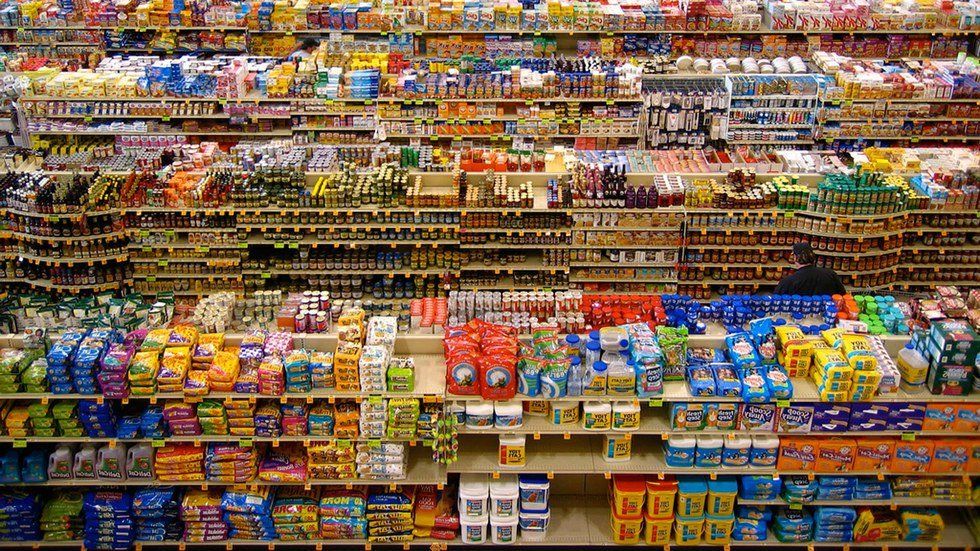
Our world is thrilled by extremes. Breaking the speed of sound, crossing the atmosphere, running at 28 miles per hour... Moreover in the twenty first century, it seems that in this same world that we have managed to achieve so much, we still somehow manage to be burdened with the most preventable of downfalls: one of the many bad extremes, food.
2.1 billion people today are either overweight or obese. That’s 30 percent of the world's population indulging in a limited resource, to the point where their health becomes an issue. Obvious instant gratification, debated terms and lengths of addiction, little to no education on the matter, and now a sort of social “embracing” of a health concern have all lead nations such as the U.S to have 13 percent of the global overweight and obese population. This when the country only accounts for 5 percent of the entire planet's population.
It becomes even more stressing when we realize that heart diseases kills an American every, single, minute. That chronic respiratory diseases kills nearly 150 thousand, and Diabetes 75. All in all, obesity and overweight related causes contribute to ending 22 lives an hour. 22 lives.
What can throw a bystander off, is the indirect correlation of a nation thrilled by their heroes, people who are held up as modern idols of perfection and idolatry, and yet their fans, their admirers do nothing to live to those standards. Take your pick. If models set an unrealistic expectation of beauty, do runners of speed? Do powerlifters of strength? Do football players of athleticism or basketball stars of dunking? Why is it that in 2015 114.4 million people saw the New England Patriots compete against the Seahawks in a duel of utter and most impressive human athletics, and during that time those same people ate somewhere around 2,400 calories? That’s nearly a pound of fat, while watching athletes loose nearly two to three in the same time.
It seems insane, bizarre--but, at the end, it comes down to to the simplest idea: it’s easy.
Growing up I was “Big Man,” “Tough Guy,” “Big Boned,” “Thick skinned,” and on and on and on. Yet, I was never fat. I wasn’t fat until I sat with my 12 year old, 15 to 20 pound of fat belly and saw it and hated what I saw. Hated it because I was slower than the other kids, hated it because I was judged for it, hated it because doctors had told me I was over weight, but I didn’t want to hear that. It was easier to eat. It always is. I grew up at the same time that I went to a nutritionist and I lost it all. It’s easy for it to come back, but I do everything that I can to live a good, healthy, athletic lifestyle. Some may even say I have strayed the other way, and now exercise. (That's a joke, there is no such thing). I understand the dangers, the perils, the stigma, I know it all more than from a third person perspective, and this is why I, as an author, can not understand how we have began to forgive and forget the overweight.
It seems as if the general populous is focused on either eating ultra healthy, organic, clean, free range, non-GMO, gluten free or, accepts and embraces being overweight. Sometimes though, it's the latter that tend to do the former, and thus, those two circles collide.
Still, what calls for concern is the idea of accepting or embracing the issue. An incentive to "OK" is detrimental on several levels. On a personal level, it's a terrible habit, one that promotes diseases, stigma and death as discussed previously. Additionally, on a global scale, it's taking advantage of a system that allows for an incredible expenditure of resources. Over production of food, to supply the demand of a country that eats too much is a major contributor to our current climate issues, low worker wages on fields, and a general abuse of power down the chain. From Wallmart ultra corporate non-incentives, low wage jobs, all the way down to minimum possible pay for migrant workers. Not to mention the amount of money that the state has spend in order to treat these conditions that for all intents and purposes, do not occur without a personal intent. The supply is costing the world all too much to fit the demand.
Yet every day we see more and more how some people have began promoting obese models, setting examples of unhealthy lifestyles as people to be. Yet, it would seem almost insane if we had a heroin addict as a cover model for People Magazine. Or a two-pack a day smoker on a billboard. A corner drunk in a movie. People who struggle from addiction on a chemical level far worst than food addiction, or over-eating tendencies are far more marginalized than those who suffer from a condition that as stated previously, kills twenty two an hour. A heroin addict does very little to create an environment of ultra demand, climate adverse effects, societal burden to the degree of being related the number one killer, and yet the U.S has had a "war on drugs" for the past 40 years.
How have we become more concerned with the idea that my feelings would have been hurt at 14 if I was called fat, than the idea that I could have grown up to have diabetes at 20 had I never taken care of myself?
Should I have been bullied, teased, or accused? Should anyone be judged and harassed for how they look? Obviously not. Yet, to forge the unequivocal truth that there are health issues with obesity, is insane. To promote anyone who is unhealthy as a role model, even more so. Societal norms of beauty are one thing that anyone can debate for years on end, medical causes of leading death in America, are not.
It’s easy to live in denial. It’s easy to pretend we don’t have four to five hours a week to do a simple workout. It’s easy to eat what’s easy. And of all of those it seems, the easiest, is to die young because we ate too much.