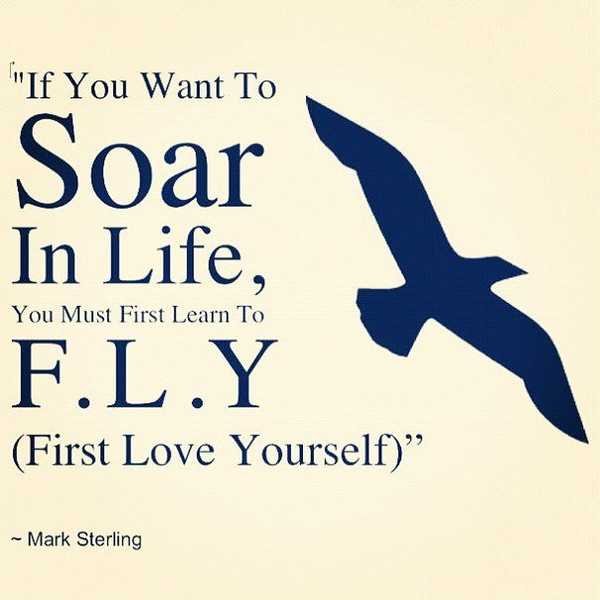


"If you do not love yourself, you cannot love others"
- The Dalai Lama
From an early age, we are bombarded with media that tells us what we have to do to be worthy of love. Among the theories of what makes us worthy of love is the idea that we must love ourselves before we can love other people. It is a popular statement, passed down through the ages by word of mouth. But is it true? To find out we need to look deeper at the realities of loving ourselves.
Shame researcher Brene Brown says:
“And shame is really easily understood as the fear of disconnection: Is there something about me that, if other people know it or see it, that I won't be worthy of connection?...The only people who don't experience shame have no capacity for human empathy or connection...The thing that underpinned this was excruciating vulnerability. This idea of, in order for connection to happen, we have to allow ourselves to be seen, really seen”(2010).Does loving yourself lead to loving other people? According to an unbiased 2002 study, yes is not the full answer; it can often be quite the opposite (Campbell, Foster, & Finkel). The same study suggested that ego can actually be harmful to relationships, as is causes a person to “turn in” towards themselves rather than out toward the other person.
An article published in 2010 reminds us that liking oneself involves being able to see your own good qualities.
"Failing to recognize one's own good qualities would not necessarily prevent a person from recognizing them in others. And in fact, loving someone else—and being loved in return—may help such a person realize his good qualities as reflected in the other person...Instead of self-love being a prerequisite for loving another, it may be a result: greater self-love through other-love”(White).While examining the topic of self-love and relationships, we have to look at and define the concept of self-esteem. In the 50s when it was first coined, self-esteem originally referred to the relationship between doing good and feeling good. Today’s definition has morphed into a measure of how good a person feels with no regard to how they got that way (Formica, 2008). There is a fine balance when it comes to self esteem. Viewing ourselves as very clever and outgoing is different than viewing oneself as nice or moral. Those in the first category fall into narcissism, whereas those who view themselves in the latter way have high self esteem (Campbell, 2002).
On the other side of the coin, Low self-esteem is not only unpleasant for those who experience it, but it can have lasting effects on our psyches, potentially leading to depression or anxiety (Venzin, 2014).
Self-esteem of either extreme can put strain on a relationship, but self-esteem and self-love are not the definitive factors in whether a relationship will be successful. Ricardo Martinez is not an expert in the field, but rather speaks from personal experience when he says “Healthy relationships occur between two people who are comfortable with themselves, in addition to one another. Love only develops after making your own happiness a top priority”(2014).
“You are enough, you are so enough, it's unbelievable how enough you are.”
- Sierra Boggess
Ken Page is an experienced psychotherapist, lecturer and author whose work focuses primarily on relationships, spirituality and intimacy. While Page’s work could be considered biased, as he does sell his services as a motivational speaker, his opinions are supported by data and experiences. In a 2011 article for Psychology Today, Page discusses two kinds of potential relationships. Attractions of Deprivation: In which we feel like we need to prove ourselves and win out partner’s love. These attractions almost always end in heartbreak and make us feel inadequate. Attractions of Inspiration: In which our partner loves us for who we are. Page suggests that true love is found in an attraction of inspiration. If we can open ourselves up to this kind of attraction, each partner can love the other for who they are, making it easy to accept love and inspiring us to be our best selves.
Brene Brown says “You know what? You're imperfect, and you're wired for struggle, but you are worthy of love and belonging” (2010). Broadway Actress, Sierra Boggess (Disney’s the Little Mermaid, The Phantom of the Opera, It Shoulda been You), has had her fair share of self-love struggles. But she has fought them, and she chooses to share her wisdom with the world. “You are enough, you are so enough, it's unbelievable how enough you are.” At seventeen that meant one thing to me, and now it means even more...just by showing up, you're enough (BWW interview, 2013).
And that brings us back to the question: What must we do to be worthy of love? Well, nothing. Right now, in this moment, as you are, you are worthy and capable of loving and being loved in return.
So yes, we need to learn to show love and compassion for ourselves, but if we haven’t fully accepted ourselves yet, that’s okay. We are still capable of loving other people. It can even help us love ourselves if we have someone who we love who sees our good qualities. We cannot let our insecurities keep us from risking and loving.
Everyone right now in this moment is capable and worthy of love and belonging.
Brown, B. (2010, June). The power of vulnerability. Retrieved from https://www.ted.com/talks/brene_brown_on_vulnerabi...
BWW interview: Sierra Boggess talks personal influences, upcoming projects and her lessons in love concert! (2013, April 16). Retrieved from http://www.broadwayworld.com/article/BWW-Interview...
Campbell, W. K., Foster, C. A., & Finkel, E. J. (2002). Does self-love lead to love for others?: a story of narcissistic game playing. Journal of Personality and Social Psychology, 83(2), 340-354. doi:10.1037//0022-3514.83.2.340
Campbell, W. K. (2002). Narcissism, Self-esteem, and the positivity of self-views: two portraits of self-love. Personality and Social Psychology Bulletin, 28(3), 358-368. doi:10.1177/0146167202286007
Martinez, R. (2014, April 07). The truth is that you must first love yourself before you can love another. Retrieved from http://elitedaily.com/dating/sex/why-you-must-firs...
Page, K. (2011, March 10). Attractions of inspiration and attractions of deprivation. https://www.psychologytoday.com/blog/finding-love/...
Venzin, E. (2014, February 28). How does low self-esteem negatively affect you? Retrieved from http://psychcentral.com/blog/archives/2014/03/01/h...
White, M. D., Ph.D. (2010, April 29). Loving yourself - how important is it? Retrieved from https://www.psychologytoday.com/blog/maybe-its-jus...