In recent Olympic-related news, NBC's gymnastics announcer Al Trautwig sent out a widely criticized tweet about Simone Biles' parents, asserting that her grandparents "may be her mom and dad, but they are NOT her real parents" in a since-deleted tweet.
Trautwig's ignorance about the legality and legitimacy of adoption and its purpose sparked mass controversy on the internet. Simone Biles took the remark rather well, and addressed it directly and simply, re-iterating the fact that her mom and dad are her real parents. Biles was adopted in 2001 along with her younger sister Adria by her biological grandparents Ron and Nellie Biles. Unlike Biles' calm response to the tweet, Twitter users quickly spread Trautwig's ignorant remark and became furious. The hashtag #FireTrautwig began to trend, but most importantly, a national conversation regarding adoption began.
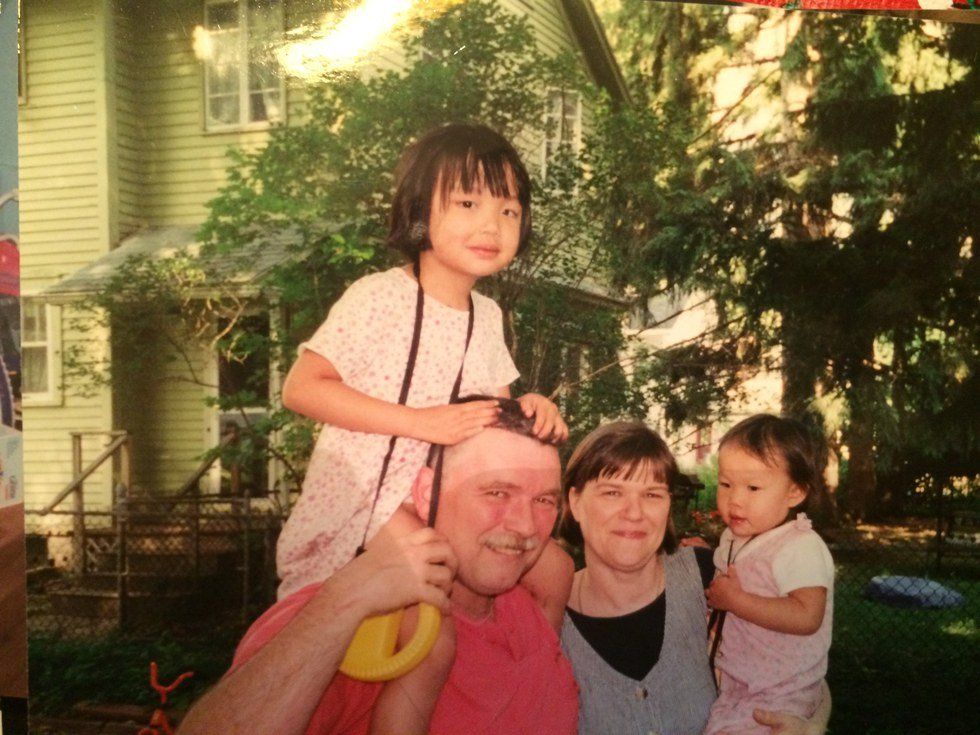
How does any of this relate to me? You ask. Well, I myself am adopted from an orphanage in China, as well as my two sisters, who were also adopted from orphanages in China. I also have multiple friends who have been adopted both domestically and internationally. Although I was saddened to see Al Tratuwig's insulting tweet, I was pleased to see that it resulted in an open national dialogue about child adoption and its meaning. With all that said, I thought I'd share some common questions people ask me when I tell them I'm adopted from China, as well as my responses.
"Where were you born?"
Honestly, I don't know for sure. I know I'm from an orphanage in the city of Changsha, in the Hunan Province in central China, but I have no idea where I was born or if it was even in a hospital, and I have no way of ever finding out that information. All I know from what the orphanage told my parents is that I was abandoned as an infant, found sometime during February and taken to a police station. People estimated that I was around three or four weeks old. The police then took me to the closest orphanage where I was later adopted from.
"How old were you when you were adopted? Do you remember anything?"
I was adopted as a baby. I was about 10 months to a year old when my parents came to China to adopt me, and no, I don't remember anything because I was so young.
"Do you know why your parents didn't want you?"
No. I also don't like when people phrase their questions this way. Some assume that my parents (and other parents in general) give up their children for adoption because they "don't want them," however there are a whole host of reasons why people put their children up for adoption: health reasons, poverty, being unfit to parent, or wanting to give their child a chance at a better life than the one they can offer, for example. It's not that they don't want their own children, because in most cases they do. They just feel that adoption is the best option for themselves and their children. That being said, I don't know anything about my parents or my background.
"Do you ever wonder about your biological parents? Do you want to look for them?"
Honestly, no. I never knew anything about them to begin with, so even as a child I just didn't think about it because I love my (American) parents and I'm extremely grateful and happy with the life I have now. I didn't feel the need to fill a void that wasn't there in the first place with only my imagination. I did wonder what they look like growing up, I wondered if I took after my mother or father more, but that is the extent of my wondering. I also knew that wondering about them was a futile exercise because I will never know anything about them.
It was common (during the 1980s and 1990s when family planning policies were heavily enforced, you may have heard of the recently reformed "one child rule") for women in China to go to other provinces or cities to live out their pregnancy and give birth and abandon the child if he/she was severely disabled, a second child, or a second child who happened to be a girl (in some rural areas, families were allowed two children if the first was female, but if the first was a male, no other children were allowed. Chinese society has a deeply ingrained tradition in which males are the desired children to have because they carry the family name and honor, and most importantly, they are responsible for taking care of their parents when they grow old. The attitude is slowly changing, and families now desire both a boy and a girl, but the tradition still stands). I should also mention that officials were often appointed to towns and villages to monitor the women's menstrual cycles and births to document the children they had and potentially arrest or fine them for breaking laws.
Anyway, I will never be able to find them, even if I tried or wanted to. I know absolutely nothing about my background and my orphanage building was burned down and the orphanage staff and children have since moved to a different location that I do not know of. I wouldn't be able to find answers even if I found my old orphanage and contacted the staff. The city I'm from isn't necessarily the city they ever lived in. The only way to locate any potential living biological relatives would be through DNA testing. That would be not only be expensive but extremely difficult seeing that I do not have a starting point at all.
"Why did your parents want to adopt? And why from China?"
This is sort of personal for my family but I will say that my parents couldn't naturally have children. They looked into adoption, and I recently discovered that a documentary on Chinese orphanages is what compelled them to want to adopt from China. They researched the prospect further and found that it would be less expensive than adopting domestically, they fit the requirements, and they thought it would be a great opportunity and adventure (keep in mind this was circa 1996). The process of going through the adoption agency and getting essentially vetted by the agency (to make sure they'd be fit parents) took at least one year, but they say it was worth it.
"Are your sisters your real sisters?"
Well, yes. I've known them since I was a young child and I grew up with them like any other sibling. However, we are not biologically related, and I know that is what you mean, but that doesn't make them any less legitimate as my siblings (same goes for my parents). Legally, they are my sisters and my parents are my parents. Both of them were adopted from the same province as me, and my older sister is from the same orphanage in Changsha as me. My younger sister was adopted when I was about two years old, and my older sister was adopted when I was five, and she was a confused eleven-year-old who spoke barely any English.
"Looking back on your upbringing and everything now, how do you feel about adoption in general?"
Adoption is a beautiful thing in my opinion. When the intentions behind the biological parents of a child and his/her adoptive parents are good (as well as their actions in the process and upbringing of said child), it can be a very positive experience. In my personal experience, I wouldn't have had my life any other way. I don't know and can't even imagine what my life would've been like had I not been adopted. It would've most likely been sad and full of tragedy and poverty. I'm not even sure if I would be alive at this point, because I was extremely ill when my parents adopted me, and my first six months in the U.S. were spent in a children's hospital.
I think it is an amazing thing that people open their hearts and adopt children, not only to raise them, but to potentially give them a better life than they would have otherwise lived. However, there are flaws in all systems of adoption whether domestic or international. No one is a perfect parent and there are people who take advantage of the system and abuse their children. The foster care system is also a very flawed system in which children who grow up in it can end up feeling like they never had and never will have a true family. Their sense of belonging can potentially be nonexistent and the psychological effects of such experiences can be damaging.
All this being said, everyone's experience with adoption and opinions of it vary.
There are people who don't believe that adoptive parents can ever be a child's "real" parents. There are people who have had very negative experiences with adoptions, whether they be the adoptive parents or adopted children, and their experiences are valid. However, I hold the very strong belief that anyone who raises a child, supports, and cares for him/her/them is the rightful parent of that child.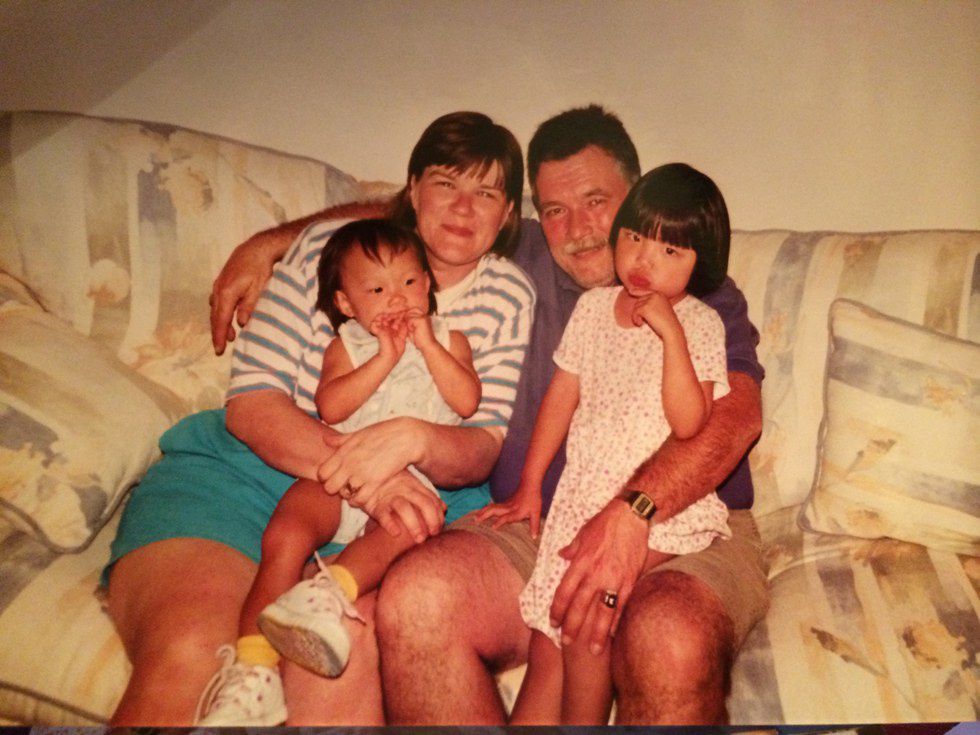
I hope that one day everyone recognizes adoption as a legitimate process and that the social acknowledgment that adoptive parents are real parents and adopted siblings are real siblings is never a question.