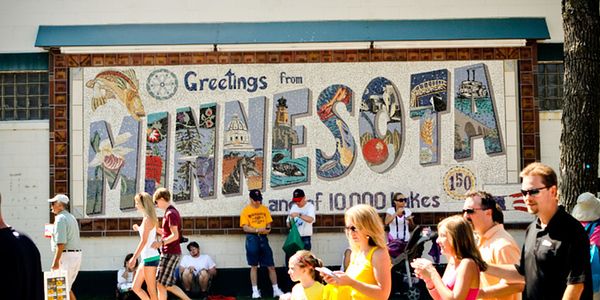
I’ve been going to the Minnesota State Fair every since I was young enough to remember. Being a Minnesota native my entire life, going to the fair was almost like a right of passage. I think I even looked forward to it more than back-to-school shopping, and I still feel that same excitement when my favorite two weeks of the summer arrive, i.e. right now. My parents would get my younger brother and I up at the crack of dawn so we could get there, walking through the entrance closest to the haunted house, at eight in the morning. Sure, getting up that early when school was right around the corner was far from ideal, but it was always worth it. To me, the fair has always been one of the best parts of the year, and I feel completely justified when I say that it’s actually the best state fair in all of the United States.
First off, let’s look at some of the history behind the fair so you can see just why this fair is so spectacularly special, and leaves all of the other state fairs in the dust. This year is the 157th year that the fair has gone on, which is quite a long time if you ask me. We, unfortunately, were not the first state fair ever to take place, New York beat us to that punch in 1841, but there was a fair going on here even before there was a Minnesota! The first Territorial Fair, which showcased local livestock and agriculture, took place in 1854. The first official Minnesota State Fair wasn’t launched until 1859, the year after Minnesota established its statehood. Since that opening, the fair has continued to run annually except for five different years due to issues like scheduling, war, and an outbreak of polio (a pretty good excuse if you ask me). It took the fair quite a while to finally pick its forever spot in Falcon Heights, where it's still held currently. The fair tried out spots in Rochester, Owatonna, and Winona first. There was even a time in the 1870s where Twin Cities counterparts St. Paul and Minneapolis held competing fairs. However, the Minnesota State Agricultural Society was started in 1884 and finally chose the fair’s permanent spot. The doors were opened in September of 1885, a space of 210 acres, compared to the 320 acres that it is now.
The fair was quite a spectacle back in the day. Minnesotans would travel from all over Minnesota, bringing with them their best pigs, cows, pumpkins, and homemade pies to show off to their year-long hard work to their peers. It was a place to discover the newest tools and techniques of the trade, and where they could have fun taking in a horse race, fireworks display, or a risque sideshow. The fair would even partake in having old-time freak shows (“American Horror Story,” anyone?). This is obviously a mix of different and familiar compared to what the fair is today.
Currently, the fair is a wonderful place to learn about Minnesota agriculture, horticulture, and farming. It’s also a great place to interact with animals you might not get the chance to otherwise like horses, goats, cows, and sheep. As a fair that has dedicated entire barns to these animals, I always take the extra 30 or so minutes to visit them. This particular section of the fair can be an educational experience if you partake in it, but the material is actually interesting to observe and learn. My favorite area to stop in is the Miracle of Birth Center for obvious reasons—cute, baby farm animals. Who can resist those? I know I certainly can’t.
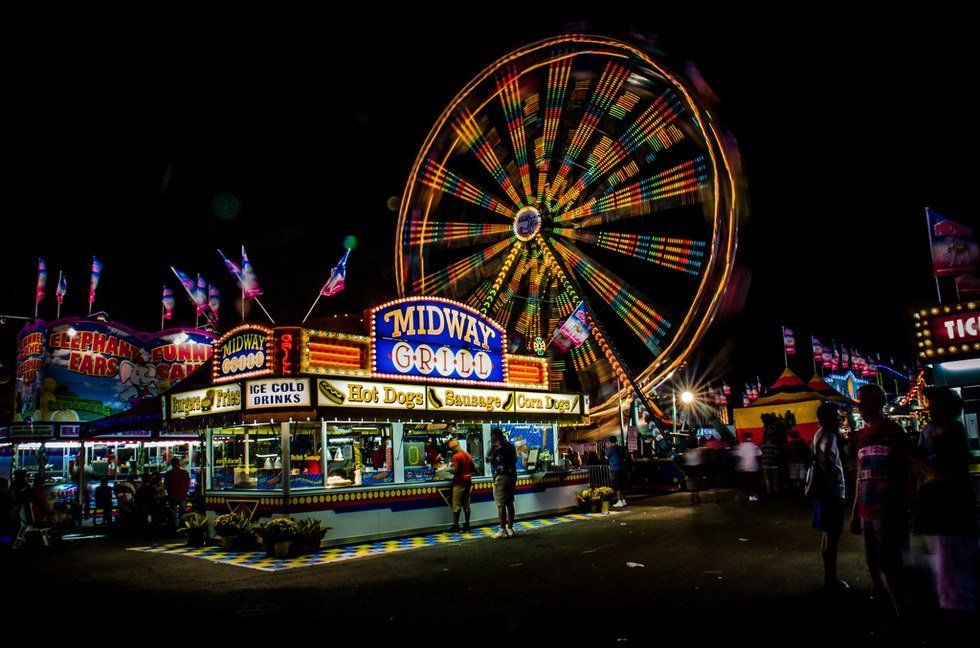
The fair also features side thrills like the Midway. This area is where you can go on rides, play typical carnival games, and try to win giant stuffed prizes. I’ve always wondered how people can stand to carry a giant and heavy stuffed dog on their shoulders for the rest of the day in the hot August heat? I’m 99.9 percent positive that I would collapse after 10 minutes. A staple "ride" that my family and I would always go on, is the Giant Slide. Some of the rides are only temporarily up just for the fair, but the Giant Slide is a permanent fixture, standing tall all year long. It’s a large fiberglass slide that you ride down on while sitting on a burlap sack. I would always sit in my mom or dad’s lap until I was old enough to attempt it myself, and even though I was probably scared the first time I went down it alone, it was a meaningful task to accomplish. I had seen myself grow, just like I’ve seen the fair expand and grow.
The Minnesota State Fair is truly the “Great Minnesota Get-Together.” By the time the fair closes on Labor Day, about 1.8 million people will have visited, with an average daily attendance of 150,000. This is close to what some other fairs attract over their entire run! The only other fair that beats Minnesota in attendance is Texas, but their fair is open for 24 days, so it runs twice as long as Minnesota’s does. Our fair always runs for 12 days, starting at the end of August and ending on Labor Day. This year it started on August 25th and will conclude on September 5th. Today the fair has an annual budget of $42 million — it’s truly a self-sustaining entity. The last time it ever received any government funding was in 1947. The fair’s concert venue, the Grandstand, has become host to amazing artists who play loud and late into the night like Bob Dylan, Lynyrd Skynyrd, Paramore, Blake Shelton, Backstreet Boys, and others. The first concert I ever saw, being a ‘90s baby, was Aaron Carter at the Grandstand. His opening act was a boy-girl group called the "A*Teens," a pop group that sang old school ABBA songs. I was in the third grade when my dad took me and my childhood best friend Ali to the show — he wore earplugs the entire time. Over the years I’ve gone on to see two other performances at the Grandstand; Carrie Underwood and Thirty Seconds to Mars. This year the fair will see performances by artists such as Demi Lovato and Nick Jonas, the Dixie Chicks, G-Eazy, and Weezer.
The most recognizable and significant part of the Minnesota State Fair, however, is, of course, the food. I can easily say that one of the main reasons I look forward to the fair so much is because of the amazing fried food that is offered there. I always bring a minimum of $40 just for food. When I was younger my family and I would always head straight to the Tom Thumb booth for mini donuts. They surprisingly make for a perfect breakfast, and I would absolutely recommend that maker of the sweet, sugary treat compared to any of the other ones offered throughout the grounds. Some of my other favorite foods that I never leave the fair without eating are fried pickles, a pronto pup, fried macaroni and cheese bites, fresh french fries, Sweet Martha’s cookies (I recommend getting the bucket so you can continue to munch on them for the next two to three days), and a potato, sour cream, and cheese crepe. Of course, I always try to find something new to try as well. Last year I tried mini donut ice cream and the delicious Australian potatoes, which are sliced, battered, and deep fried potatoes that you can have topped with cheese and/or ranch sauce. Each year brings a new selection of food to add to your list to try and I definitely have already been making mine. This year some of the new items at the fair will include candied bacon donut sliders, cheesy french onion monkey bread, gumbo fries, deep fried grilled cheese bites, and deep fried nachos.
The only time I think I ever had my overshare of the fair was in 2014 when I was an intern for the main iHeartMedia radio stations in the Twin Cities. All of the interns were required to do a sizable number of five-hour shifts, and trust me, by the end of it I was beyond happy to be done with the fair until the next year. But even including that, I’ve really only ever had positive, enjoyable experiences at the fair. In my opinion, if your feet don’t hurt at the end of the day, then you were not doing it right. It’s a great way to be a part of my state and the people watching is unreal. Overall, I wouldn’t miss the fair for anything and I can’t wait to spend an upcoming Saturday or Sunday there partaking in the “Great Minnesota Get-Together.” Just because it’s bigger in Texas, doesn’t mean it’s better.