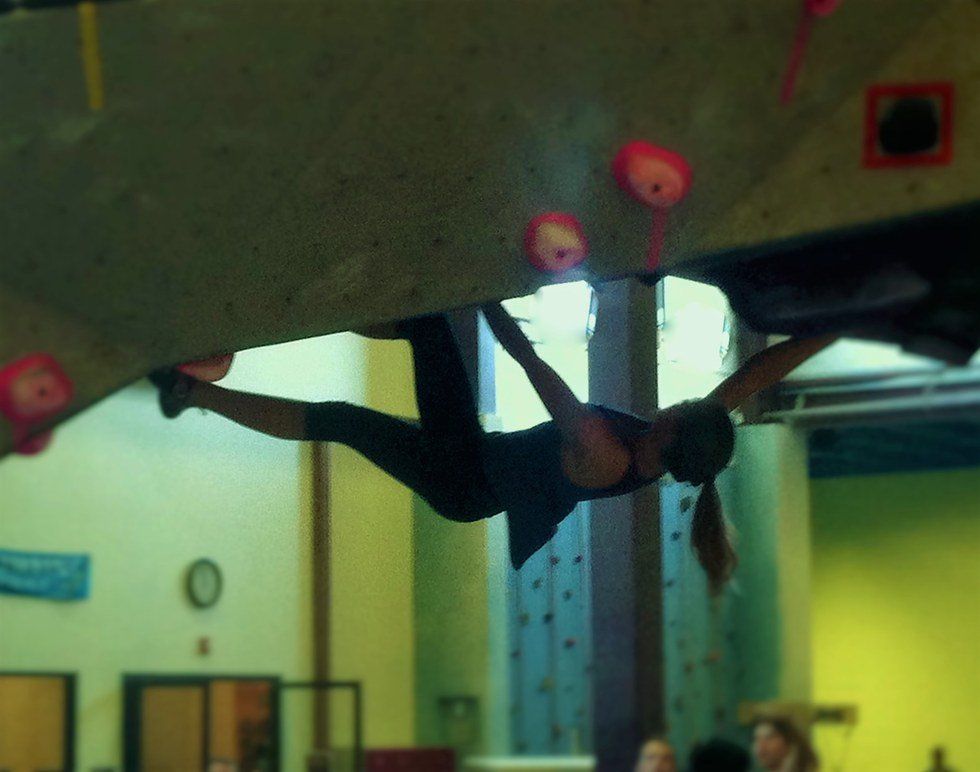
A combination of gravity and human nature usually work
together to keep our feet on the ground, but every once in a while someone
comes along who has a passion for heights and a love for climbing. Being a
good rock climber means being able to manipulate your body and mind to be able
to do things you would never have thought possible. It means hanging your entire weight on just the tips of your fingers, or tip-toeing your way up an impossibly smooth wall. You must be able to swallow you fear as you catch a glimpse the ground dozens of feet away. Being a climber is terrifying and pushes your body to its limit. But climbing is also the freedom of movement, the control of every piece of your body, the feeling of belonging in a community. It's connecting with people you've never even met over your love for the sport. To many climbers, it's more than just a sport- it's a lifestyle.
Every climber goes through a phase where they just can't seem to get over their nerves. For some it's the first few weeks, for others it takes months or even years to sink in, but everyone knows the feeling. The gut-wrenching realization of the 15 foot fall they're about to take. Whether they don't trust themselves, their belayer, or even their rope, it's as if their body goes completely numb. Their legs start shaking, and their hands clamp on to the holds so tight that even the simplest of moves seem impossible. A wave of overwhelming fear washes over them, and no matter who is yelling at them from safely on the ground, they aren't moving. But the best part of climbing is what happens when they learn how to move past the fear.
The most amazing thing about climbing is the true freedom of expression you get on the wall. Each climber can have his or her own style of climbing. Shorter climbers can work on more technical ways, while taller people use more dynamic movement. No matter what is going on at home, at school, or on the job, when you climb, it's just you and the wall. Every move teaches you something new about the route and about yourself.
When you are trusting someone with your life several times a week, you develop a bond that isn't found in other sports. Climbing with a team or even just a partner becomes more and more like climbing with family. You learn each others' climbing styles, weaknesses, and strengths. You see them at their best- after finishing their project- and their worst- after a long, hot workout. In order to place your life and safety in someone's hands, the climber learns to trust their partner on and off the wall. This creates a loving and trusting environment that helps the climbing community thrive.
Whether someone climbs for exercise, on a team, in a club, or on a team, it isn't something you can succeed at without complete commitment. If the climber doesn't like climbing, they aren't going to get good at it. Climbing is no easy sport- you're carrying your entire body weight dozens of feet up the wall- but it certainly has it's rewards.