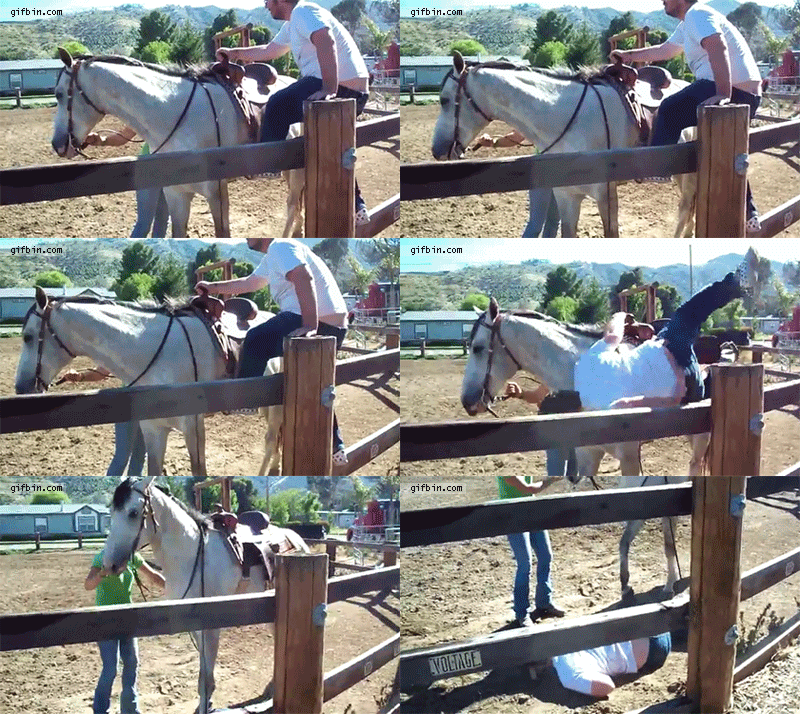
As an equestrian of 17 years, nothing frustrates me more than when people underestimate the difficulty of horseback riding. I can't tell you how many times I have heard some form of "all you do is sit there. Kick to go, pull back to stop. What's so difficult?" Well to start, I am sitting on the back of an animal that weighs almost a thousand pounds.
This is a living, breathing animal with it's own thoughts, feelings and opinions. Ian Fleming once said, "A horse is uncomfortable in the middle and dangerous at both ends." While the danger of being kicked or bitten on the ground is real, once I'm up in that saddle the whole game changes. There is no steering wheel, and I do not have a gas and break pedal. All that I have are two leather reigns in my hands and a whole lot of determination.
Riding is more of a conversation between horse and rider. A conversation with Mr. Ed (the talking horse, of course, of course) would be so simple, but unfortunately, most horses do not speak English. My job is to make myself and the conversation more interesting than whatever may be happening around us. Without the horse's attention, the horse is more likely to make all the decisions, which can be dangerous. With the horse's attention, it opens the conversation to let me convince the horse that they actually want to do what I want to do.
Sometimes, this conversation turns into an argument. "You mean you want me to canter around this circle, with connection and forward energy, and not stand in the shade and scratch my itch? Yeah, that wasn't really on my to-do list today." My instructor once told me, "If he says no, just be more stubborn," but being more stubborn than an animal who outweighs me 10 to 1 is not an easy task. Most people don't even know they have the muscles that are sore after a difficult ride.
When I get this kind of response from someone, I can give several different explanations to try and change their mind. On occasion, I just throw a bunch of dressage terms at them and watch as they get more and more confused by the complexity of the sport. But, more often than not, I simply ask them if they have a dog. Now, does your dog always come, sit, stay, or drop the ball on command, every single time? Unless they own Wonderdog, the answer is usually no. See where I'm going with this? Now imagine that your dog weighs 800 to 1,000 pounds, and you're sitting on it's back. Not so easy, is it.