
With the Summer Olympics in full swing and talented athletes shattering records left and right, rising to fame for their hard work and athletic prowess, the media's treatment of female athletes has aggressively come to my attention. So what's the big deal - what do people seem so upset about women being, apparently, praised by being compared to men? Why are we constantly "griping and bitching" as Donald Trump might say, about the downplaying of our successes or the unnecessary mentions of our marital status or age of our children? What is the media doing wrong?
 Well, it has a lot to do with the fact that these “compliments” only go one direction. I can’t think of a male athlete – or male anything – who has ever been compared (as a compliment), to a woman in his field as the male version of her. If it is done, it is only seldom and not by major reporting outlets. On the whole, this is a unidirectional trend.
This establishes that the standard we are all held to is the one set by men. We see this is all sorts of places, not just in sports. In storytelling (both movies, television, books) the male experience is the norm, the male narrative, the male gaze – stories about men are consumed by both men and women, while stories about women are just for women. In medicine even women receive poorer treatment because a good deal of research does not account for how men and women experience disease or react to treatments differently.
So when we compare female athletes to men, it says “women are good at this too” – which maybe would be a compliment 50 years ago, but today it’s just patronizing. Of course we are capable of these things. If you’re unconvinced, think of how ridiculous it sounds the other way: men can be good at basketball too. Or how belittling it sounds: men can be good parents too. Those sentences would establish women as the standard, with men struggling to keep up – but look, they can! How sweet. Not all of them, of course, just a few outliers. Remember for the most part basketball is a woman’s sport, so.
"Her [Katie Ledecky's] stroke is like a man's stroke. I mean that in a positive way. She swims like a man." -- fellow Olympian Connor Jaeger quoted in the Washington Post
"Meanwhile Katie Ledecky, who is being touted as the female Phelps, has broken her own world record to win gold in the Women's 400m freestyle." -- Daily Mail
The compliment of Katie Ledecky being the female Michael Phelps could be taken as a compliment if it was established these comparisons regularly went in both directions, because heck yeah – Michael Phelps is a beast. But as it stands, it feels like we’re just still trying to prove that women are capable of being kickass swimmers too (despite countless examples that we can be) - because, would you look at that, her stroke is so good it's as if she were a man!
People are still uncomfortable with praising women beyond the scope of their allotted spaces. A recent study out of UK's Cambridge University Press looked at the ways discussion surrounding men and women in sports differs. After analyzing 160 million words - in everything from newspapers, academic papers, tweets, and blogs - spanning decades, the study found male athletes are three times more likely than women to be situated in a sporting context when discussed; women are disproportionately described in relation to, you guessed it, their age (washed up!), appearance (gained weight), and marital status (still single?). Men also are given the privilege of just being a "swimmer" or competing in "uneven bars" while women are "female golfers" competing in "women's beach volleyball." If you try to Google search your way into proving me wrong, don't bother. There's the NBA and the WNBA, folks. Women are the after thought, the elective course, not the standard core curriculum.
Part of situating women within traditionally feminine places is because we just don't understand women without those markers - we don't know how to talk about women independently. That and we're scared to: a woman separated from her "femininity," as society would define it, is terrifying (partly because the bounds of femininity have always served to keep us in a safe place where we couldn't compete with, and therefore threaten, men).
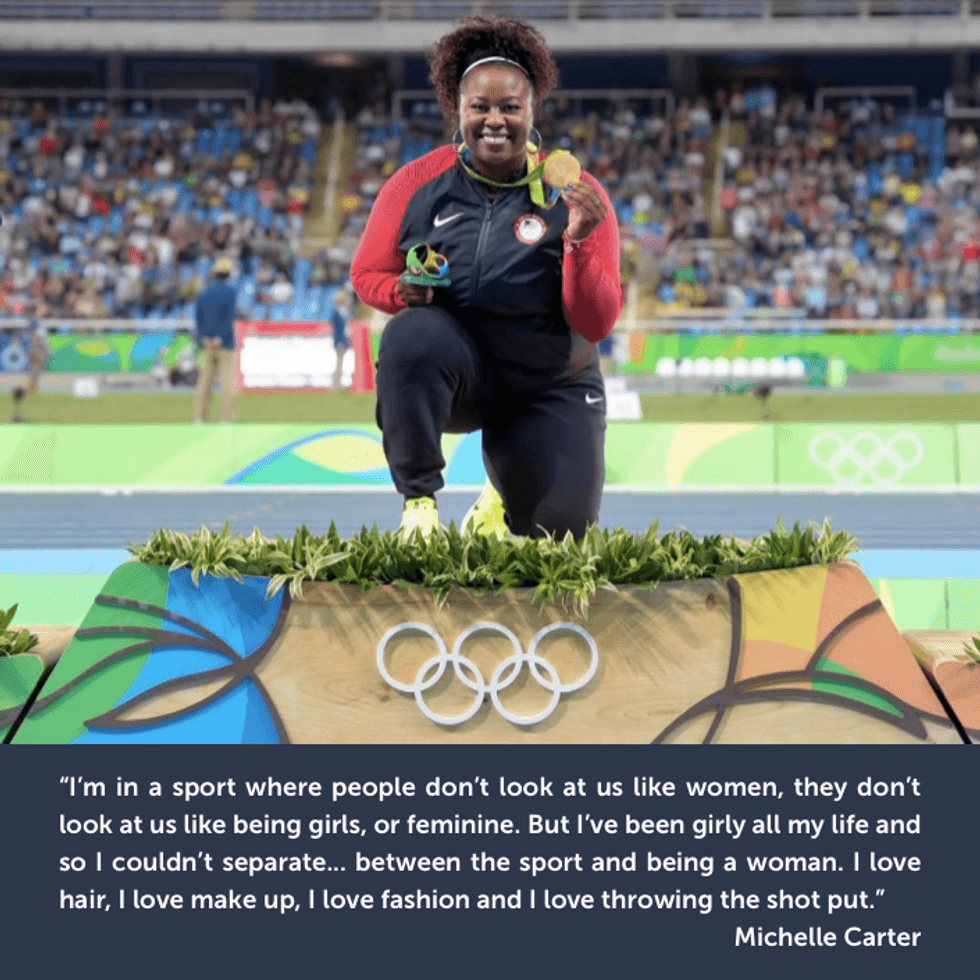
We're comfortable watching women's gymnastics - a sport in which the athletes still wear sparkly leotards and patriotic makeup, and weave elements of dance of model-like poses of elegance and sass between intense feats of athleticism - but less comfortable watching women's weightlifting. To be clear, I'm not trying to dig gymnastics, their uniforms, or their choice to wear makeup, only that we as viewers require those reminders of femininity to be comfortable watching it. Think I'm exaggerating? Fox News asked two people (coincidentally both men) if they thought female athletes should wear makeup to compete. Here's what they said:
“I think when you see an athlete, why should I have to look at some chick’s zits? Why not a little blush on her lips and cover those zits?”
“Would you put money behind a gal that won the gold medal that looks like a washed out rag?”
“Tamara, look how beautiful you are with that makeup. What do you look like when you crawl out of bed in the morning? I’d rather have you now.”
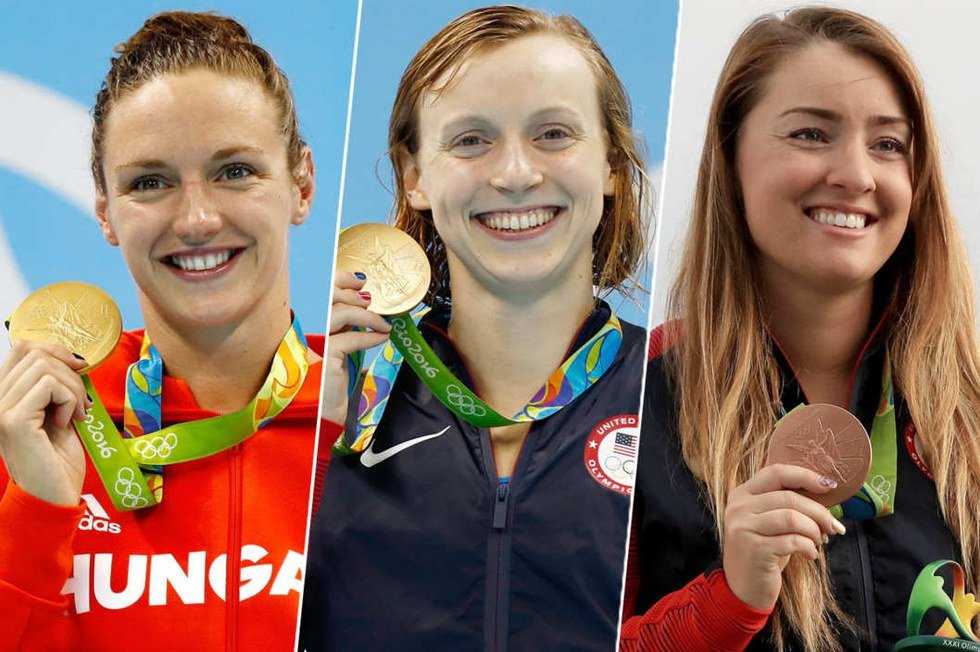
Once we look presentable enough, we face another hurdle: it's okay for women to be praised as wives, mothers, and homemakers, but beyond that in order to receive praise, we have to mention a guy to balance out all that estrogen. To understand Katinka Hosszú’s success, we explain it by giving the praise to her husband and coach (literally, according to NBC's commentators, who cut to him after she won, "there's the man responsible"). Instead of saying Corey Cogdell won a medal, we say the wife of Bears lineman Mitch Unrein did. Without men, women are like startling disembodied entities that we need to find a place for, and we ground them by attaching men to their narratives. A woman's success doesn't boost her own reputation, but serves instead to boost the reputation of the man who claims her.
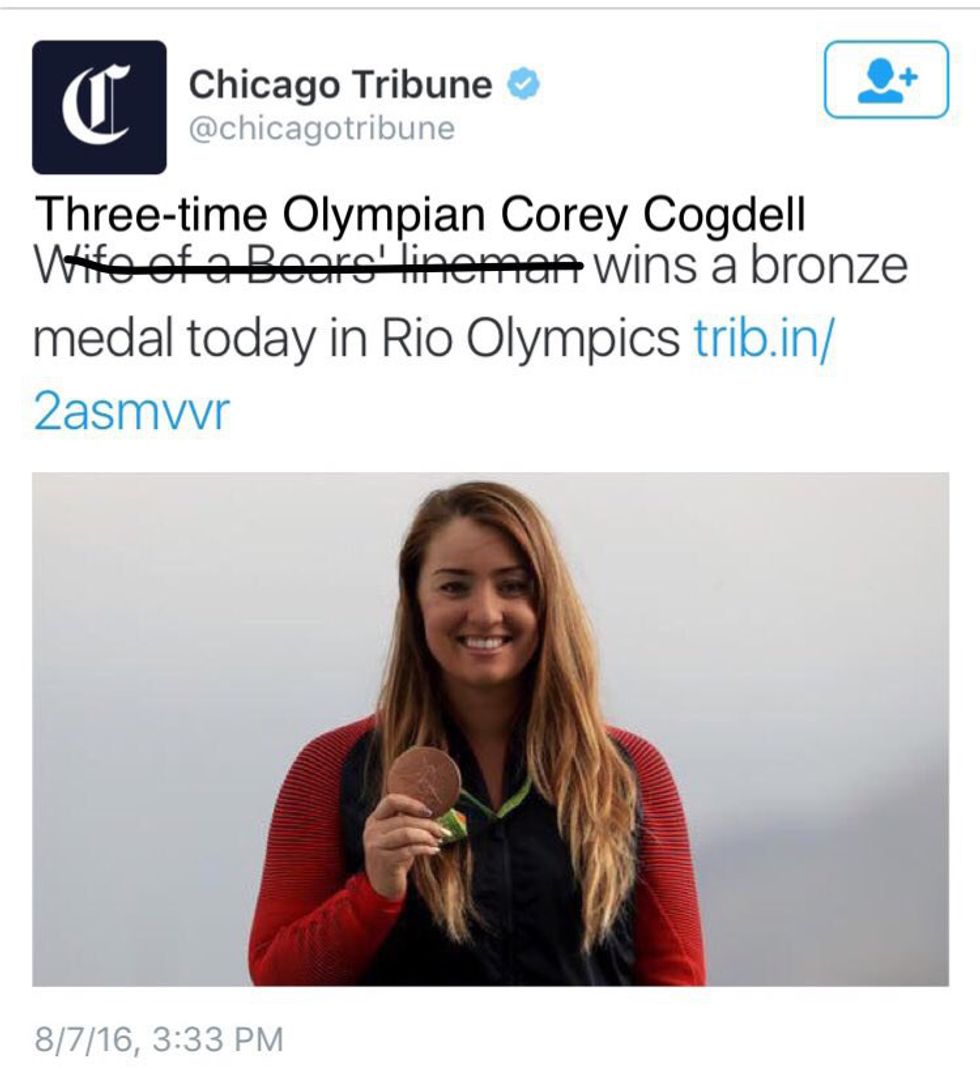
"As Jezebel pointed out, the Tribune’s article wasn’t much better. The headline ― 'Corey Cogdell, wife of Bears lineman Mitch Unrein, wins bronze in Rio' ― only referred to her achievement, but didn’t say in which sport. Nor did the story mention the fact that it was the second medal she’d won at a Games and her third time competing at the Olympics.
The newspaper article later went off on a tangent about her husband, saying the defensive end was in his second season with the Chicago Bears but 'was unable to get away from training camp to join her in Rio.'" -- Huffington Post
For some us, the men in our lives are a big part of our stories! Hosszú’s husband is her coach and life partner, and I'm sure she would say he is, you know, a big part of her life. But he's not responsible for her medal, he doesn't deserve her credit - we should be able to talk about women's achievements without bringing up men, because we certainly talk about men's achievements without bringing up women. We talk about men and women in sports (and science and business) totally differently. It would be less problematic for a story on a female Olympian to mention her children if we also saw stories about male Olympians that mentioned theirs (for example, Michael Phelps has an infant and that usually isn’t mentioned in the first few sentences, as it would be if he were a woman).
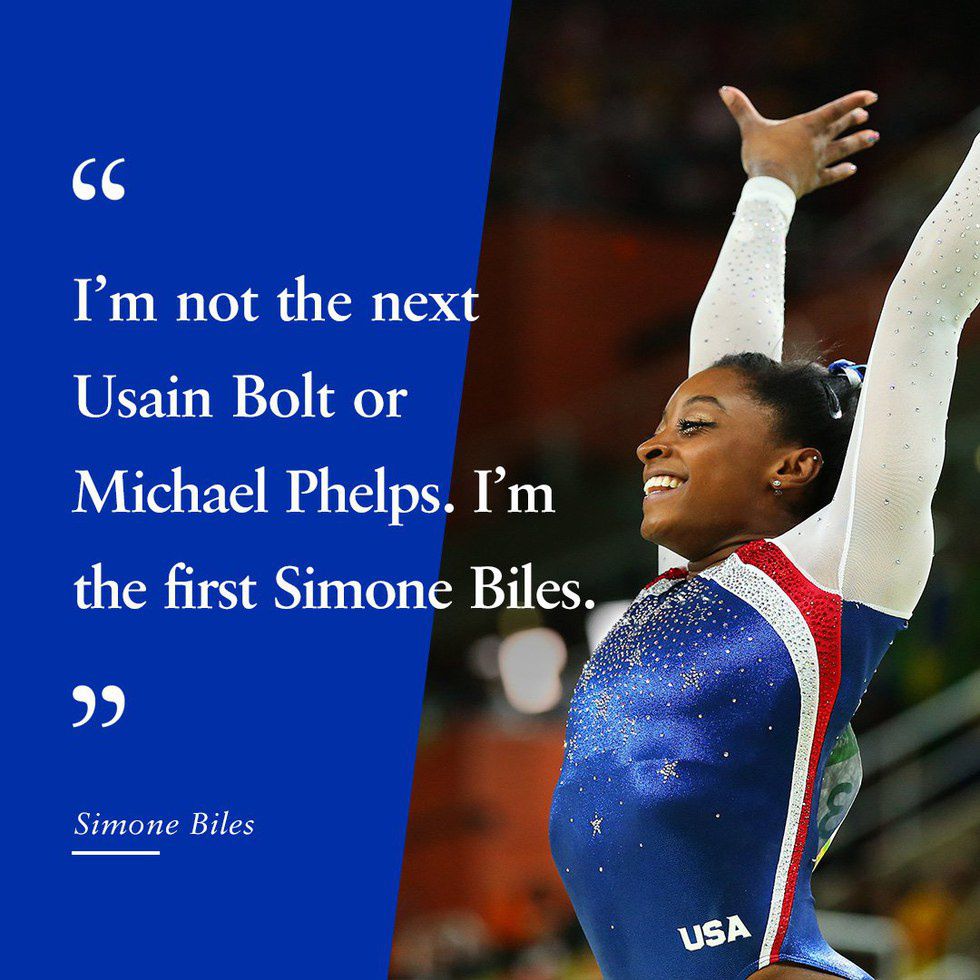
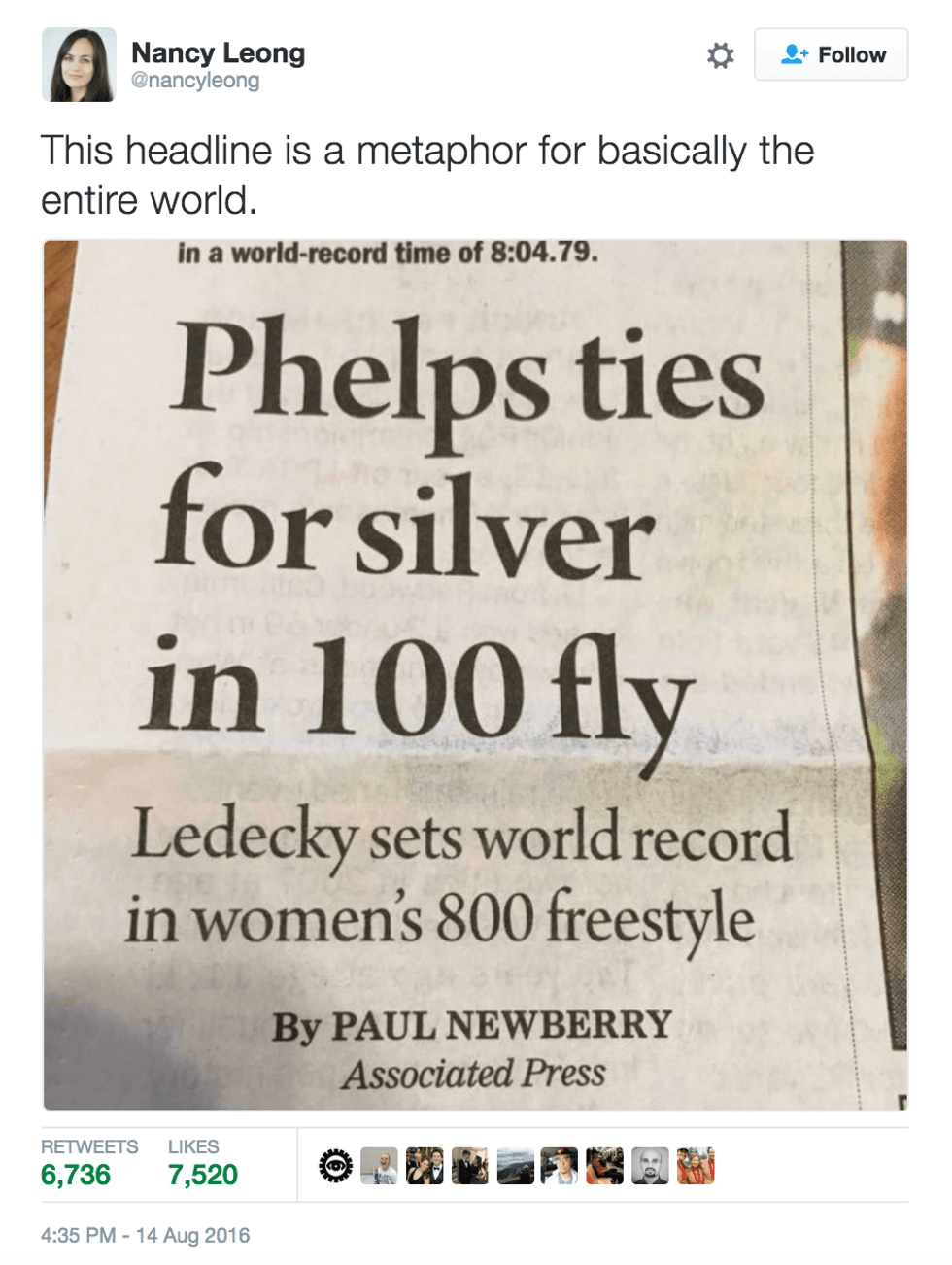
The reason these things bother women – as recipients and readers of the “praise” – is because it’s a constant reminder that we aren’t taken as seriously as men are (see, again, the newspaper headline mentioning Phelps' tie for silver and the mention of Ledecky's world record is smaller print below - seems like maybe her feat was a better contender for the large font? Just a thought). It's a reminder that people are still looking for reasons to take some of the credit away from us, to fit us into the narrow confines of where they expect to find women succeeding. Can we have a gymnast called the male Simone Biles? Or a swimmer the male Katie Ledecky? An author called the male Mary Shelley, Jane Austen, Roxane Gay, or JK Rowling? A scientist called the male Marie Curie, Rosalind Franklin? Until we compliment men this way, we shouldn’t be complimenting women that way. Both or neither, people. Of course, there’s always the option of letting successful men and women stand alone without the need to hold them up against other successful men and women to see how they compare.