
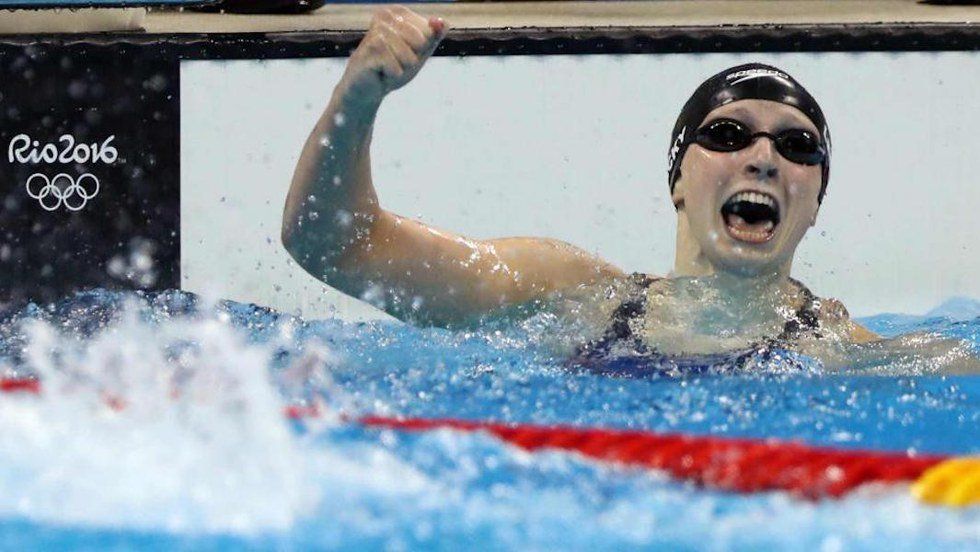
The Olympics are here again, this time in Rio de Janeiro, and we've already seen impressive displays of athleticism from women. Think: swimmer Katie Ledecky's world record in the 400-meter freestyle, gymnast Simone Biles' seamless performance on the balance beam, and university student Ginny Thrasher's gold medal win in shooting (the first gold won for Team USA in Rio). These three athletes all happen to be nineteen-years-old, but this hasn't stopped them from showing us all their diverse talents. Whether female athletes are competing in their first Olympics or their third, or even if some aren't from our home countries, we still cannot help but appreciate a record-breaking swim, sprint, or individual effort in a team sport. However, it seems that with exciting events such as these, the media will be posted nearby ready to deliver the latest news - some of which is undeniably sexist.
With female competitors making up 45 percent of athletes this year (compared to 13 percent several decades ago), one would hope that sexist rhetoric of the past would be absent from Rio's news coverage. Well, think again. You may think that sexism is long gone with an increase in female athletes in the Olympics, but you can count on the media to weave in casual, inappropriate commentary which reflects deeply embedded stereotypes. Regardless of whether the comments seem harmless or not, the issue is that even in an environment of the world's most adept female athletes, skill and technique are forgotten and pushed aside by questions about outfit choice, male influence, and body shaming.
Let us begin with American athlete Corey Cogdell-Unrein, who won a bronze medal in women's trap shooting. Coincidentally, this Olympic competitor is also married to Chicago Bears lineman Mitch Unrein.

"The Chicago Tribune," framing her victory around the career of her husband, announced her win with the title 'Wife of a Bears' lineman wins a bronze medal today in Rio Olympics.' What did she win the metal in? Is the mere fact that he is a recognizable athlete news-worthy? And most importantly of all, does she even have a name? I realize that there are more direct examples of sexism, but this instance tells readers that we do not need to know a women's name or the exact nature of her accomplishments so long as we include those of her husband. If Mitch Unrein is well-known for belonging to a sports team, what makes Corey's Olympic success any less newsworthy? Minimizing words on a headline is understandable, but this could have been done easily without total erasure of Corey's name and Olympic event. What may be a simple mistake to many is actually representative of how easily women's accomplishments are ignored to those of men.
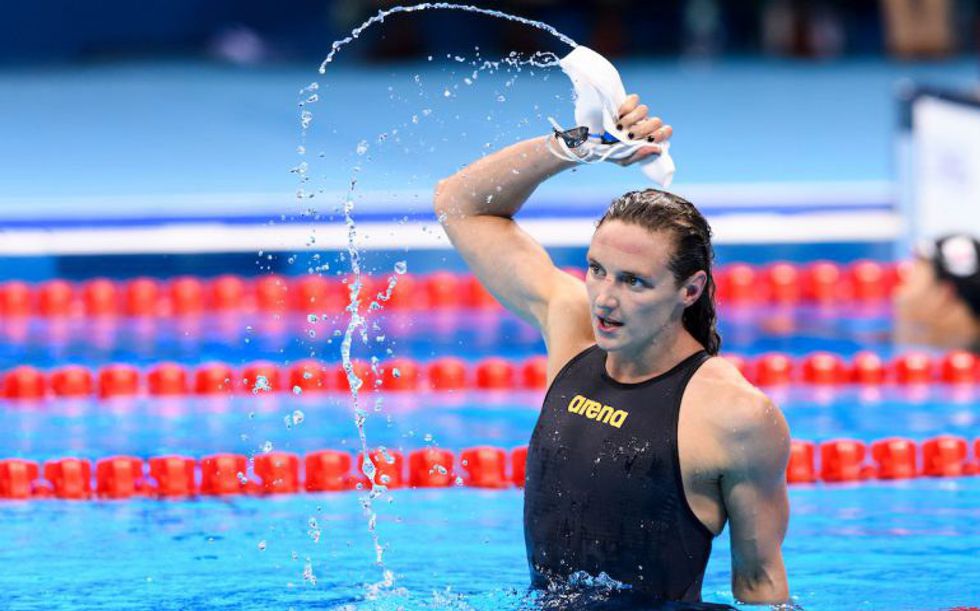
Back in the Olympic pool, Hungarian swimmer Katinka Hosszu crushed records in her 400-meter individual medley, delivering an outstanding race. As a former swimmer, watching her shatter the world record by two seconds was astounding. After Hosszu exited the pool, dripping in victory, the camera panned over to her husband-and-coach Shane Tusup, only for NBC sportscaster Dan Hicks to remark, "And there's the man responsible." At first, you might think, "This is no big deal! Coaches deserve credit for their athlete's successes, too!" Yes, it is true that excellent coaches can bring the best out of athletes. However, most athletes at the Olympics have coaches, and not many of them emerge from their events with world records to have their coach commended as "responsible" for their success. Especially not if these athletes are men. Acknowledging a coach's importance is important, especially after an athlete breaks world records, but sports commentators must be held accountable for the implications of their rhetoric. To all the viewers tuned in at the time, Hicks' instant commendation of Tusup took Hosszu's hard work and glory and made it his.
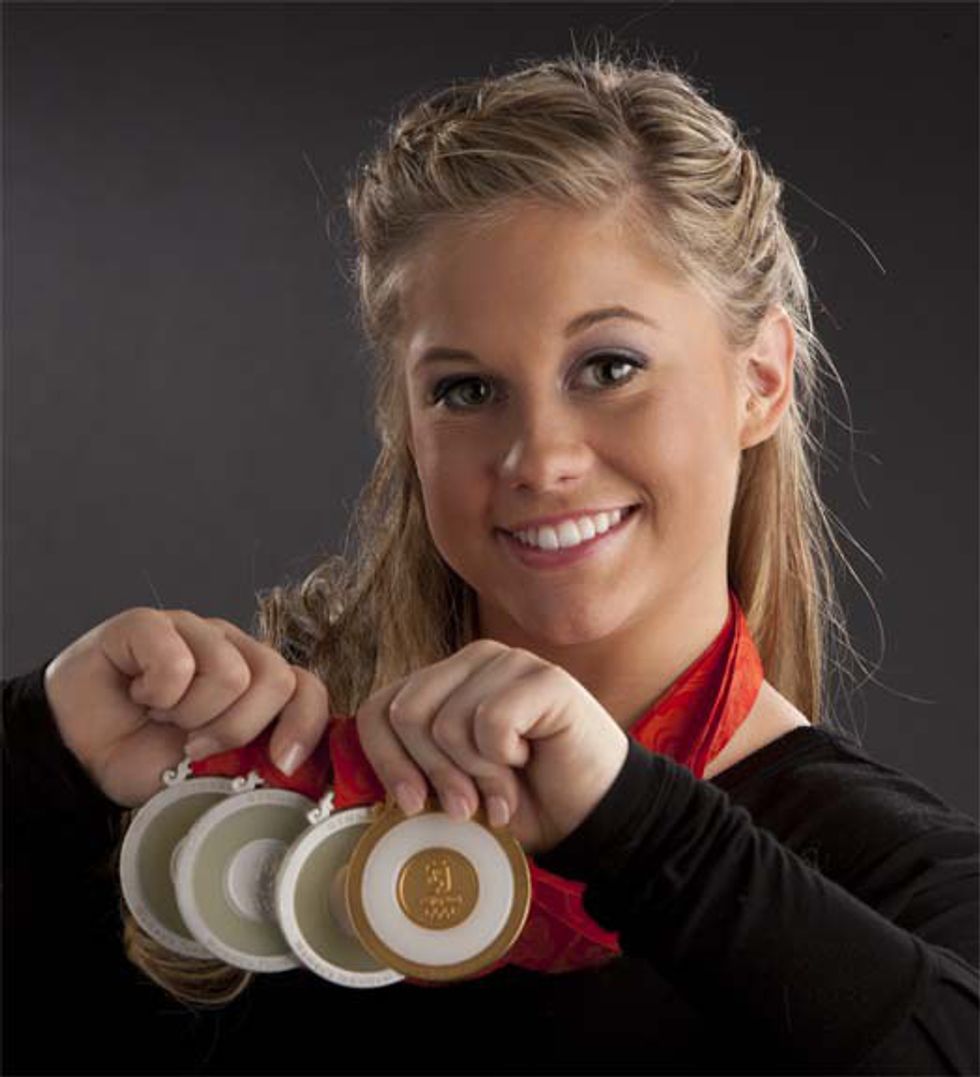
Olympic gymnast Shawn Johnson, who won gold in the 2008 Beijing Olympics for dominating the balance beam and silver for all-around and floor exercises, has spoken out on her experiences since retiring. "I was always compared to Nastia Lukin, my teammate, who was six inches taller, long and lean, and flexible," Johnson said. "I was what [the] media would describe as bulky, stocky, powerful, too big, too short, too fat." Johnson admitted that the media's focus on her body led her to focus on her appearance, hoping that this would improve her performances. However, claimed Johnson, "I remember sacrificing probably how I should've been training and eating and sleeping and resting, and focusing on my appearance more than my actual performance." Female athletes, more often than their male counterparts, are often scrutinized physically and bombarded with media commentary about how their bodies "should" look. When the media pressures female athletes to not only perform well but to somehow look a certain way whilst doing so, their athletic skills are devalued for the typical appearance-related criteria imposed on nearly all women.
We should all be familiar by now with the media's favorite hobby of pitting women against each other. By comparing Shawn and Nastia, both excellent athletes and friends with their own preferred events, we create an atmosphere of unhealthy rivalry among women. Unlike the competition between men, female competition is portrayed as vicious, and the discrepancies between each woman's portrayal is dangerous. If one succeeds, says the media, than another fails. Both cannot be celebrated and appreciated properly. When sexist rhetoric like this floods our media, it eventually leads us to see two women as enemies, dismantling healthy and common female bonds and replacing them with notions that women are petty and insincere. How many times have we seen magazines compare two women wearing the same dress while attending career-related events, focusing more on their clothing and appearance and less on their work? Soon enough men and women are so familiar with this concept that they assume "looks" and "rivalry" are common between any two women.
Let us return to the gymnastics arena and have a look at our latest team, one that has been dominating lately with its diverse and talented group of girls.
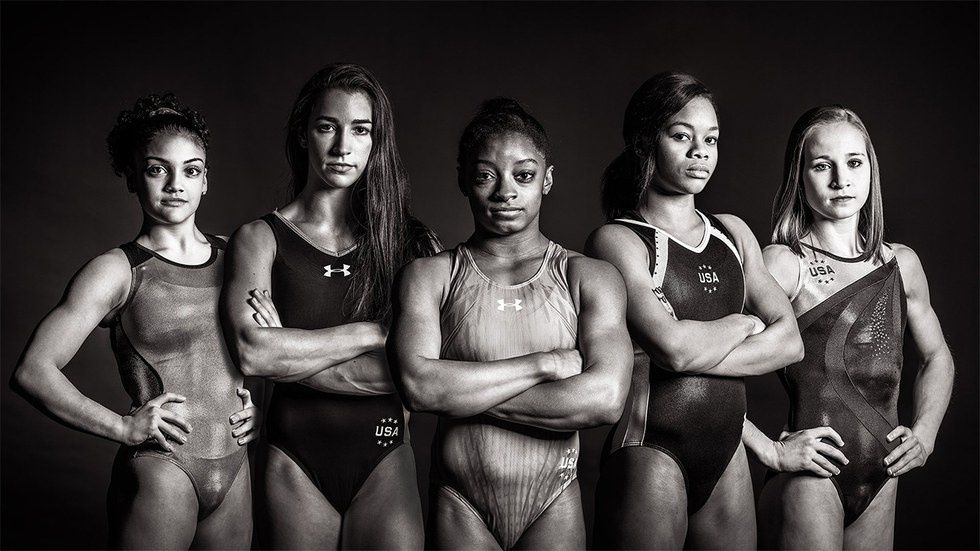
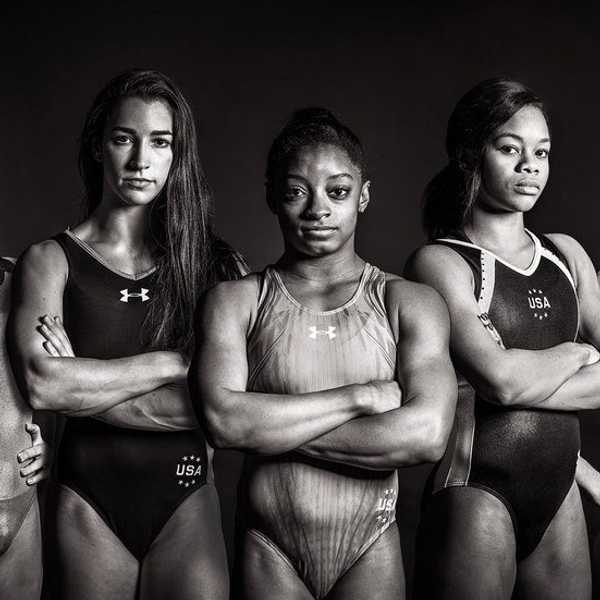
This year we have newcomer Laurie Hernandez (the first U.S.-born Latina to go to the Olympics since 1984), team captain and gold medalist Aly Raisman, Simone Biles (the first African-American to be world all-around champion) returning gold medalist Gabby Douglas, and Madison Kocian (2015 world champion on uneven bars). The controversy came after the team, who had dominated their competition in the qualifying rounds, was caught on camera laughing and engaging in conversation. As the camera caught the girls sharing a moment of victory and celebration, an unknown commentator said that the competitors looked like they “might as well be standing in the middle of a mall”. Why, do you ask, is this so disturbing? First of all, this would not be said of the male team, especially after an impressive athletic performance. This is not to say that girls and women cannot enjoy both sports and shopping, but by equating the female athletes' victory celebration with a trip to a location that typically speaks of materialism and appearance, the commentator trivializes their success. With countless other observations that could have been made, this is what the commentator came up with? In a position of influence and power, choosing to comment on something irrelevant reveals the ease of integrating judgmental comments into a sports event.
In addition, a Cambridge University Press study confirmed that, "in the media’s coverage of sports, men were three times more likely to be mentioned in a sporting context than women — who, meanwhile, were routinely described with regards to non-sporting issues, such as their age, marital status and appearance". If this isn't cringeworthy enough, NBC's chief marketing officer John Miller (who, judging by his title, has significant media influence) commented on how female viewers who are "not particularly sports fans" are to blame for delays and commercial breaks. Huh? Miller also added that "more women watch the Games than men, and for the women, they're less interested in the result and more interested in the journey. It's sort of like the ultimate reality show and mini-series wrapped into one. And to tell the truth, it has been the complaint of a few sports writers". What a surprise to learn that this man, who has quite the audience, is able to delve into the minds of women and declare their intentions and opinions regarding sporting events!
Female athletes deserve the same treatment and respect as male counterparts, and more often than not they are forced to bear the weight of not only their events but the dangerous media commentary on their bodies and accomplishments. If we can learn to adjust our rhetoric and give female competitors the same treatment, there will be significantly less trivializing and ridiculous questions for our athletes who work hard every day for success. Next time a commentator sees a female victor on the podium, he or she would be wise to comment on the gold around her neck rather than the cut of her attire.