Sometimes we are too absorbed in our daily lives, with what we have to do, the work we are required to do at work, the schoolwork to get done, and the time to set aside for both family and friends. Humans are very short sighted, in the fact that we cannot comprehend how others out there in the world are suffering and the first thought that ever enters our heads without us even trying is about ourselves and the plan we have for the rest of our day. However, that does not change the fact that others out there are suffering from wars, starvation, and destroyed homes. Now in these past months in the news, I have heard about the Flint water crisis, Zika virus reaching the U.S., the flooding in Louisiana, the Puerto Rico debt crisis, and the earthquake that caused many deaths and homes destroyed in Italy. It is great that these problems are gaining both national and international attention. Regardless, there are still other wars and conflicts happening in today’s world that do not gain this attention even though world leaders and professionals know about them.
The conflicts that I will discuss that do not gain as much attention as these other humanitarian problems are frozen conflicts. However, frozen conflict, which means a conflict with active arms has been brought to an end but with no peace treaty to conclude it, is not something that I would call these suppressed conflicts. I refer to frozen conflicts as suppressed conflicts because there was a time when in general these conflicts created a war between two entities and in time they ultimately dwindled out to a standstill between these two entities, but now and then there are individuals that take action against the opposition and decide to initiate a war.
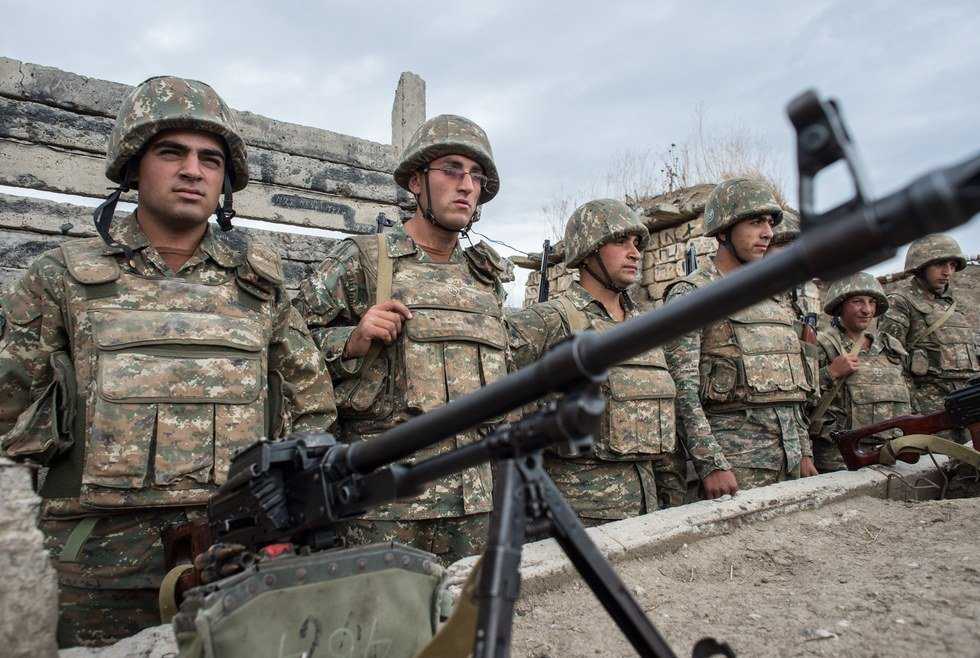
The first conflict I would like to discuss is between Armenia and Azerbaijan. There is a disputed area between Armenia and Azerbaijan called Nagorno-Karabakh. Armenia claims that it has rights over the territory that is in Azerbaijan land because the majority of the population are ethnic Armenian. Armenian and Azerbaijani people both blame each other for taking the others’ land and in 1991 each side initiated a full-on war. However, the conflict seemed resolved when Azerbaijan decided to not acknowledge Nagorno-Karabakh as a part of Azerbaijan, but as a third party in the war. Thus, a cease-fire was reached in 1994 with the help of Russian negotiations. However, despite the so-called cease-fire Armenian and Azerbaijani forces continued armed conflict with the use of tanks and artillery fire. The latest seen action in the region between the two countries’ armed forces was on April 2nd of this year. The Armenian Defense Ministry claims that Azerbaijan launched an attack to seize territory within the region and at least 30 soldiers were killed during the fighting, a helicopter and tank were destroyed, and 35 Armenian soldiers were reported wounded. About 147,000 people still live in Nagorno-Karabakh and if there ends up being an all-out war between Azerbaijan and Armenia over the land there will be major casualties, not including only the citizens of the region but for Azerbaijani and Armenian people as well.
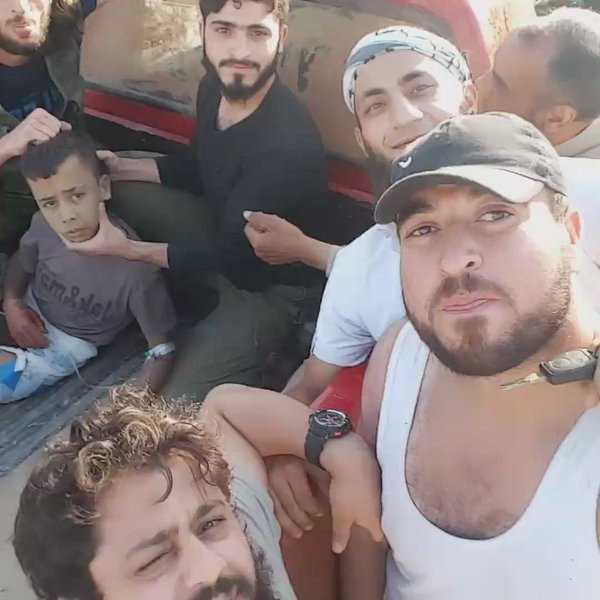
The second conflict is in Ukraine between Pro-Russian rebels and Ukrainian fighters. Fighting in eastern Ukraine, in the town of Debaltseve, began in April 2014 due to Pro-Russian rebels believing that Eastern Ukraine should be a part of Russia, due to the majority of ethnic Russians in the region rather than a part of Ukraine. Ukraine and Pro-Russian rebels came to a deal on September 5, 2014, to stop the violence. However, the cease-fire was not enforced and both sides continued fighting to take over the Donetsk airport (a symbolic asset of government forces). On January 22, 2015, it was reported that Pro-Russian rebels took over the airport. In the process of attaining the Donetsk airport, many casualties resulted including civilians, Ukrainian fighters, and the Pro-Russian rebels. Many homes were destroyed by the artillery used, such as rockets, tanks, and explosive shelling. Roughly 5.2 million people lived in the town of Debaltseve and are not only affected by the fighting but starvation as well. About 1 million people are displaced, including almost 120,000 children, without a home and trying to find refuge in neighboring countries. Food is being sent to the town but is not distributed to the citizens in the region that are really suffering and it only causes more distress.
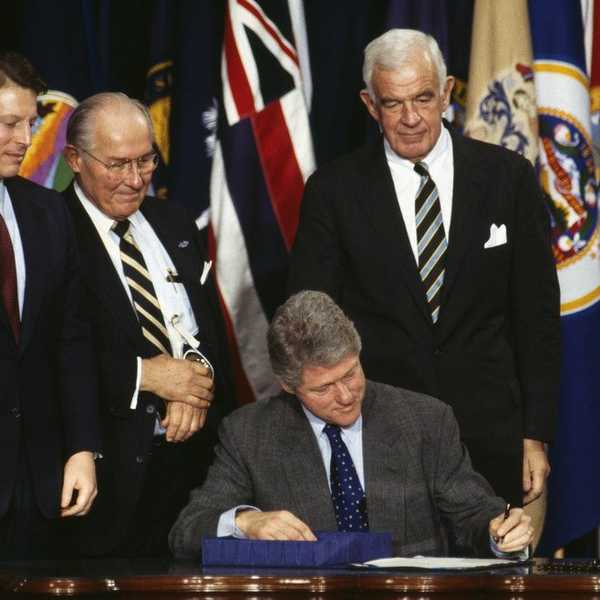
The third conflict I would like to bring to your attention is between the United States and Russia. It is not necessarily referred to as a frozen conflict because we are no longer in the age of The Cold War, but tensions have increased over the past decade or so. With every president we have had after the end of The Cold War, the United States has tried to have good relations with Russia. However, as NATO expansion inches closer and closer towards the Russian Federation, Russia feels as if it has to defend its territory from the United States forces. Russia feels as if its land and people are threatened by the expansion of NATO. In 1989, Russia and the United States made an agreement to end The Cold War, and in doing so the Soviet Union would disband and bring down the Berlin Wall, while the U.S. would stop NATO expansion. Although, many see today that the United States did not keep this promise and in turn, it has caused much Russian hostility towards Americans. It is one of the reasons why Russia is against American policy and the things the United States does as a nation. Russia has taken matters into its own hands to make its point that it is a world superpower, in which nobody can go against without retaliation or do anything without when it comes to international policy. For instance, on March 19, 2014, the Russian Federation annexed Crimea and made it a part of the Russian Federation. In turn, Russia was kicked out of the G8, decided on by a vote by the rest of the 7 largest world democracies, including Canada, France, Germany, Italy, Japan, the United Kingdom, and the United States. Of course, Russia blames the United States more than ever before for the action taken. If more disagreement and tensions keep flaring between Russia and the United States, we could potentially enter World War 3 and more lives would be lost than ever before.