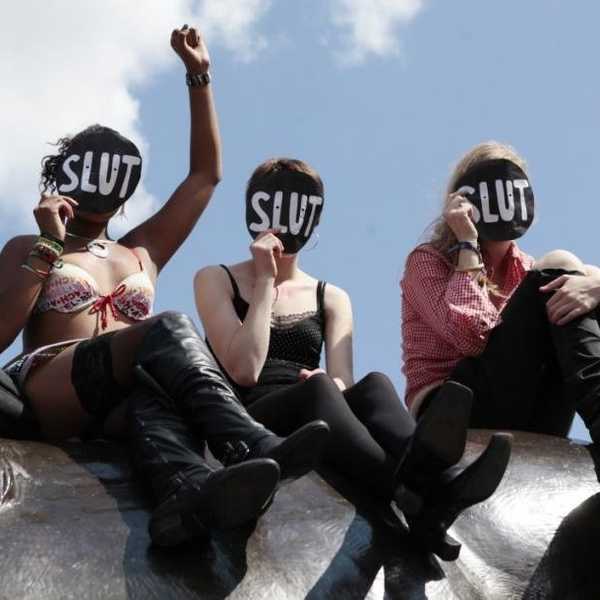

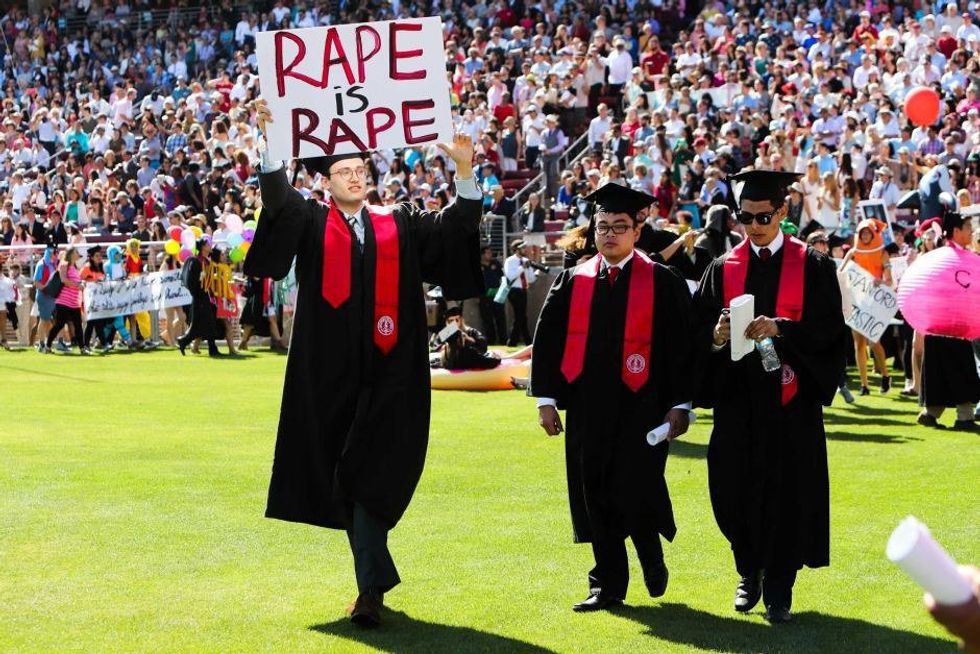
“Dude, I just got raped by that test,” “she was asking for it," “he probably liked it,” “boys will be boys.” Our culture is obsessed with rape and rape jokes. You can’t turn on the television without seeing yet another case of rape being announced by the anchorman. It seems that no matter what, you can’t avoid it. I’m not just talking about discussing rape, because there is a need for a healthy and mature discussion on the topic. I’m talking about the grotesque prevalence in our world in which we have heard so much about the act that we have become numb to what has taken place. Newscasters and judges have become blind to how a victim’s life is from that point on- changed forever.
The first story that comes to mind when I think about how our society handles rape and its aftermath is the recent case of the Stanford swimmer who assaulted and raped an unconscious woman behind a dumpster after a frat party in January 2015. The case went to court a few months ago and the criminal was given a minimal six months sentence in jail. On September 2nd, the rapist, Brock Turner, was released three months early from prison on bail. Three months. That is all he had to serve for ruining a young woman’s life for the rest of her life. Yet, all the news can pay attention to is his swimming career. Because, somehow, if you are a talented athlete it makes it justifiable to rape someone. Someone who can swim the 50 meter pool quickly can’t be that bad right? I mean, he goes to Stanford for crying out loud. What about his swimming career? 'He’s an Olympic hopeful,' says the media. They claim he was well-behaved in prison, he will have to register as a sex offender, woe is him.
Has anyone mentioned the victim? We keep hearing about this poor, poor young man who just made a mistake and raped a woman (oopsie, his bad), but we hear nothing about her mental health. If the media would take the time to read her entire emotionally loaded impact statement, they would see a different light of this “talented young swimmer.” After she realized she had been raped she says, ”After a few hours of this, they let me shower. I stood there examining my body beneath the stream of water and decided, I don’t want my body anymore. I was terrified of it, I didn’t know what had been in it, if it had been contaminated, who had touched it. I wanted to take off my body like a jacket and leave it at the hospital with everything else.” How would you like it to no longer feel comfortable in your skin? To have the place where you are supposed to feel safe and grow as a person and be protected completely infiltrated and polluted by vermin is a thought that makes me want to vomit.
For the rest of her life, this woman will have to work through the PTSD and the emotional scars that follow this kind of abuse. She will be afraid to walk alone at night, she will push away those closest to her, and she will have to see her abuser’s face all over the television. I can’t fathom how she must have felt watching the television that morning, witnessing the law, the very thing that is supposed to protect its people and serve justice, fail her. Yet, “what about his swimming career?” asks the media.
This detestable case is just one example of dozens of cases across the US, for both male and female victims, in which the act of rape is tossed aside. The act of rape has become a normality, just another story on the nightly news. We are so used to hearing these stories that we brush them off. We see these stories on TV shows, in books, online, and even in our own personal lives. And the story is always somewhat the same. The victim is blamed for drinking too much, wearing too short of a skirt, giving off mixed signals, or never having the voice to say "no" because of the shock of it all. Cases like these are reasons why I am uneasy walking from my car to my house after getting off a late shift, reasons why I make my friends let me know that they have gotten home safely when I know they are out and about, and why I am afraid to be alone in the presence of a man. The rape culture that surrounds this nation is sick and twisted, but we can change it. We can change the discussion from one of victim blaming, jokes, and bad feminism to one of truth. A discussion in which everyone is heard and we actually get to solving the problem instead of adding to it.