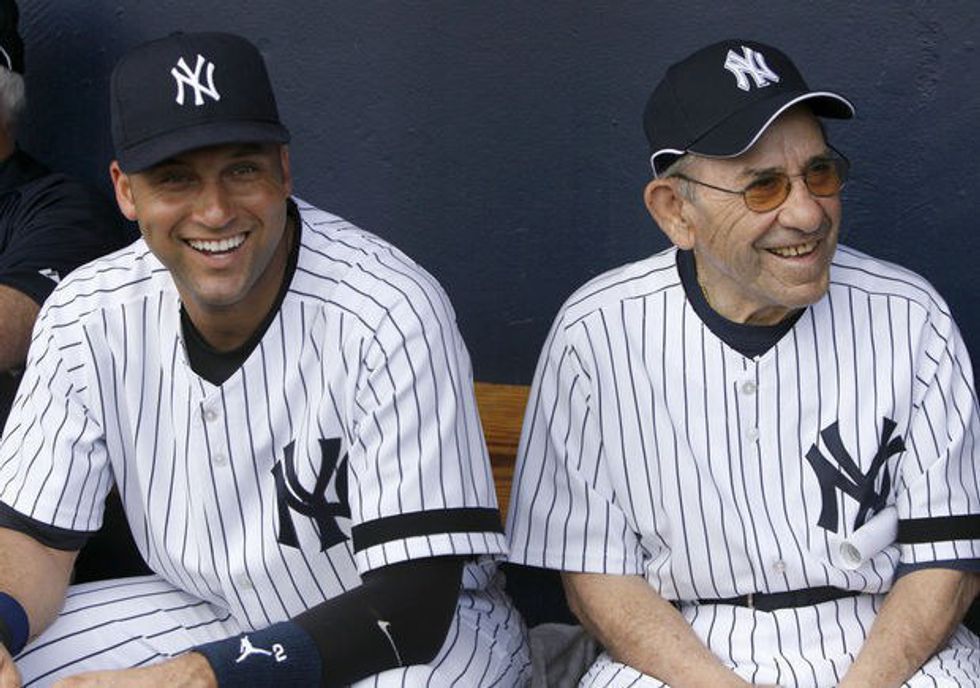
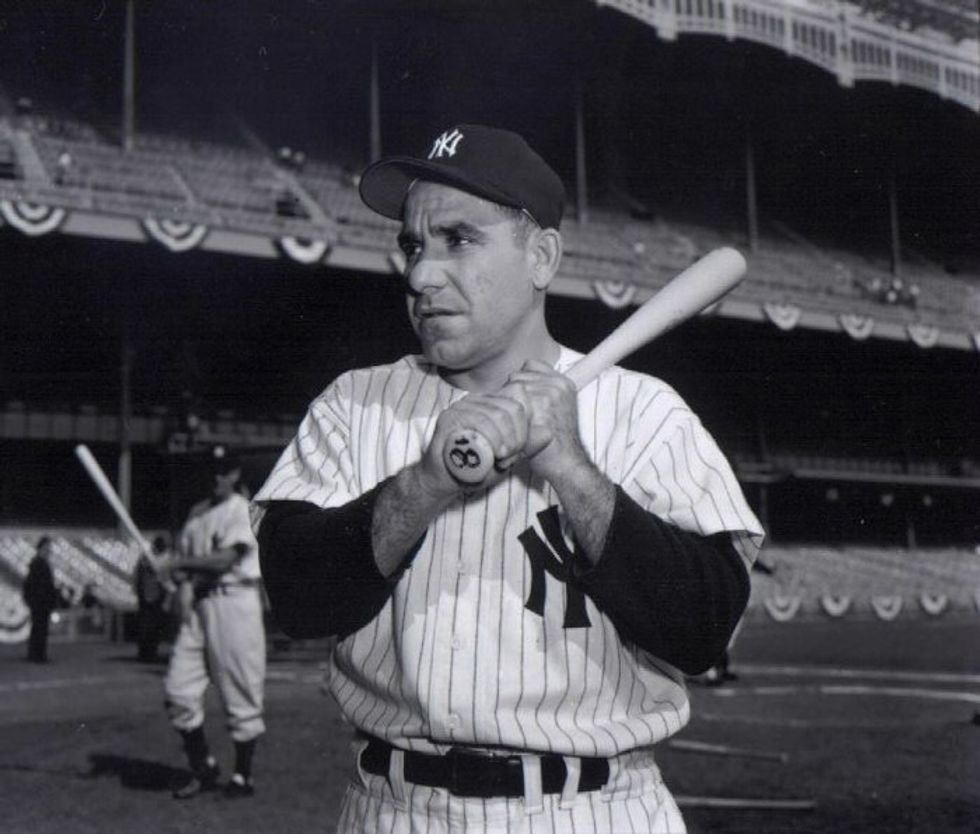
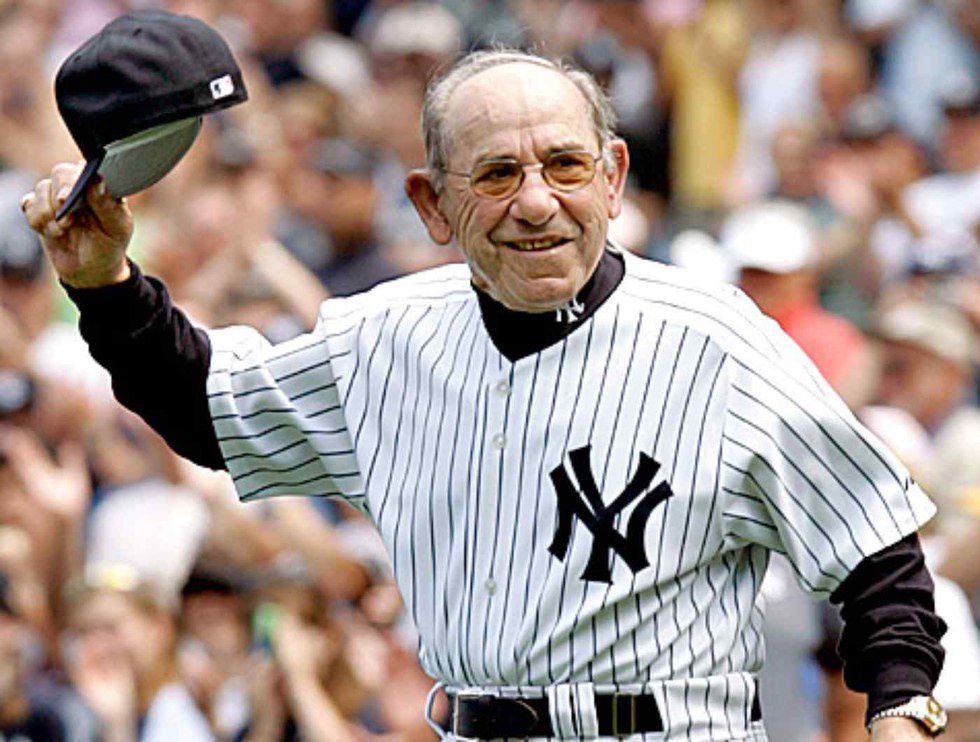
Yogi Berra is perhaps one of the most revered icons in all of baseball. Exactly 69 years after his first game in Major League Baseball, the Yankee great passed away on September 22, 2015. A phenomenal catcher, manager, World War II veteran, and jokester, Berra leaves behind a legacy as absurd as some of his "Yogi-isms."
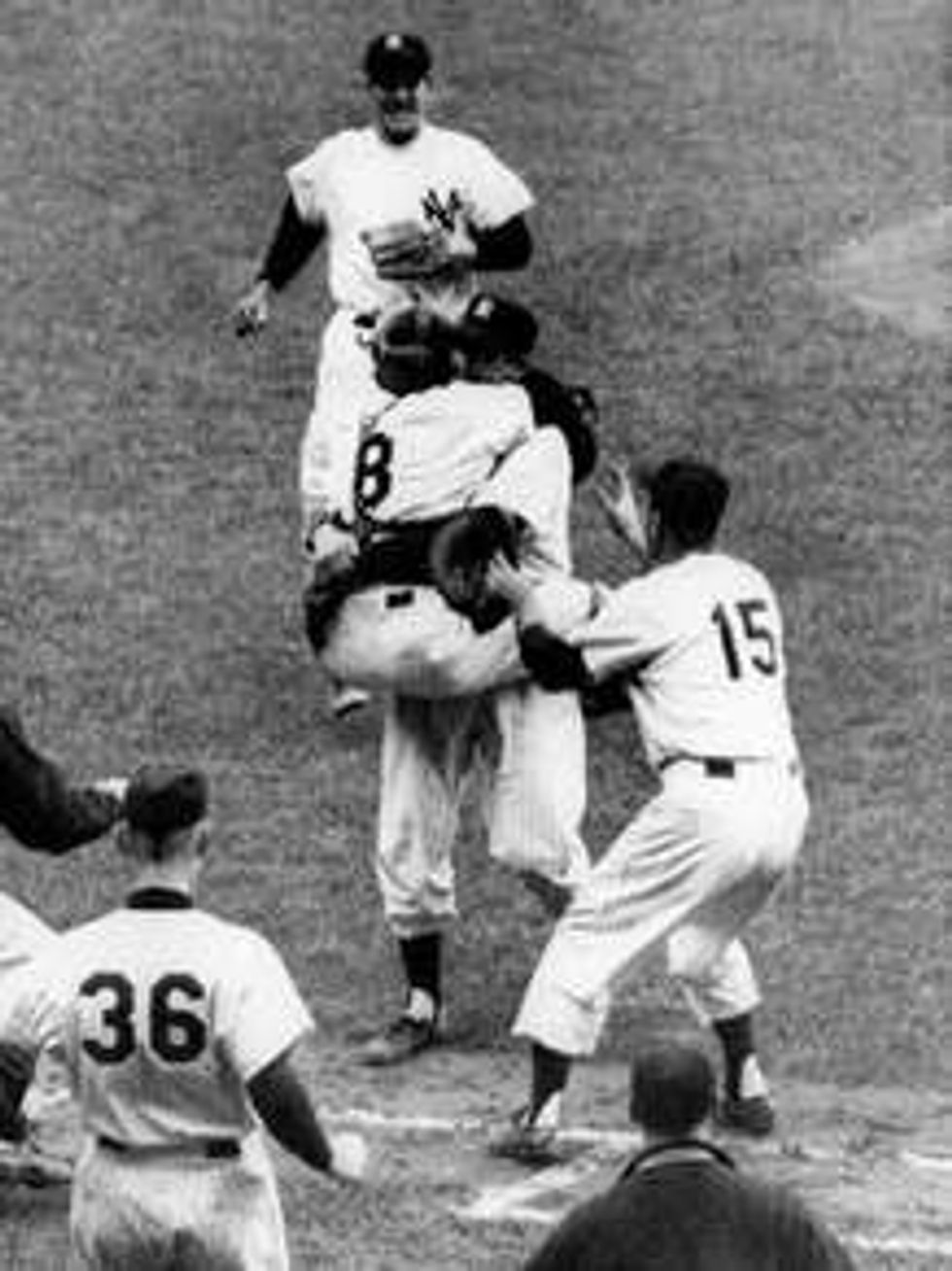
An 18-time All-star, 10-time World Series champion, and one of only five people in history to win the American League Most Valuable Player Award (1951, 1954, 1955). Despite being mocked for his short stature, Berra is one of the most accomplished players in the game's history. He was one of the most successful power hitters in the major leagues, compiling World Series records in games (75), hits, at bats (75) (259), doubles (10), singles (49), games caught (63), and catcher putouts (457). while playing alongside legends from the Golden Age of the Yankees like Joe DiMaggio, Mickey Mantle, and Roger Maris. Inducted into the MLB Hall of Fame in 1972, one of Yogi Berra's most remarkable feats is that he caught Don Larsen's perfect game in the 1956 World Series. One of the highest, most recorded and memorable points in sports history is after the 27th out of Game 5 of the Series, when the elated Berra leaped into his pitcher's arms after he'd made history, becoming the first pitcher to throw a perfect game in the post-season.
After a sensational playing career, Yogi Berra went on to manage and coach the Yankees, Mets, and Astros before retiring in 1989. He'd return to, and win, the World Series several more times.
While Yogi Berra was sensational in what he did on the field, his off-the-field track record is just as impressive. A World War II Veteran, he fought in the D-Day invasions of the Normandy Beaches in 1945, one of the largest military assaults in the history of modern warfare. Although he'd signed a contract with the Yankees in 1943, his career was stalled temporarily because of the international crisis. Some of the things I find most fascinating about this generation of baseball players are that so many of them had contracts to play baseball but left to fight for their country, and also that players at this time received such low salaries that they often had to work other jobs. It's a stark contrast from today's culture in Major League Baseball where stars are earning upwards of $1 million per game. After coming back from the War, Yogi quickly rose up through the ranks and soon became a sensation. He, along with other stars like Ted Williams, Joe DiMaggio, and Stan Musial are among baseball's greats who had to put baseball on hold to fight in World War II.
Perhaps the thing that will live on most vividly about Yogi Berra are his "Yogisms," whacky quotes and pieces of advice like, "It ain't over 'til it's over," "It's like déjà vu all over again," and, "you can observe a lot just by watching." Berra dropped out of school after the eighth grade and was often playfully ridiculed for his "isms." "I really don't know why I say them, it just comes out," he once told CNN.
Yogi Berra is one of baseball's greatest. He was one of the last of the truly sensational old-timers remaining from the Golden Age of the Yankees including Joe DiMaggio, Mickey Mantle, Don Larsen and Whitey Ford. I'll never forget going to Yankee Stadium, one of my favorite places in the world, as a young girl and admiring his retired number 8 in Monument Park. He leaves behind a legacy and a witty, fighting spirit so deep and so expansive that few people will ever be able to compare. As per usual with Yogi Berra.
Rest in peace, friend.