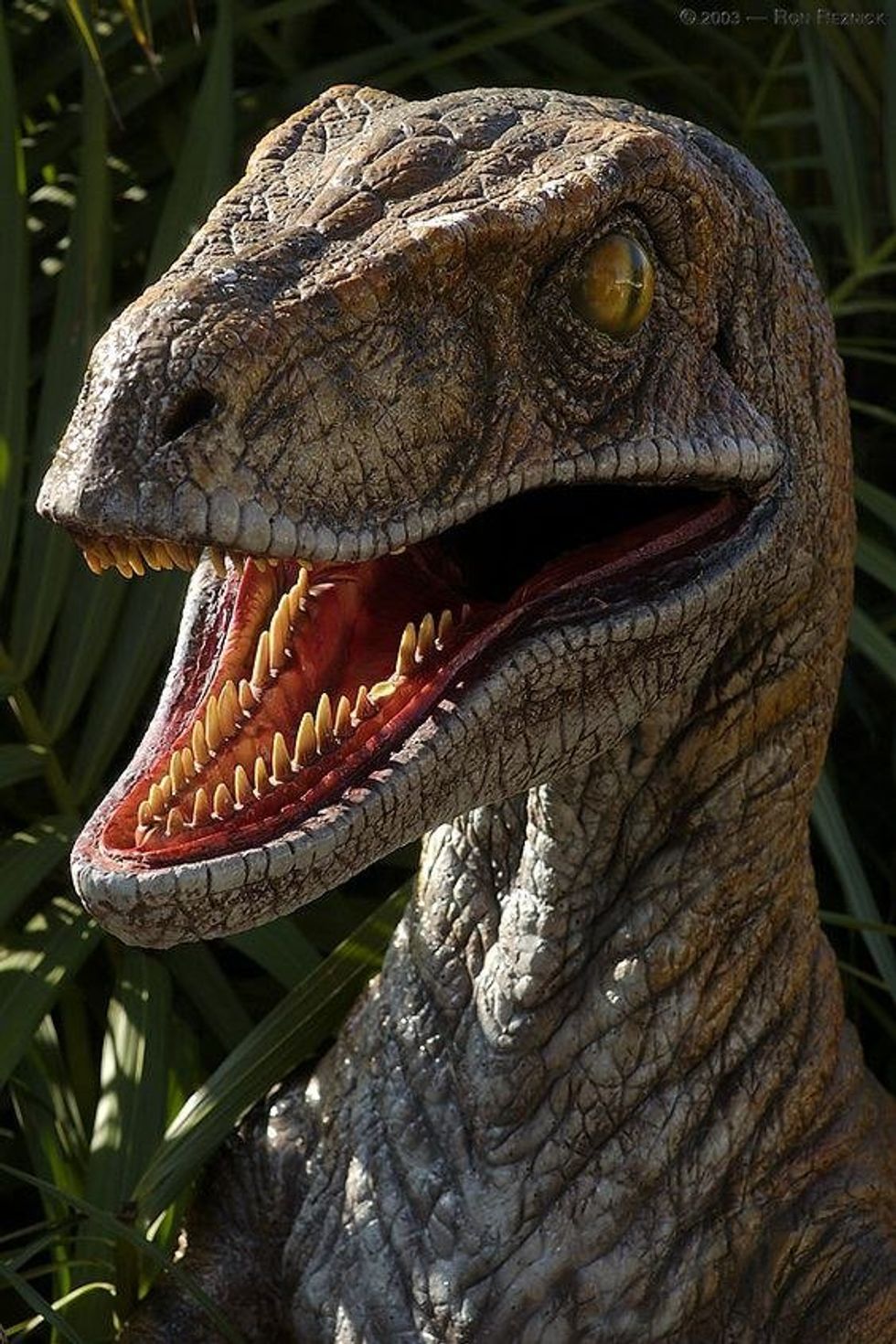
It is common knowledge that the human species pretty much got the sloppy seconds of Earth. You know, post-dinosaur. But on the other hand, we weren’t completely wiped out by a so-called meteor. We’re the self-proclaimed dominant species. Although, in reality, we would’ve been little match for the prehistoric monster. But, interestingly enough, the question has been raised, were they really wiped out?
Movie franchises like “Jurassic Park” make coexistence between humans and dinosaurs seem feasible…when we’re completely separated by massive electric fences and they’re nothing more than a theme park attraction to us. However, recent research has piqued the question, were the dinos really completely annihilated? Or do they still walk among us, disguised?
Everyone is so terrified of the famous Tyrannosaurus Rex. “Jurassic Park” did a phenomenal job of portraying that beast as a creature of nightmares. It is debatable if the T. Rex did evolve into a species that walks among us today. However, there is no land animal in our reality that has that kind of massive presence.
However, the smaller, faster, smarter, albeit scarier dinosaur that is quite possibly with us now is the velociraptor—or at least the raptor family. I know, your mind flies automatically to the famed kitchen scene in the end of “Jurassic Park.” Something you probably didn’t know, however, is that the creatures portrayed as raptors in that franchise, anatomically correct to the deinonychus (Di-non-y-cuss), are a cousin species of the raptor. In “Jurassic Park 3,” we see raptors portrayed again, this time with feathers on the tops of their head. But in the recent film “Jurassic World,” the raptors are portrayed without feathers, just as they were in the first movie.
The second version of raptors in the “Jurassic Park” series is actually more accurate to what the animal truly looked like - or we can assume. In 2013, in Mongolia, a fossilized forearm of what was believed to be another species of dinosaur was excavated. Paleontologists later realized that this fossil was part of a velociraptor.
According to National Geographic, “Recent research suggests that Velociraptor Mongoliensis was a feathered dinosaur. A forelimb fossil discovered in Mongolia showed quill knobs like those found in many modern birds. These tell-tale features are evidence of where ligaments attached flight feathers to bone and are considered proof that Velociraptor sported a fine, feathery coat.”
However, the length and anatomy of the creature’s arms would have made flight impossible, according to National Geographic paleontologists. When you think of what modern creatures shares these newfound characteristics of raptors, you can pretty much argue that any non-flying avian species could be connected, such as the flamingo or penguin. But due to the raptor's height, agility and speed, one particularly stands out - the ostrich.
It is commonly believed ostriches are in some way descendants of the Velociraptor Mongoliensis. They share the same height, between 5 and 6 feet, they are both fast-moving, vicious creatures (yes, ostriches are quite rude) and they both cannot fly. If you compare the literal anatomy of the two beasts, their skeletal structure is extremely similar. This begs the question, are the creatures of the Earth's past still living among us, disguised as what we do not fear?
If velociraptors are the ancestors of ostriches, who is to say that other animals in our present day world are not also descendants of dinosaurs? The truth of it is: it’s plausible, and not only is it plausible, but it’s probably a true fact. This assumption poses an interesting question, what really did wipe out the dinosaurs? If the species had the opportunity to evolve, that means that there must have been some survivors of the apparent obliteration.
What really did happen 65 million years ago? Is a “Jurassic Park” concept doable? Is it wise to act on such an idea? But the core question is this: how much do we really know about the creatures that coexist with us today? Humans are the products of millions of years of evolution, who’s to say that every other animal isn’t as well?






 man running in forestPhoto by