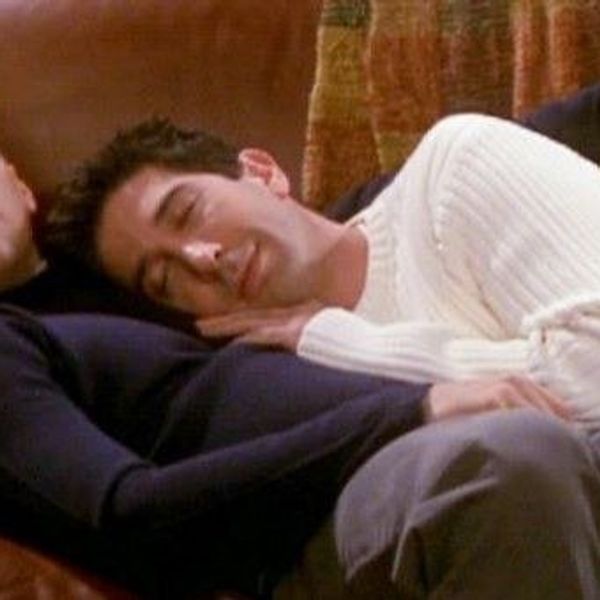


I was on the phone with my mom last week, and we had a conversation that I swear has been happened countless times since I left for college. The highlights of my mom's part of the conversation were pretty much like this:
Are you getting enough sleep?
Why don't you just take a quick nap?
Yes, Victoria, it is possible to take a nap that's less than two hours.
If I'm being honest, sleep isn't my main priority right now. But I do love to nap, and I have taken more naps in college than I did for years before I got here. I would rather sleep for four hours at night after finishing an assignment, go to class, then crash as soon as I get home. So of course, that got me thinking: Why is it that I feel better off taking a nap in the middle of the day rather than just getting a full night of sleep?
To start this off, I went and searched online (in the middle of the night) for some actual evidence. Time Magazine published a great article last year about if it's actually good to take naps. And the conclusion is that the benefits of napping are only really apparent if you're sleeping a regular amount at night.
Which, to me, is crazy.
In that same article, Dr. Sara Mednick, who is a psychologist at UC-Riverside, says that naps -- which she defines as under 90 minutes of sleep during the day -- can be just as "restorative" as a full night's sleep for some people. They can also improve brain functions such as memory, focus, and or creativity.
Other sources also say that if college students need to take naps, they should keep it them to 20 to 30 minutes. Which, again, is crazy.
I had a conversation with a friend and we established that, at least while in college, 30-minute naps are unheard of. I haven't taken a 30-minute nap since I was in kindergarten. And I don't plan on going back to that. I've only known two people in my life who enjoyed naps shorter than 20 minutes: my dad and my grandpa. And to me, that still doesn't make sense.
The lifestyle that students have to adapt to while in college pretty much demands naps -- even if you only take one nap a week, or if that nap is you accidentally passing out in the library while you're studying for you next test. College students need about seven to nine hours of sleep a night, and we are constantly staying up until 2 or 3 a.m. and waking up at 7 a.m. or earlier to finish an assignment, or to finish reading, or to do any other multitude of activities.
Students in college nap to deal with lack of sleep, for one, but also many take a short nap or even just close their eyes for a few minutes to deal with the stress and anxiety of college life. That is normal for us.
However, it is true that excessive napping can be an indicator of deeper health issues. Whether that be emotional, mental, or physical health ailments. If you or a friend is napping more than usual but feeling groggy, or worse than before you went to sleep, there could be an underlying problem. Napping is not an adequate substitute for actually sleeping, which leads to my next point.
But to get to the point: I think that we, as students, need to start taking better care of ourselves. Getting two hours of sleep for an entire day just doesn't make any sense. Pulling all-nighters is kind of inevitable when you're at a competitive university, but if you think about it, your body can't handle that kind of stress on a regular basis. For the people who claim they can run off of the fumes of coffee or energy drinks: it's scientifically proven that naps are better than caffeine.
If you go back to Dr. Mednick from the Time article, she says that there are apparently "natural nappers": people who thrive when they nap, and who do poorly when they don't get to take that daytime rest. These people make up about 40 percent of the population, and I think that it's a serious possibility that all of those people are in college.
So from now on, if anyone questions your napping habits, you can say that you're a natural napper.