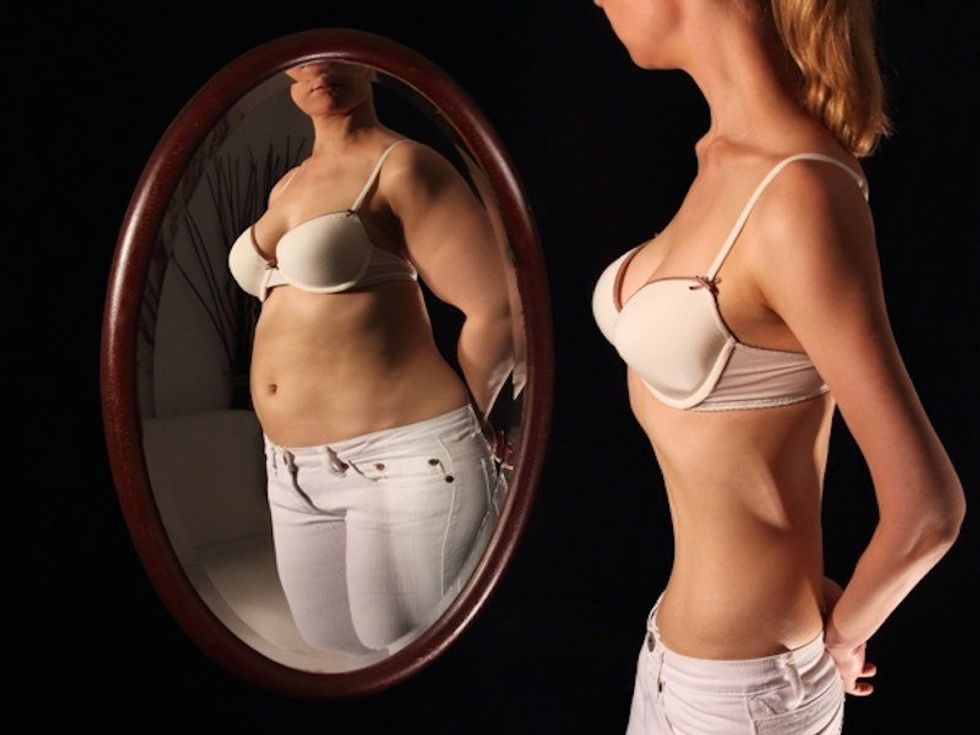
Anorexia is a commonly known eating disorder. It is taught during health class in school systems, celebrities are shamed about it in tabloids, and television shows such as "Full House" and "Lizzie McGuire" have created episodes about it to raise awareness. The flaws with all of these are the fact that they are incorrectly explained- there are so many points that are either left out or untrue. I myself believed all of these lies until my best friend became anorexic. Through my support of helping her through recovery, I learned so much about the disorder. I want to raise awareness about the reality of this disorder, and I want to put an end to these misconceptions.
Misconception #1: A person chooses to be anorexic
Often times, people are taught to believe that a person will decide they are too fat and will stop eating one day. This is absolutely untrue. Although the idea of losing weight can be a factor in anorexia, the reality is that it is a psychological disorder. A person who develops anorexia feels out of control about something, and their brain forces them to control their eating. The disorder can be compared to a firefighter putting out a fire. The eating disorder is oddly meant to comfort people and ease their mind away from something traumatic that they are experiencing in their life. Often the real cause is subconscious, and it can take months to figure out what the actual cognitive reason behind the disorder is.
Misconception #2: It is simple to cure
If I had a penny for every time I heard people say to people with anorexia to "just start eating again," I would be rich. It is often believed that people with anorexia refuse to eat. Even once they become aware that they have a problem and need to eat, they simply cannot. Once a body gets used to being restricted and being on a certain diet, it takes training to be able to eat again. If a person with anorexia tries to go from eating small snacks as meals to trying to eat a full meal, they will become sick. Also, after a certain point, the body no longer feels hungry, so eating anything becomes a challenge after a while.
Misconception #3: Bulimia is the eating disorder that involves throwing up
We are taught in school that anorexia is the eating disorder in which a person starves their self and bulimia is the one in which person throws up. The truth is, both of the eating disorders involve throwing up, except bulimia is when a person purges, or forces them self to throw up. With anorexia, once a body is in starvation mode, it likes to stay that way. As a person in recovery tries to introduce food back into their body, their body will reject the food. After not eating certain types of foods for so long, the body forgets how to digest certain nutrients, so it takes time to reintroduce those foods back into the system. Often, a person who is anorexic will have to distract them self for an hour or longer to try to keep the food down. Many people who are anorexic will dread going to restaurants for fear of becoming sick at the restaurant. On top of this, they will develop "fear foods" from bad experiences.
Misconception #4: It takes a while for health issues to arise
Often times we are made to believe that a person has to be 75 pounds before any serious health issues kick in. The truth is, it only takes a few months to notice severe changes. Often times, girls with long hair will dread taking showers because that is when their hair comes out in massive clumps. Other times, all it takes is a simple "brushing the hair out of the face" movement to get a handful of hair. Often, girls will wear their hair tied back in hopes of keeping their hair under control and not bringing attention to themselves.
Other than hair falling out, the body itself feels extremely weak. People with anorexia have a difficult time walking, for their joints ache from the lack of nutrients. It is amazing what a toll your body can take from not receiving proper nutrition.
Misconception #5: Only really skinny people are actually anorexic
You do not have to be as thin as a piece of paper to be anorexic. There is a legitimate diagnosis called "abnormal anorexia," which means that a person is at a healthy weight, however they have the same eating behaviors and health problems of a person who is 80 pounds. Anorexia is not about how much a person weighs, but rather how their eating behaviors are.
Misconception #6: Only girls are anorexic
Although it is more common for females to be anorexic, it can affect males as well. If you are concerned about someone's eating patterns, do not rule out an eating disorder because of their gender.
Misconception #7: People who are anorexic hate their bodies
This misconception can be true for some people, but for others it is not. Some people cannot see how much weight they actually lost despite the bagginess of their clothes or the change of the number on the scale. Some people will want to lose more weight. Others will notice how skinny they are and want to gain weight back. There are even some people who notice how much weight they lost and are extremely happy to be skinny. Not every mind thinks the same, and not every person sees their body the same.
Misconception #8: It is easy to spot an anorexic person
Sometimes, it is simple to notice that someone refuses to eat; however, many anorexic people will cover up their behaviors with excuses. Many of these excuses are not to simply convince others that the person is okay: people with anorexia use these excuses to convince themselves that they do not have a problem. They will justify not eating any dessert due to wanting to be healthy. (Although it is not healthy to eat dessert every day, it is important to incorporate dessert in your diet 2-3 times a week). They will also say they are vegan. (It is proved by nutritionists that vegan diets are an eating disorder; it is NOT healthy to be a vegan. A vegetarian diet is manageable and okay, but it should be the limit of restriction.) Also, people with anorexia may eat a reasonable portion, but then they will secretly exercise off every single calorie that they consumed.
If you know of someone who may have an eating disorder, please encourage them to talk to their doctor about their eating habits. The sooner an eating disorder is recognized, the easier it is to cure. If you know someone with an eating disorder, please do not force them to eat, but do let them know that they have your full support. Also, do not shame people for being anorexic. Please know that it is not their choice to control their eating habits, and judging them is only going to make it worse. They are doing their absolute best to overcome it, and you just look like an idiot for making fun of them. Finally, If you have an eating disorder, do seek help and do not be embarrassed by it. Just know that you are a strong person for seeking help, and if you have the willpower to overcome it, you will do so.