After a brief absence during 2015's Year of Chalk, chaos made a triumphant return in the first round of the 2016 NCAA men's basketball tournament. The carnage was unrelenting; by the conclusion of the opening round of games, no fewer than thirteen teams had upset higher-seeded opponents, and at least one team went home early from every seed line save the first.
By contrast, last year's first round saw only six upsets, and only two upsets of teams on the top four seed lines. Not surprisingly, this season's brackets collapsed accordingly; while last year's final perfect bracket finally "busted" in the 35th game of the tournament, three games into the second round, this year's last bracket standing dropped with seven games left in round one.
With the resurrection of pandemonium, even experienced bracket-builders and hoops analysts are left asking: What happened this year to put the Madness back in March?
The short answer: The committee crashed and burned.
Much was made of the generally nonsensical bracket released by the NCAA selection committee, and most of those criticisms look remarkably astute on the weekend's evidence. The committee not only missed the mark by leaving several deserving teams out of the field, but most of the teams in the field deserved very different placement than they received.
FiveThirtyEight evaluated the teams in the field according to its own model, and most of the results are consistent with wild misses on the committee's part. A few takeaways:
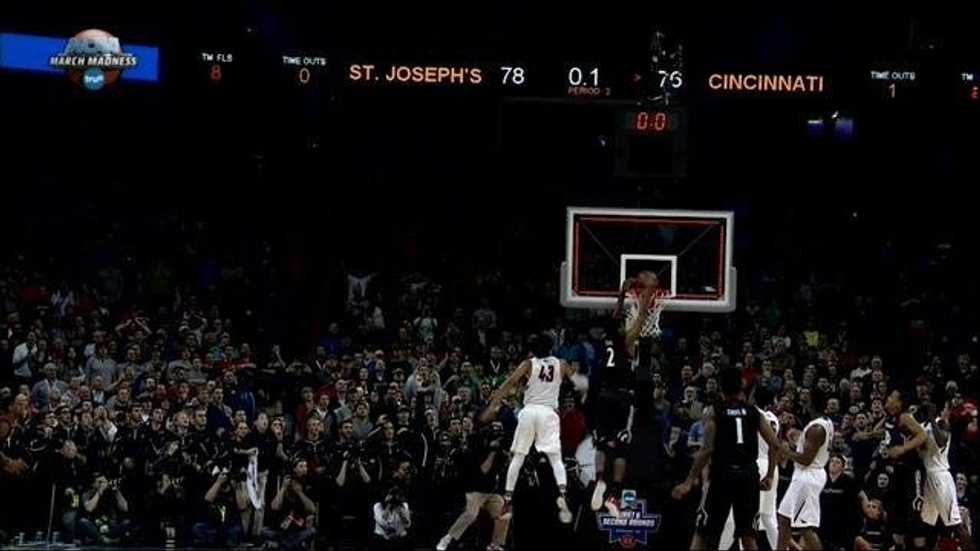
1. The ESPN affiliate's ratings indicated that all four 9-seeds are better teams than their 8-seed pairings. 9-seeds subsequently went 3-1 in the first round, and might well have finished perfect if not for a controversial decision to wave off Cincinnati's tying dunk in the West regional.
2. Wichita State and Gonzaga have absolutely no business being 11-seeds. Przemek Karnowski's injury might explain the low expectations for Gonzaga, but the committee has no excuses; the Polish center was declared out for the season three months ago, surely a sufficient time to evaluate the Bulldogs in his absence. Double-digit wins in the first round for both teams are often indicators of deep runs to come.
3. Four of the twelve weakest teams in the field by FiveThirtyEight's Elo rating wound up as victims in the East - which also featured four of the twelve strongest teams in the field by Elo rating. The Midwest regional, by contrast, actually had three teams - Butler, Syracuse, and Gonzaga - projected to upset their first-round opponents. Reality frequently agrees with Elo: Midwest teams recorded a staggering five upsets in eight games, as opposed to the East regional's mere two.
Advanced statistics are far from perfect, but they predict fairly well. Seven teams were favored by Elo over an opponent with a higher seed, and Cincinnati was the only one of those seven to lose, by the barest of margins against St. Joseph's. Empirics can even explain away outright losses on occasion, such as 5-seed Baylor's; the computers picked Baylor on average, but 12-seed Yale was hardly a bad bet at 39 percent.
However, there were a number of natural upsets that even advanced metrics struggled to predict. If prediction were reality, 15-seed Middle Tennessee and 14-seed Stephen F. Austin would have caught the next round from their living room couches by general consensus.
A small portion of the blame still falls, predictably, on the committee. Michigan State and West Virginia earned their lofty seeds, but both were burdened by unexpectedly strong opponents on Selection Sunday. SFA's profile, in particular, is closer to that of a 11-seed than a 14-seed; the Lumberjacks are actually rated more highly than either Michigan or Tulsa, the two teams that received 11-seeds in their region.
There is one final class of upset, though, over which the committee has no control. What happens when a team is rated better, seeded better, and inexplicably grinds to a halt?
Yes, this is about Purdue.
The Boilermakers not only managed to blow a double-digit lead in mere minutes, they did it against a typical 12-seed from outside the major conferences. To top it off, they managed to blow a second chance at victory in overtime before succumbing in the second overtime period. Taking nothing away from Little Rock, whose collective effort was phenomenal, Purdue's offense simply choked.
Nothing about these games is externally induced; these are the matchups that give the tournament its moniker. The better team seldom wins every game, and waiting for those games is a considerable part of the fun. Perhaps, now that lightning has struck the Big Ten twice in a weekend, the Big East's March detractors will finally learn that lesson.
2016's first round was a crazy opening salvo in a potentially wild tournament. In the search for a culprit behind this season's reinvigorated lunacy, look no further than the committee.
If that answer fails to satisfy, then just blame the Madness.