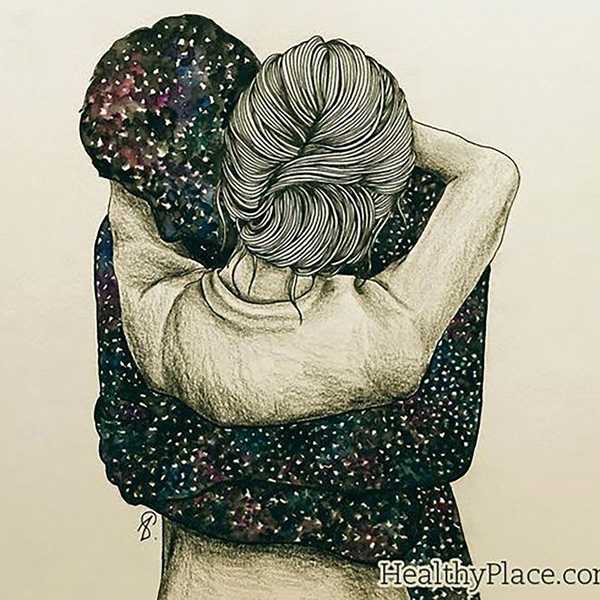


Mental illness a sensitive subject for some people to talk about, especially for those who have never experienced it before. It's difficult to find someone in today's society who hasn't lived with it for at least a short period of their life. Approximately 43.8 million people experience some form of mental illness in a given year. Most of my friends, family, and even coworkers have a mental illness. I'm 22 years old now and I've been depressed since the age of 12, when my mother passed away. When I was 15 years old I was diagnosed with manic depression along with an anxiety disorder. Manic depression is synonymous with Bipolar disorder, and living with these disorders has put strains on my relationships and friendships throughout the years. They have caused me to become extremely introverted, and I'm still working on that, but it has gotten better. I have days where I'm incredibly social and have all the energy in the world, to the point where I get my hopes up that my depression and anxiety is finally gone. Then there are days, many days, where even a simple phone call can trigger an anxiety attack. I have always been a highly emotional person, even as a kid, and anxiety has always had an influence on my mind. However, these characteristics grew to be a bigger part my personality when depression joined the party. I still feel as though a part of me and a part of my childhood was stolen, and I'll never get it back. I will never be the same person that I was before.
Mental illness is hereditary, and I definitely inherited some of it from my father as well as his parents. For me, living in a constant state of fear is normal, and growing up I didn't really know how to deal with it. I have since learned how to guide myself through an anxiety attack. When I get dizzy and it's hard for me to breathe I usually try to lean against something, or slowly make my way to the floor before I start seeing white spots. Splashing my face with cold water, or even holding an ice cube in my hand also helps. I have only blacked out from an anxiety attack once before, when I was a teenager. I was nervous about going to school and the next thing you know I'm on the floor. It has become a part of my every day life and some days it doesn't even happen at all. The most difficult time to deal with my anxiety is at night, usually as I'm trying to fall asleep. I stress about everything there is to think about, and every evil creature from every horror movie I've watched pops into my head. My mind turns things like the silhouette of a coat hanging on the wall into an intruder waiting for me to fall asleep. It almost feels as if my brain is taunting me. It's an extremely challenging task to convince myself that what I'm afraid of it isn't real, while also knowing that I'm being completely irrational. Sometimes I force myself to stare into the dark corner that I'm afraid of just to prove to myself that nothing is lurking there, and that it's all in my head.
Depression on the other hand has been more of an obstacle for me to overcome. Spouts of rage, losing my motivation to do anything, and crying for absolutely no reason at all. My emotions are like a light switch that I have no control over and they have isolated me from many of my friends, but my true friends have always stayed by my side. By now they know how I work and understand that some days I just can't push myself to be social.
One very important thing to do if you know someone with depression is to let them know that you are there for them, but you must realize that you can't force them to do anything that they don't want to do. Getting help has to be their own decision and there's nothing you can do to persuade them. You can give them your opinion on the matter, but don't expect them to see a therapist or psychiatrist immediately. It takes all of someones will power to seek help and it is a major accomplishment, no matter how minor or severe the mental illness may be. If someone you know admits that they think they may need help it is best to express how proud of them you are for making this decision. Being reassured that they are doing the right thing is exactly what they need. If someone you know has lived most of their life with a mental illness it is very unlikely that this will change. And I can't stress this enough, if you start dating someone with a mental illness, do not expect them to change for you. Don't start a relationship thinking you can "fix" them. This will cause many problems in the long run, and it most likely won't work out. It will brew feelings of resentment on both ends. With that being said, if you are dating someone with depression and their mental state doesn't get better, it doesn't mean that you don't make them happy. You can have a healthy relationship and love someone and still not be able to defeat the part of your mind that's working against you.
Living with a chemical imbalance in your brain is exhausting, and we all have the right to choose how we go about treating it. Some of us choose routes other than medication, and that's perfectly okay. Those who decide to medicate themselves are also doing what they think is best for themselves. Either way, you must respect our decision regardless of what your opinion may be. I have been medication free since I was sixteen, and that's my choice. I have, however, thought about attending therapy sessions and I may get back on my medication one day. I have made tremendous progress both with and without it. When you live with a mental illness for 10 years, you adapt. I am now choosing to live my life to the fullest, and I'm finally learning to love myself. I hope that anyone with a mental illness who reads this learns to do the same. It's in you somewhere, you just have to dig a little.