
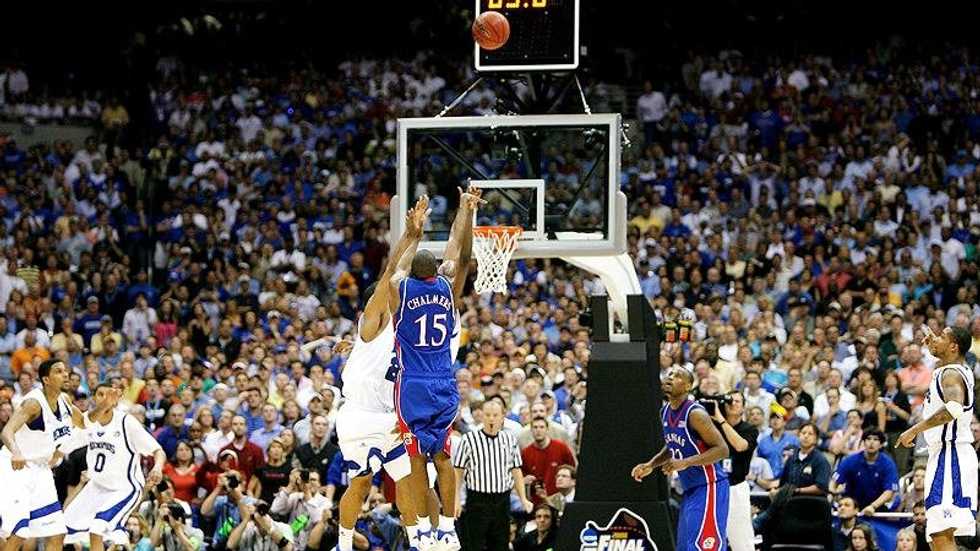
Forget the Super Bowl, the NBA playoffs, the WNBA Conference titles, your birthday and maybe even Christmas… March Madness is here. For those who don’t know, March Madness is the term used to describe the time when millions of Americans binge-watch the NCAA college basketball tournament. It is sheer chaos: 64 basketball teams enter the festivities to partake in a single elimination, bracket style tournament filled with buzzer-beaters, upsets and frenetic energy. It is estimated by the American Gaming Association that 40 million Americans will make 70 million brackets and bet $9 billion on the games. Nine. Billion. Dollars. It is a time of both joy and despair as teams are victorious or eliminated, but more than anything an aura of madness resides for truly anything can happen.
We tend to separate the world of academia and the world of sports, which is, in my opinion, an error. Just as I do research and analyze data for school, so do I research and analyze data for my bracket. In fact, last week I thought of bracket research as another class – bracketology, if you will. I looked at stats, analytics, expert opinion and player profiles. In fact, if I wasn’t writing this right now in my Bible class, I would be on ESPN or Bleacher Report doing research. When looking at any matchup between two teams one has to consider their records, their average points per game and the opponent’s points per game, their records against teams ranked in the top 25 and the star power that certain players on their teams bring. For example, consider Buddy Hield of the University of Oklahoma. Any basketball fan knows he is a good player, but does he have the leadership ability to lead a squad to the Final Four? Is he clutch? How will he react when his team is losing in the fourth quarter and everybody looks to him? These are the intelligent questions that 40 million Americans are asking themselves right now.
Some people think that following sports requires less intelligence than other more studious issues, but this is an ignorant belief to hold. You may disagree with the application of our intelligence, but the object of our focus does not determine whether or not we are intelligent. We define intelligence far more narrowly than we should, for the realm of sports requires the same keen intellect and knack for educated guesswork that is characteristic of other academic avenues. Enjoy, therefore, these next couple weeks–because if you’re like everyone else, your scholarly efforts didn’t work and your bracket is already busted. Happy Bracketing.