
If you’re like me, you’ve spent the last two weeks glued to the TV, marveling at the super-human athletes at the Olympics in Rio. Along with the celebration of athleticism, I also praised the strides of equality that occurred at the games. I also scrunched my nose in disappointment from some of the discrimination and sexism at the big event. The headlines in the news about the Olympics showed the progress we’ve made, but also highlighted how far we have to go in terms of equality. There were highs, and oh, were there lows.
The Highs
1. Chinese swimmer Fu Yuanhui openly talked about periods.
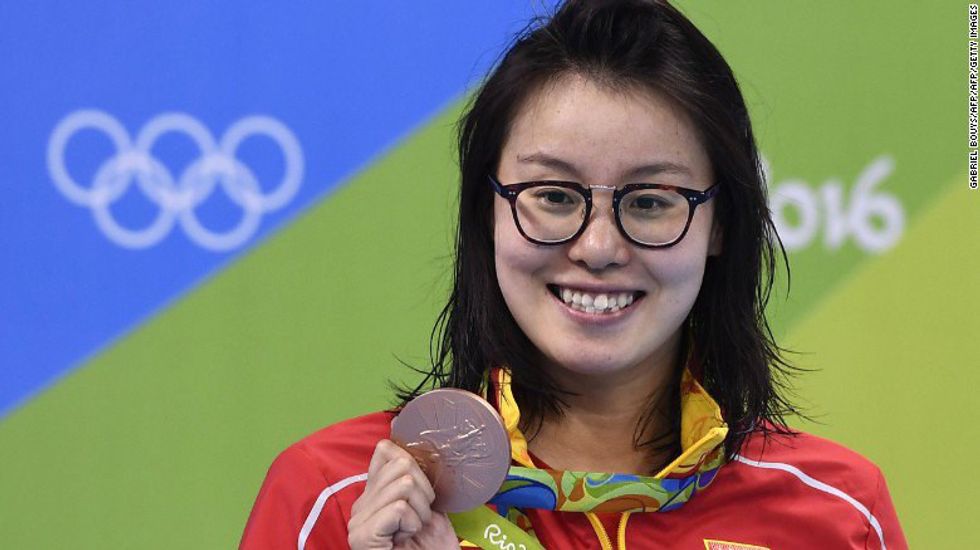
After being disappointed with her team's fourth place finish in the 4x100 meter relay, Yuanhui explained in an interview, "Yes (my belly hurts) because my period came yesterday. I'm feeling a bit weak and exhausted, but this is not an excuse. Anyway, I didn't do well." Periods are often seen as a taboo subject, especially in sports. The hushed nature of discussions about periods seems silly, since it affects half of the world's population. With Yuanhui, whose bubbly personality has already won the hearts of many, integrating menstruation into the conversation, it shows that periods are not a subject to be ashamed of.
2. A rugby player from Brazil, Isadora Cerullo, was proposed to after her game.
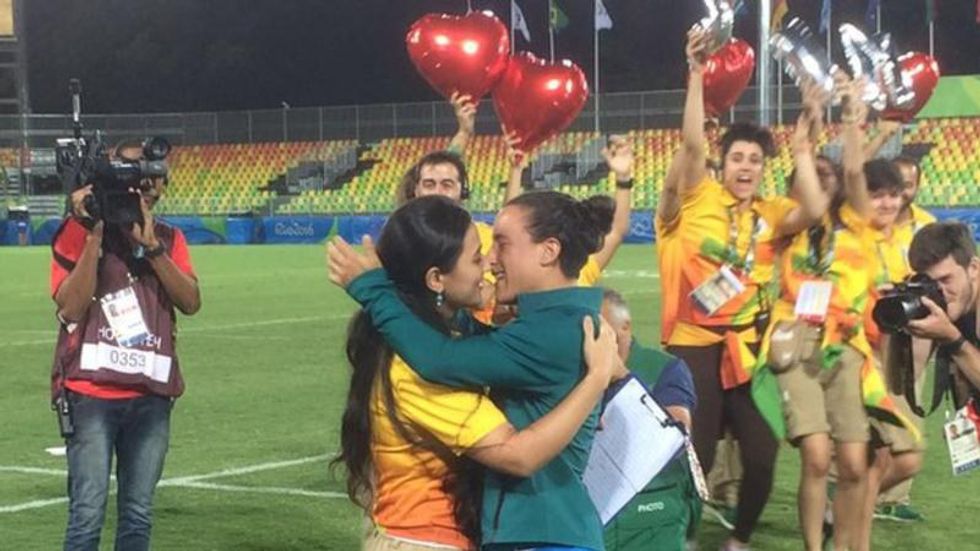
For the first proposal of the Olympics, Marjorie Enya, a manager at the rugby game venue, proposed to her girlfriend of two years, Brazilian rugby player Isadora Cerullo. Afterwards, Enya told BBC, "The Olympic Games can look like closure but, for me, it's starting a new life with someone. I wanted to show people that love wins." She did just that. #LoveWins, everyone.
3. Great Britain race walker Tom Bosworth also popped the question at the Olympics to his longtime boyfriend.
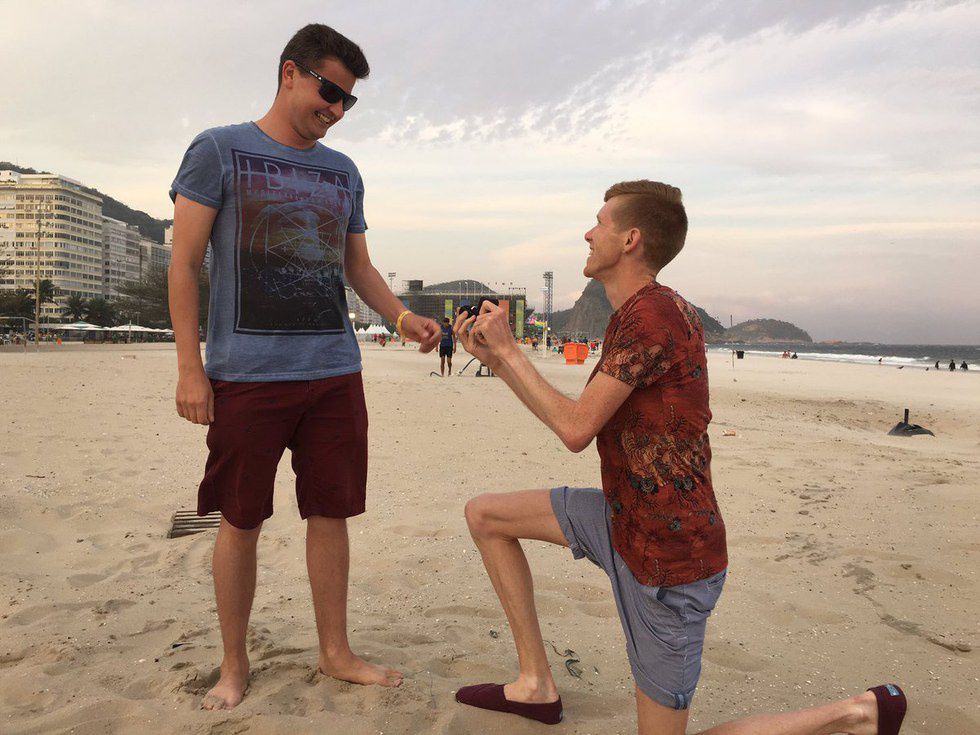
Bosworth sweetly proposed to his boyfriend Harry Dineley on Copacabana Beach. Bosworth announced the happy news through a tweet and his fiancé also later shared his own picture of the ring. Bosworth has spoken out on how we must help and protect LGBT athletes from unaccepting countries, saying, “Can sporting governing bodies do more to combat homophobia? Absolutely. But I think for athletes from countries where it’s not accepted, things have to change at home first – for their own safety, and for them to be able to come out and be those role models. The world needs to change.” Congrats to Tom and Harry and to all the happy couples engaged during the Olympics!
4. American swimmer Simone Manuel made history.
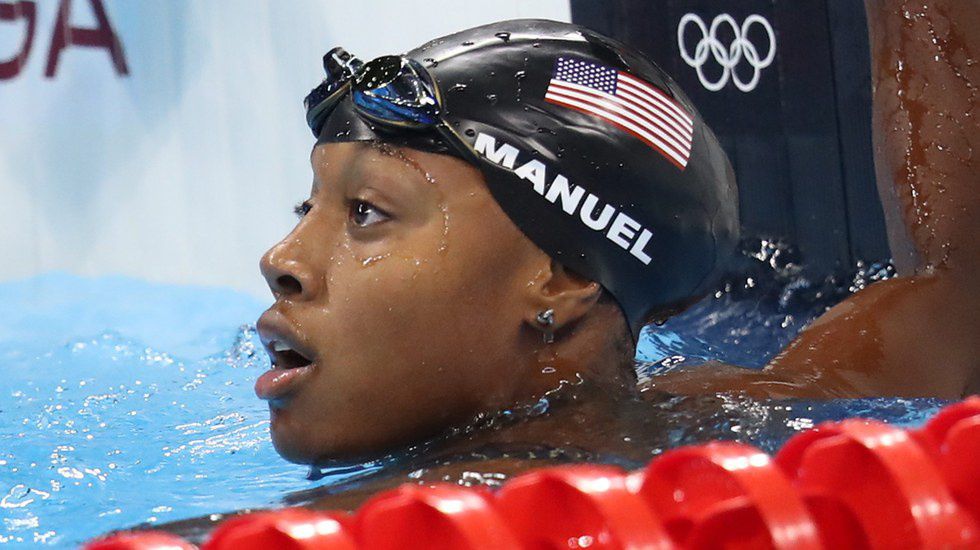
Simone Manuel became the first African-American woman to win a gold medal in an Olympic swimming event. She tied for first in the 100-meter freestyle and in doing so, inspired many young black girls to achieve their dreams. After her historic win, Manuel spoke out about police brutality, saying, “It means a lot, especially with what is going on in the world today, some of the issues of police brutality. This win hopefully brings hope and change to some of the issues that are going on. My color just comes with the territory.” Thank you, Simone, for inspiring so many and using your voice to speak on such an important and prevalent issue.
5. Fencer Ibtihaj Muhammad became the first athlete from Team USA to compete with a hijab.
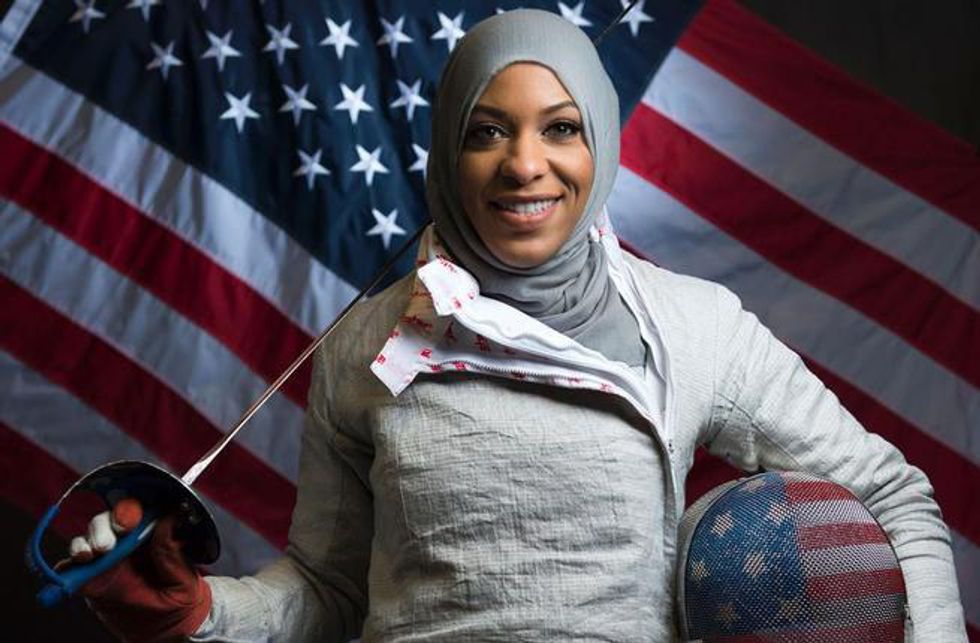
Muhammad was the first American Muslim woman to wear a hijab while representing the United States team. On making history, she said, “I realize that this moment is bigger than me. Anyone who has paid attention to the news at all would realize the importance of having a Muslim woman on Team USA. It’s not just any team, it’s the United States of America. It’s just been a really remarkable experience for me.” Muhammad earned a bronze medal with her teammates in the women's team sabre.
6. Chris Mosier became the first transgender U.S National Team Member and starred in Nike advertisment.
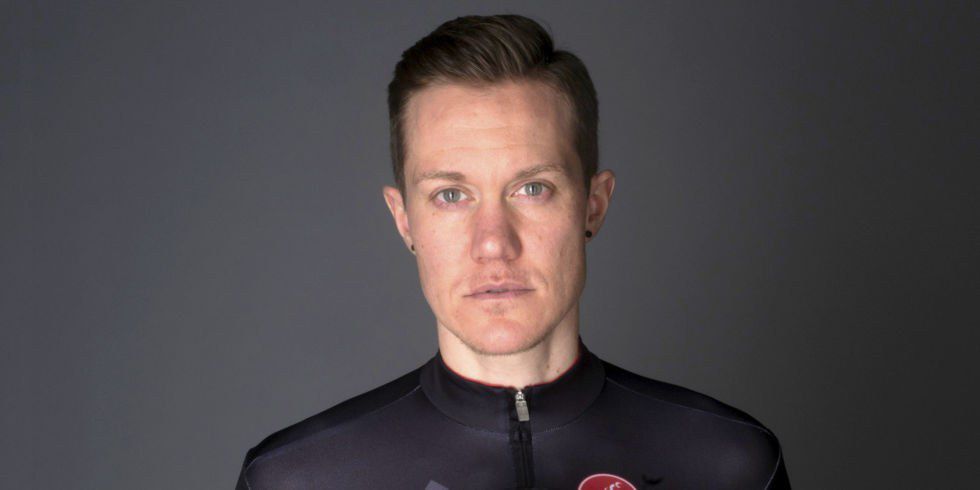
Duathlete Mosier also broke history by becoming the first transgender athlete to qualify for the United States National Team. While he did not compete in Rio, since the Olympics do not hold duathlons, he did star in a Nike ad that premiered during the games.
7. A visualization of the blending of cultures occurred during a beach volleyball match.
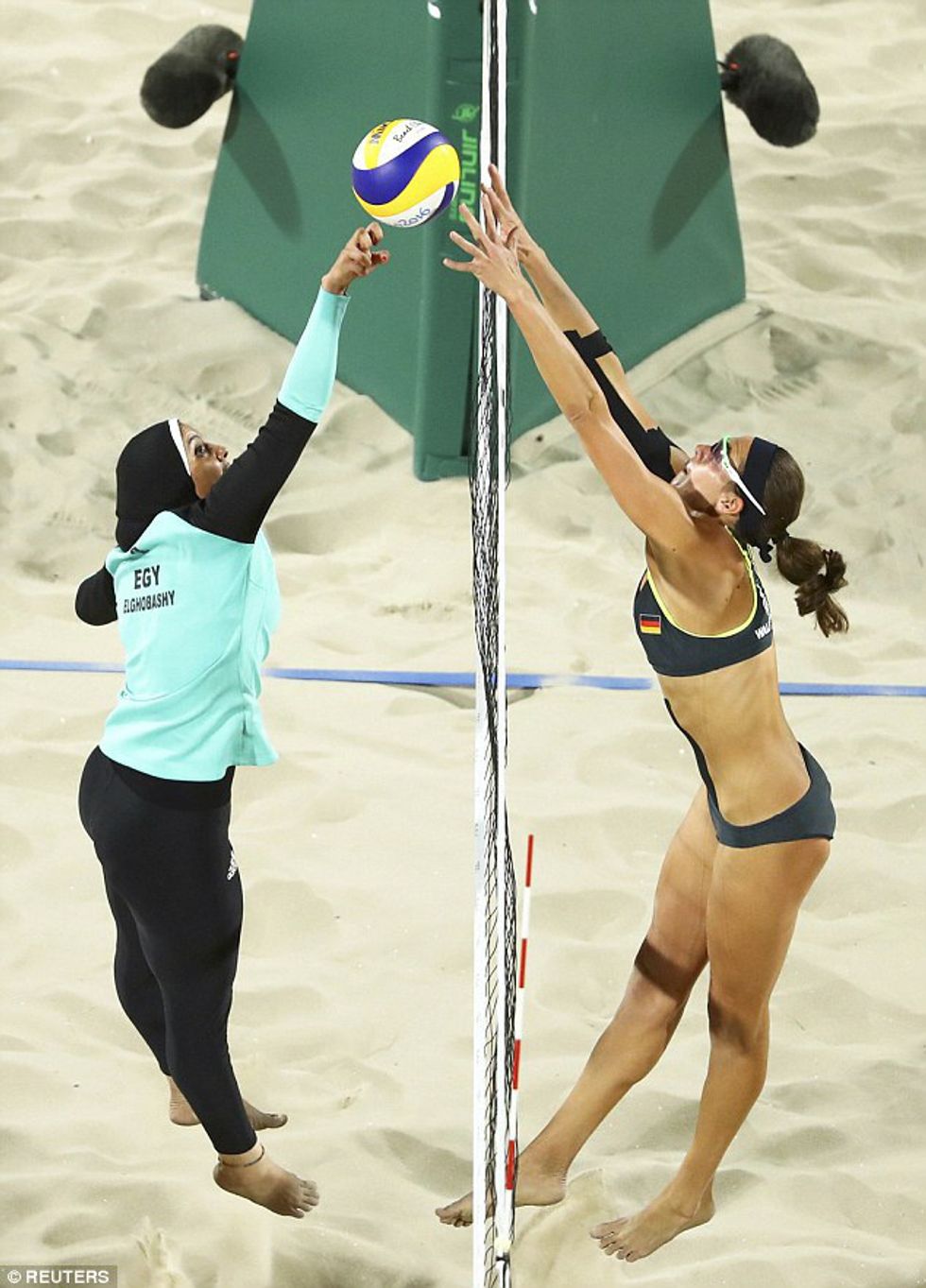
This now iconic image shows Doaa Elghobashy of Egypt (left) and Kira Walkenhorst of Germany (right) playing during their beach volleyball preliminary match. As represented in the picture, women can be strong, athletic and successful competitors no matter their background, culture or religion. It also represents two different cultures uniting in sport, which is the whole point of the Olympics. Many were quick to call the beach volleyball match a clash of divided cultures. As Annalisa Merelli explains in her article on Quartz, "There is no clash of cultures here. Just two women athletes who are among the world’s best at their jobs, and are free to do those jobs wearing whatever they please—in one of the rare environments that respects both their cultures."
8. A record number of openly LGBT athletes competed at the Rio Olympics.
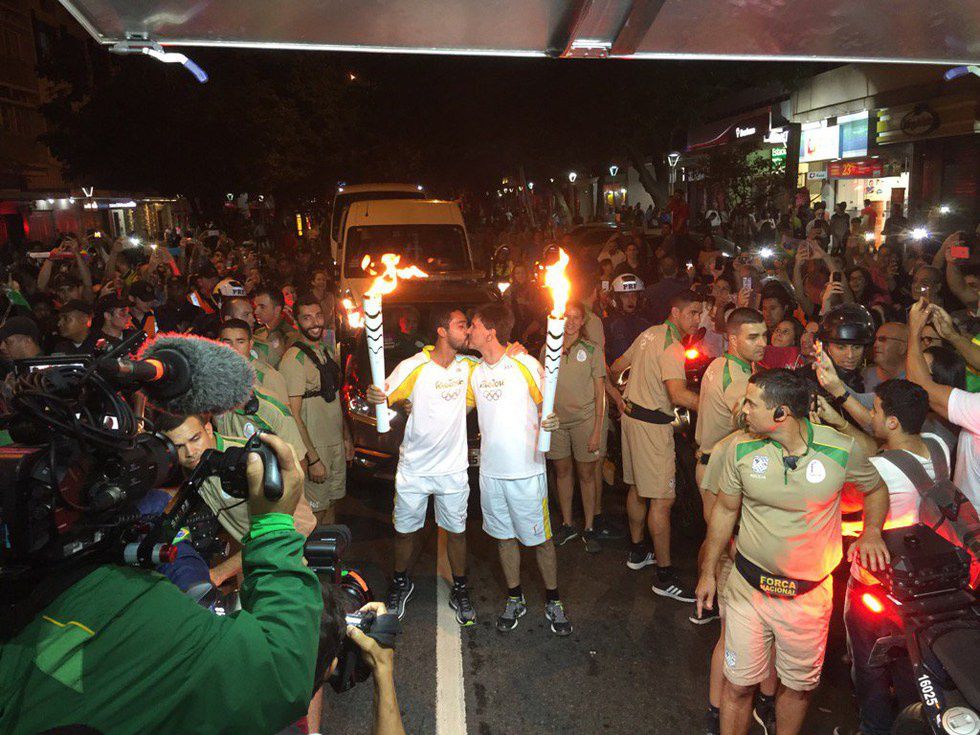
According to the Human Rights Campaign, a record setting 42 openly LGBT athletes competed at the games. This is almost double than the 23 openly gay, lesbian, and bisexual athletes that competed at the London 2012 Olympics.
The Lows
1. After winning gold and breaking a world record, Katie Ledecky's name appeared under Micheal Phelp's in a headline after he won silver.
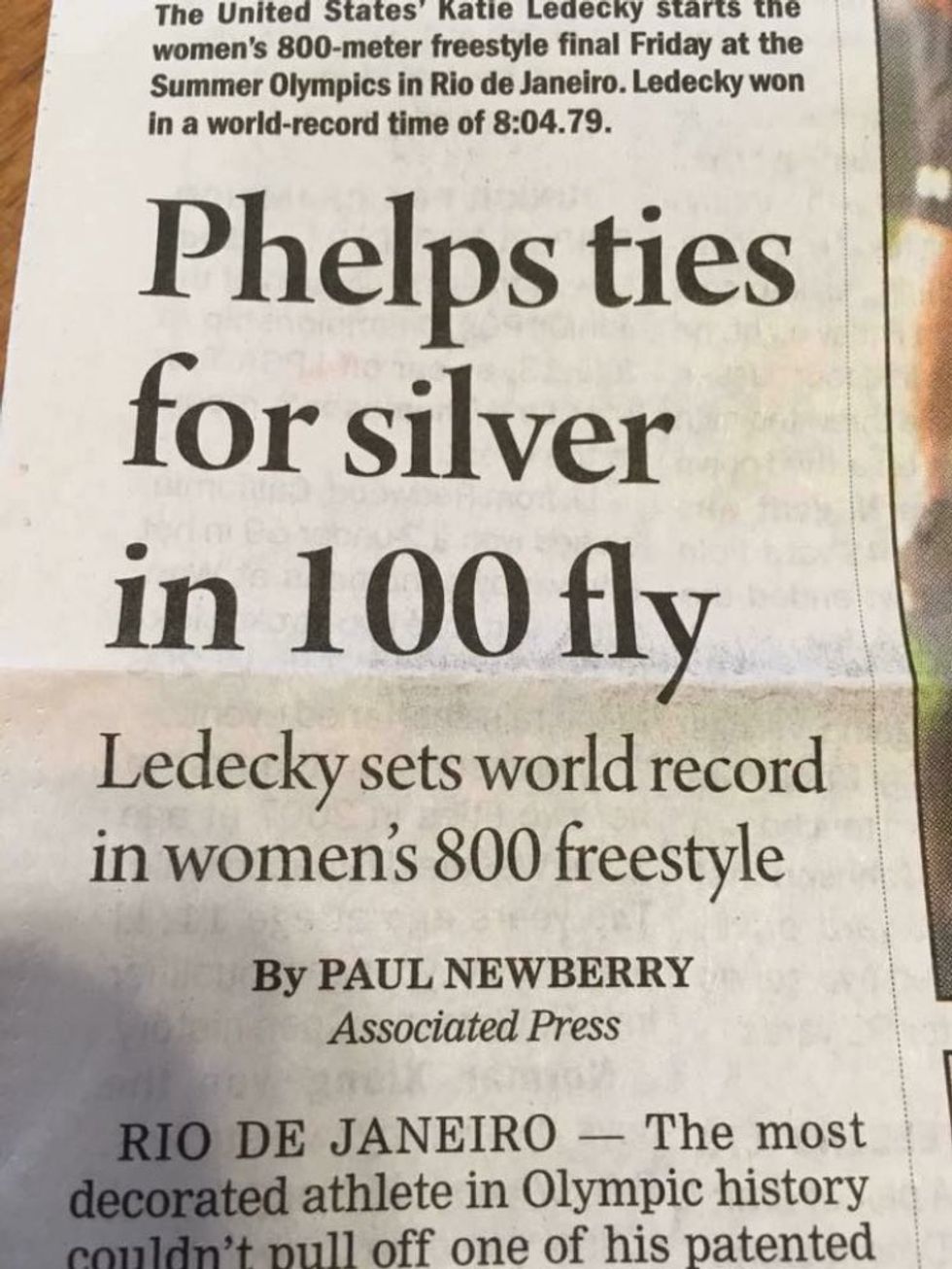
After winning gold and breaking a world record, American swimmer Ledecky's name was printed under Phelp's after he tied for silver. This photo produced a collective sigh from many, since women's successes are often overshadowed by men's accomplishments. As Nancy Leong wrote on Twitter, "This headline is a metaphor for basically the entire world."
2. Ryan Lochte made sexist comments on teammate and fellow swimmer Ledecky.
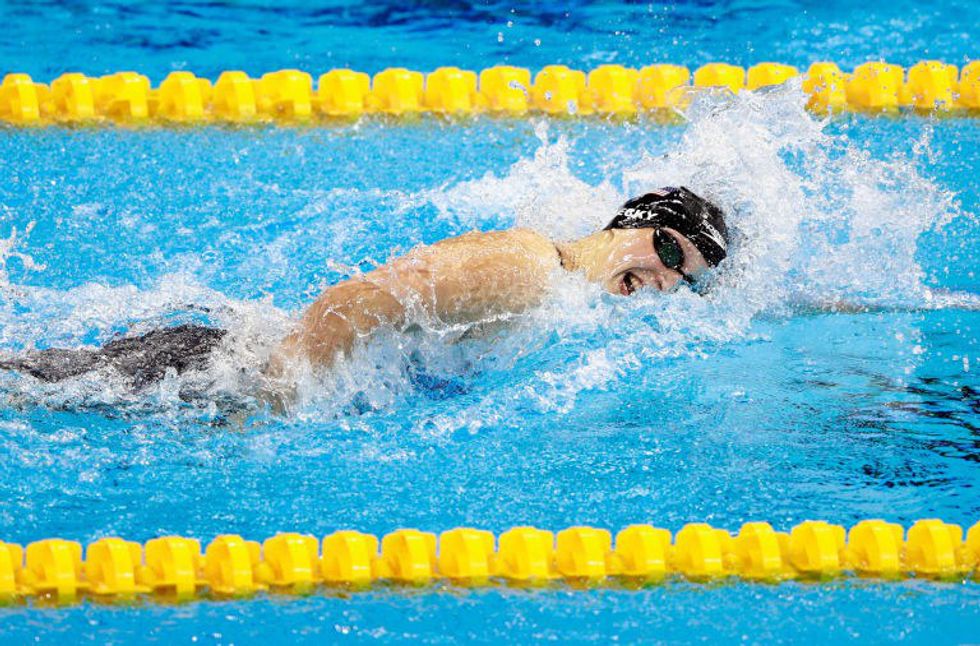
After training with her at the Olympic Training Center in March, Lochte explained to Sports Illustrated, “She swims like a guy. Her stroke, her mentality. She’s so strong in the water. I’ve never seen a female swimmer like that. She gets faster every time she gets in, and her times are becoming good for a guy. She’s beating me now, and I’m, like, ‘What is going on?’” Yikes. A woman can be successful without being "like a man" or being compared to one. Katie Ledecky is one of the best swimmers in the world, regardless of her gender. Someone should remind Lochte of that.
3. Corey Cogdell-Unrein's name was left out of headline by The Chicago Tribune.
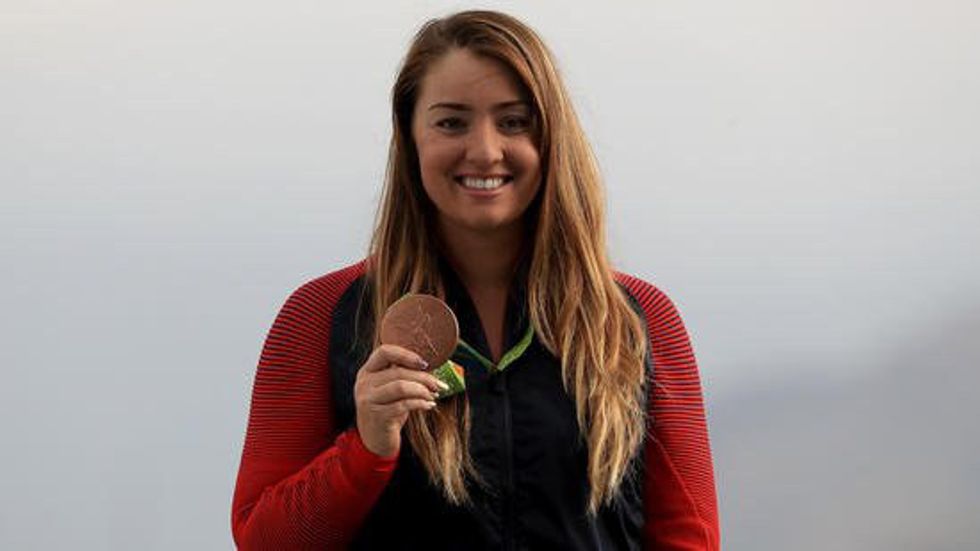
Instead of using her actual name, The Chicago Tribune referred to Corey Cogdell-Unrein as "wife of of a Bears' lineman" after she won bronze in trap shooting. The Tribune later apologized, but the damage was already done. She has a name and is a three-time Olympian, remember that next time.
4. A straight journalist used a dating app to expose gay athletes.
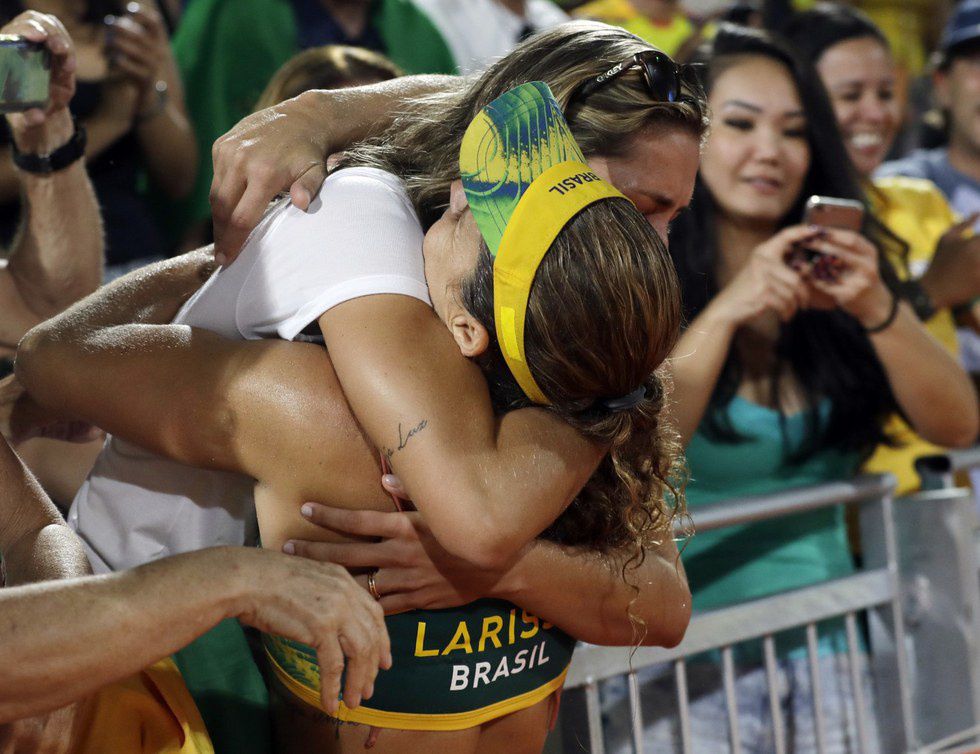
Daily Beast journalist Nico Hines created a fake Grindr profile to try to find and entrap athletes in the Olympic village. Many athletes are from countries that are unsafe to be openly LGBT in. The online dating world is seen as an escape for many. Potentially outing athletes could be very dangerous. This faux journalism is embarrassing. Of all the coverage he could have chosen to write about, he chose to put many LGBT athletes in danger and distress. Coming out is a personal choice and matter, it is not the job of a nosy journalist hungry for a headline.
5. Commentators debated whether or not athletes should wear make-up.
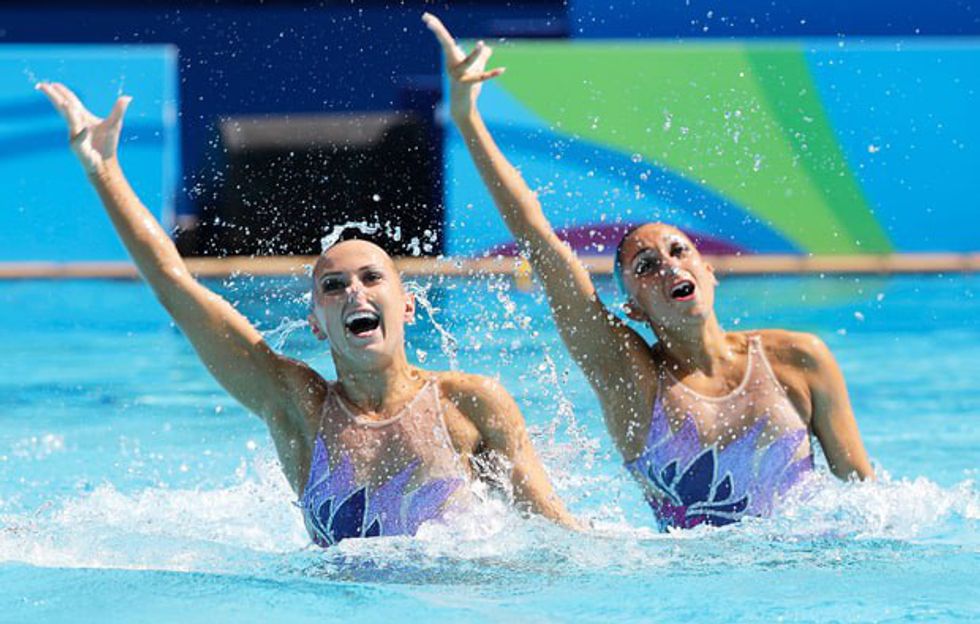
Fox News commentator Tamara Holder was quoted saying, "We all know that old adage, sex sells. Well now female Olympians are sexing it up more than ever by wearing makeup during their competitions." Fellow commentator Bo Dietl added , “I think when you see an athlete, why should you have to look at some chick’s zits or some guy’s zits on his face. Why not a little blush on the lips and cover those zits? I like to see the person who wins that gold medal go up there and look beautiful.” Oh my. Athletes do not train for years to come to the Olympics to look beautiful. They come to be the best in their sport and show their athleticism. It is no commentator's right to tell the athletes what to do or what to look like. Some athletes choose to wear make-up, other's don't. Either is fine. It's the Olympics, not a beauty pageant.
6. Mexican gymnast Alexa Moreno was body-shammed.
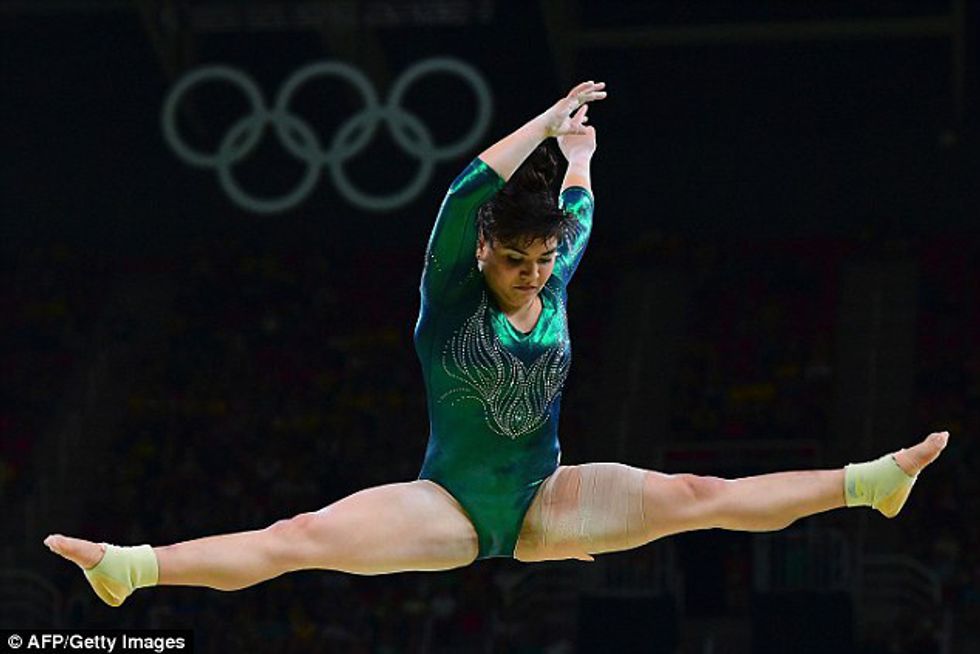
22-year-old gymnast Alexa Moreno was heavily body-shamed on Twitter after competing in the gymnastics qualifications. Luckily, many users fought back against the cruel attacks, sending supportive and positive messages to Moreno. Moreno competed in one of the most physically demanding sports at the Olympics and people still want to criticize her body. She's a badass gymnast who proudly represented her country.
7. Gabby Douglas was the target of social media bullying.
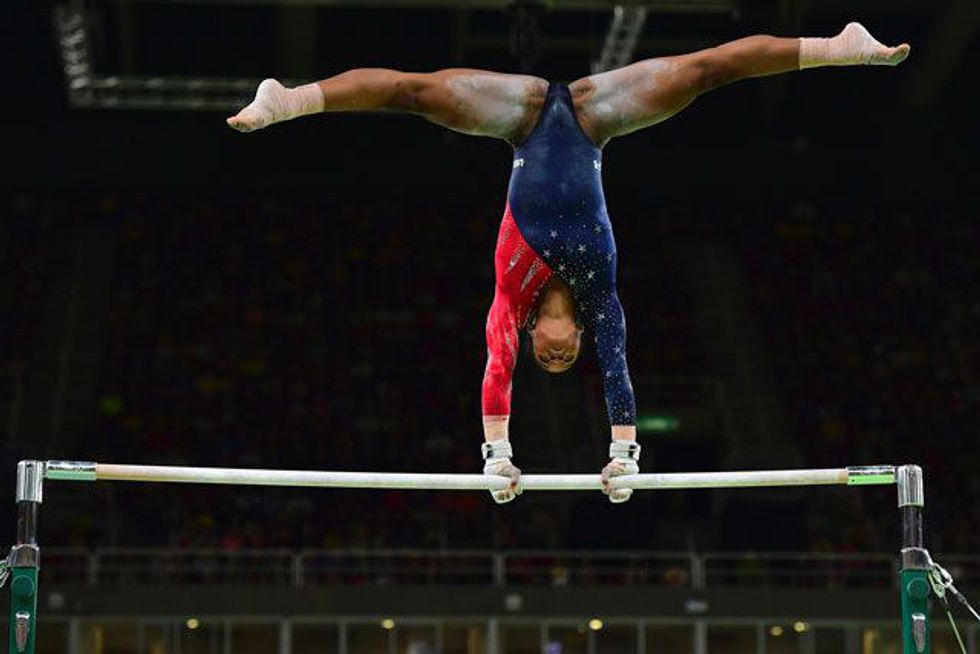
Douglas has been bullied on social media for her hair and for not cheering in the stands for her fellow teammates. In hopes to send love to the gymnast, comedian Leslie Jones started the hashtag #love4gabbyUSA on Twitter. Douglas received hatred during the London 2012 Olympics as well. No online commentary can take away her greatness nor her success.
8. BBC commentator described the women's judo final as "a catfight."
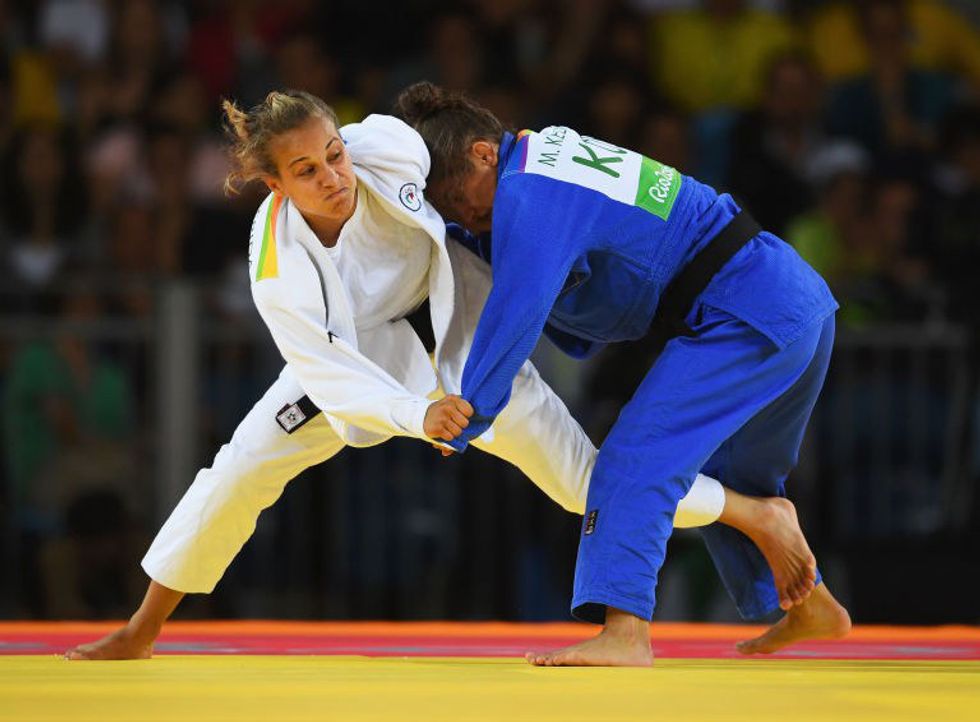
A BBC commentator used the word "catfight" to describe the judo final between Italy’s Odette Giuffrid and Kosovo’s Majlinda Kelmendi, who won gold and made history by being her country's first Olympic medalist. No, it was not a "catfight." It was a final in an Olympic event. Sigh.
Let’s hope for more highs and less lows in Tokyo.