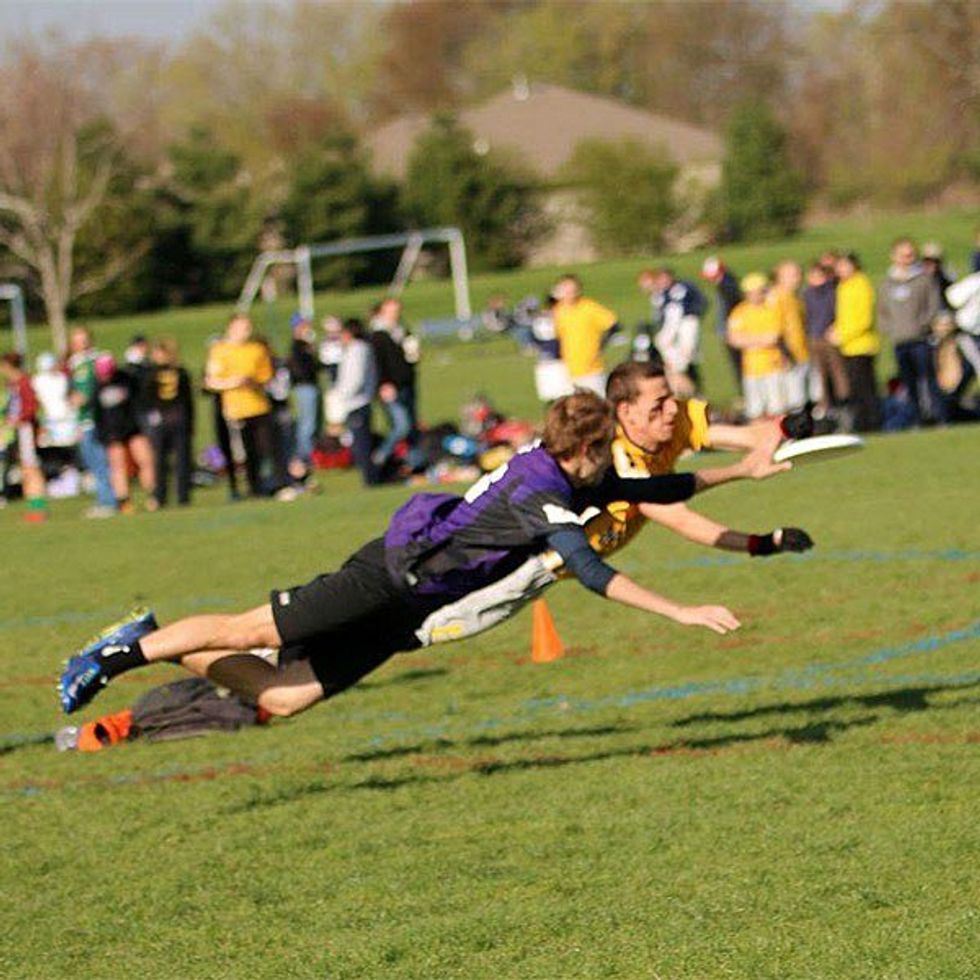
Sweat drips down my face as I looked to the ground, heaving. There is only 20 yards to the end zone. The next few minutes are crucial. I see my teammate cutting across the goal line and just a simple pass will win the game for us.
Now, think for a minute, what sport could have just been depicted above? Football is most likely the first guess to be produced after that scene. However, the scene described above is typical of an Ultimate Frisbee match.
In the Northeast, many people take part in the Ultimate Frisbee scene. My hometown, Falmouth, Maine, sent multiple players to the national competition in Minnesota last year. I, personally, played in high school and am now a coach at both the high school and middle school levels.
Every time I am approached about my ultimate frisbee history, I am confronted about how Ultimate Frisbee cannot be considered a sport or how it is too soft and slow to be a fun sport. In retort, it is certainly a sport that many people enjoy nowadays, with both Division I and Division III colleges competing for a national championship each year along with post-graduation opportunities such as the AUDL (American Ultimate Disc League).
Just like every other sport, Ultimate Frisbee coaches and organizers claim that Ultimate will help you grow as a person and teach you the life skills necessary to succeed past your playing days. I personally have received this as a player, and dished it out as a coach. But this isn't just another encouraging slogan to boost player interest, its the truth, and here is why...
Sports, such as soccer, football, and hockey teach character through perseverance, feeling good about yourself, and learning about a solid work ethic. Ultimate Frisbee goes above and beyond in developing people through one unique method: Spirit of the Game (SOTG).
SOTG is a rule unique to Ultimate Frisbee. In the most basic form, SOTG means be honest, be a good teammate, and be a good opponent. In Ultimate Frisbee matches that are not part of a major tournament and are not part of MLU (Major League Ultimate), the players are their own referees. They call their own fouls, settle their own disputes, and are the ones responsible for game flow.
More uniquely, the offense gets the deciding call in most situations. For example, if a player catches the disk on the sidelines, as long as the receiver says they believed they were in, they were in. In most other situations, fouls can be contested by either player, but the disc will typically remain with the offense when a call is disputed.
This unique form of refereeing results in players discovering their own morals. Is lying worth this field position? Should I really tell the other team I caught it when I know I didn’t? These are questions many players ask themselves. However, the end of the day usually brings honest men and women out in all players. Ultimate does not only teach players how to have a good work ethic, how to never give up, and how to stay healthy, but it also teaches them the value of honesty and good character.
The cherry on top of the ultimate frisbee sundae is cheers. In many high school and college leagues, the teams create cheers for the other team and the performances of the other team after the game. One memorable example was my junior year. Falmouth beat Fryeburg very easily and quickly, so Fryeburg did a cheer to the tune of wrecking ball for us about how we played so well and crushed them like a wrecking ball. Our cheers are our ways of saying, good job, congratulations, and we enjoyed playing with you. This is the final lesson of each game: good sportsmanship.
So, yes. Ultimate Frisbee is new and many people still don’t know what it’s about, but hopefully that changes. Ultimate Frisbee is not only one of the most fun sports out there, but it also teaches people how to love what they’re doing, love themselves, and love the people they’re playing with.