
Between numerous mass shootings, political mishaps, environment crises, international disagreements, and even celebrity Twitter fights, the world seems to be an increasingly chaotic place (that, or we're getting more effective at recording, accessing, and sharing the chaos). Most of us hurt when others are hurt and are naturally drawn to wanting to be involved in fixing those chaotic things that lead to this hurt. Caring about the world and those in it, and having empathy is important for social progress, but, sometimes, we need to take a breather, take a moment, even if only a short one, and re-focus on the immediate, the solid, and, most of all, the calm.
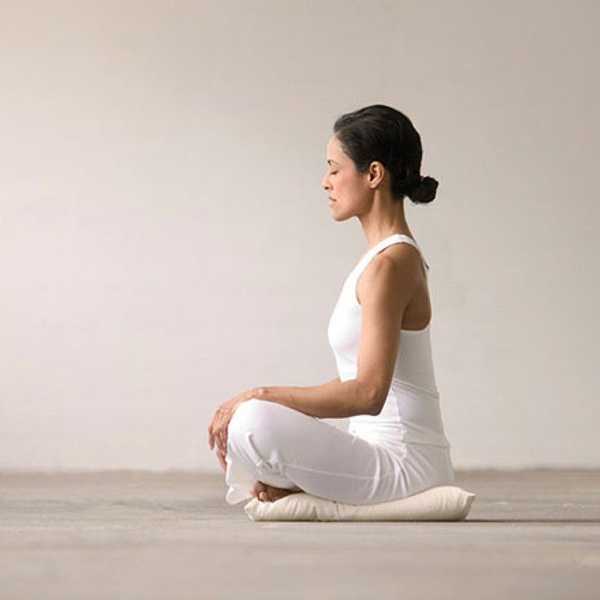
Psychologists call this "grounding" or "mindfulness," while some may call it meditation-- directing one's thoughts to a very specific, immediate thought or observation. Regardless of what it's called, though, focusing on the immediate and the simple can help lower stress, clear your mind, and make the world feel a little less chaotic, if even just for a moment.
Take Five
A common grounding exercise is to sit in a comfortable position and pick out one thing in the environment that you notice with each of the five main senses. What is one thing that you see in the room that you are currently in--maybe the edge of a picture frame, for example, or the texture of the wood of a desk? What is one thing that you hear--the air conditioner, perhaps, or the sound of breathing? What is one thing that you smell--perfume, maybe, or coffee brewing? One thing you feel--your back against the chair? Taste? Try to focus only on those things. Repeat until calm(er) or for a set number of minutes or repetitions. This helps to steer your thoughts away from what troubles you and allows you to calm and re-collect yourself; it can also grant a sense of being "grounded" into one's environment, which often gives a sense of security.
A variation on this is to imagine one thing for each of the five senses that you like or that calms you. I, for example, use a deep-blue sphere for sight, gently running water for sound, sea salt for taste and smell, and the warm on my back for touch. This is sometimes accompanied by assigning each sense to a finger (i.e. thumb for sight, pointer for sound, middle for smell) and tracing or tapping the respective finger when imagining that sense. This method allows you to always have a pleasant and calming sense to focus on at hand, even when the environment you're in isn't so calm.
Safe Word
Sometimes, we need to make our thoughts even simpler than sensory experiences to achieve a desired level of calm. At times, it would be nice to be able to think nothing at all, to have a mind completely free of worries; while this may be the Nirvana ideal, human minds aren't too apt at having no thoughts or perceptions. The closest that many of us can come to this is having one single thought, one single perception. In many movie portrayals of meditation, this takes the form of "Ohm..."; often, though, this takes the form of focusing on a word or phrase of personal positive meaning to us, such as "Peace," "Forgiveness," "I am okay," "I am in control," or anything else that invokes positive calm. As with the technique above, one simply gets as comfortable as the situation allows, and then focus away.
This may take a bit of practice at first: our minds are used to entertaining several trains of thoughts at a time, and it's not at all uncommon for a few (or a bunch) of stray thoughts to slip past. This does not mean that you are doing anything incorrect, or that you are "bad" at mindfulness--this just means that your mind is being a mind. It is often advised to thank your mind for whatever stray thoughts pop up (in order to maintain a sense of positivity or at least non-negativity), take a breath, and start again.
Progressive Muscle Relaxation
The aim of these exercises is to reduce tension, but a bit of tension used properly can also be beneficial. Progressive muscle relaxation directs the mind's attention less towards the mental stimuli and more towards the physical; you start by tensing all of the muscles in a certain part of the body (i.e. all of the muscles in your hands and arm), holding that tension for a few moments, and then relaxing each of the muscles one at a time (i.e. relax the upper arm muscles, then the forearm, then the fist, then the fingers).
Ideally, one would get around to tensing and relaxing every part of the body; in today's rapid-fire society, however, one may only be able to work on a few muscles for a minute or two. Aside for the attention required for this task getting the mind off of stray thoughts, this exercise is also claimed to lower one's heart rate and breathing, which evokes a sense of calm.
Gratitude
While not exactly a conventional grounding exercise in the "focusing on the immediate, concrete, and simple" sense, mindful gratitude does adjust one's thoughts towards the positive and can help to put the world back into perspective. Some psychologists even claim that it has mental and possibly physical health benefits.
Many find it useful to keep a gratitude journal and log in three or five things each morning/night that they are grateful for (i.e. "I am grateful that I will have breakfast this morning; I am grateful that my cat lets me pet her."). As a meditative exercise, one could simply close their eyes and focus on grateful thoughts instead of, say, blue spheres or repeated chants for as long as one needs to or as long as the situation allows.
This, like everything mentioned above, can take some practice. The mind is prone to wandering, and it can be difficult to think grateful thoughts in the midst of chaotic or hurtful situations. It may be helpful to start with the smallest or most obvious thoughts first--the more creative and "deep" thoughts may come with time. Regardless, the idea isn't to come up with the most epic lines to tout at Thanksgiving dinner (although that can be a plus); as long as you are feeling calmer and less stressed, you're doing a fantastic job.
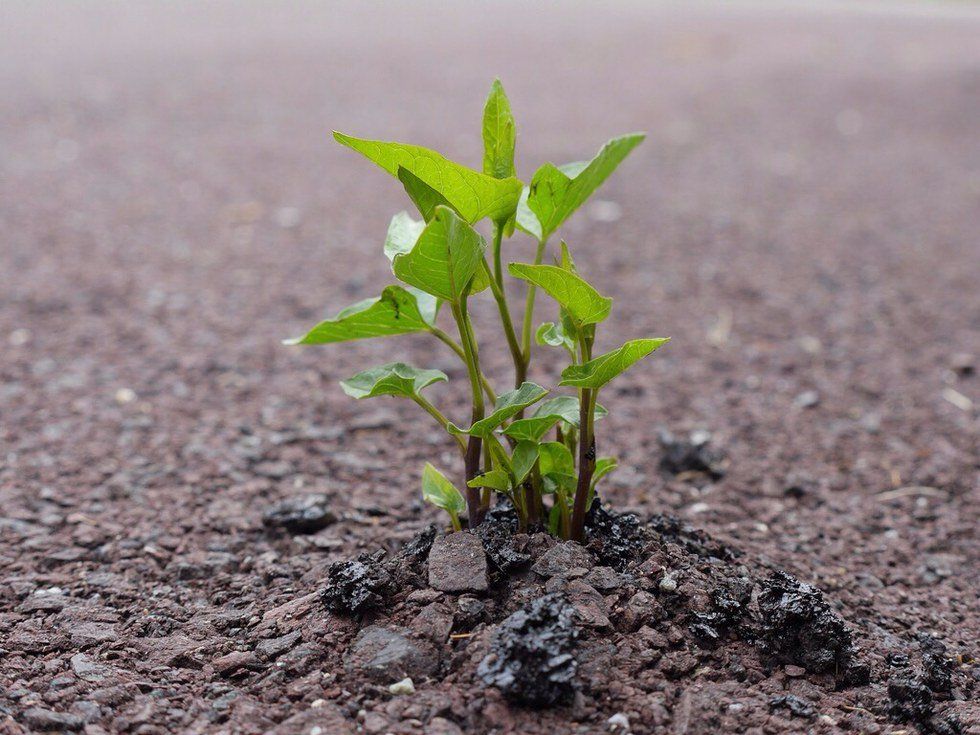
Of course, tensed-relaxed muscles and repeated words and images doesn't make this chaotic world any less of the chaos that it is; grounding, however, can tilt your frame of mind towards a state of balance, and balance is much needed when treading on unstable grounds.