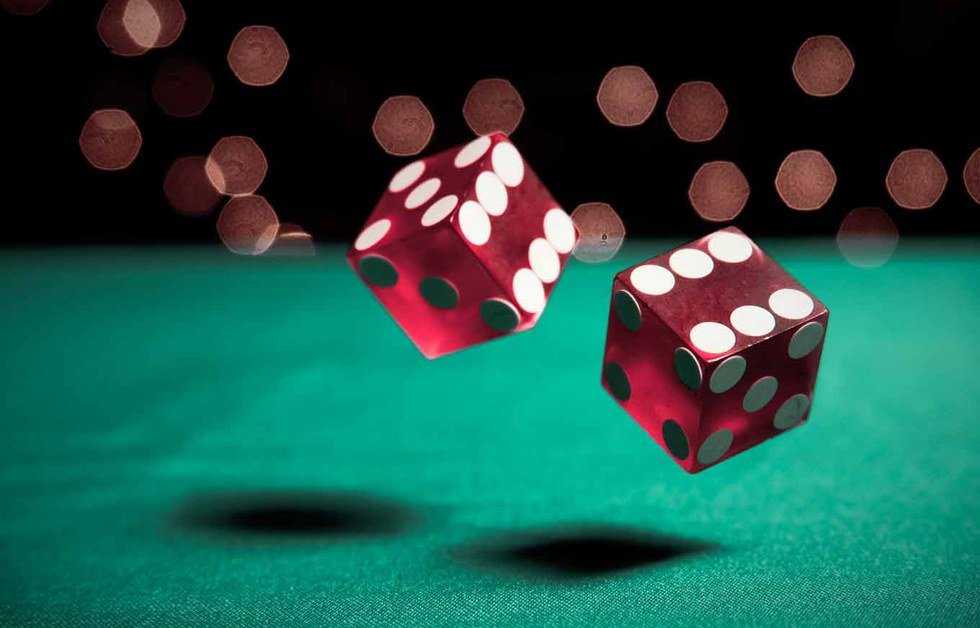
For a lot of people, gambling can be seen as one of two things: destructive or productive.
Unfortunately, gambling has no positive effect at all. Gambling has left its mark on the world and this mark is not a good one. People like to gamble on almost anything, from people getting up and out of their seats a certain amount of times at an event, to whether or not a dime will land on heads three out of five times it's flipped. Gambling itself is considered to be very “addictive," according to the Centre for Addiction and Mental Health that is based in the Institute of Ontario in Canada (Effects of Gambling 1). Typical statements that chronic gamblers normally say are "how could this happen? I can't believe all the trouble I'm in." Or "I never thought it would get this bad.” No person should allow gambling to affect them completely but unfortunately, some love the adrenaline rush they get from the thrill of such vast possibilities. The worst part about this all is that gambling can affect everyone from the fans of sports, the people that are gambling to even athletes that people are betting on. Gambling is just an umbrella for the different varieties of bets.
Depending on who you ask, gambling either has rewards or risks. If you feel like you have mixed feelings on gambling, listen to some of these statements and see if you can pick a side of the fence: "I gamble because I love the thrill of playing, I know one big payout can solve all my problems, gambling is my own shot at becoming a millionaire, I feel important when I win I love being able to treat my family and friends, I have a sure system it's just a matter of time before I win." On the contrary, you have these statements: "I’m thinking about getting help because my partner is leaving me if I don't stop, we fight all the time about my gambling, I'm tired of sneaking around trying hiding my losses, gambling is all I ever think about and it is taking over my life."
If any of these statements seemed to resonate for you then gambling has an effect on you. Gambling not only affects the gambler, but their families. Some of the problems that occur involve money problems. Usually, the first person to find out about the money issues is the spouse. Mainly because money from the savings or joint bank account, property or even belongings have been depleted or gone missing. Some other issues include emotional problems and isolation. Gambling can sometimes cause strong feelings among family members which make it harder to solve these problems that occur. Many partners of those gambling problems usually do not want to be emotionally or physically close due to the pain the gambler may have caused them. the worst of all these issues have to be physical and emotional abuse. According to www.problemgambling.ca, Family violence is more common when families are in crisis. Gambling problems can lead to physical and emotional abuse for a partner or spouse, elderly parent or even a child. Gambling sells fake dreams of winning big, hitting jackpots and becoming a millionaire in an instant.
Unfortunately, many people who gamble feels stressed and anxious and depressed mainly because of a number of times they have lost or because they can't resist the urge to want to bet more. Now usually when looking into dealing with anxiety and depression in patients, Psychologists usually look for symptoms lasting around six months. When dealing with gambling, the Centre for Addiction and Mental Health are only giving them two weeks of continuous symptoms before they advise speaking to a family doctor or other healthcare professionals. Some of these symptoms include loss of interest in usual activities. Feeling depressed or irritable. Sleep pattern has changed as well as their appetite and has either lost or has gained weight. Lawson interest in sex and feel physically tired, slow, and heavy; or you feel restless and jumpy.
Now gambling in sports is not just a one bet thing; it is an umbrella of multiple types of betting. Spread betting is wages that are made against the spread. This spread, or line, is a number assigned by bookmakers which handicap one team and favors another. In team sports such as the NBA or MLB. When two teams play each other, there is always a team that is perceived as being more likely to win. To attempt to make wagering on the underdog desirable, the bookmaker will give them points. For example, the New York Knicks and the Utah Jazz were in the NBA Finals and I wanted to bet on the Knicks. Assuming that the Knicks were better, the Bookmaker would have the line read NY Knicks -3, Utah Jazz +3. What this means is that I would have to subtract three points from the New York Knicks final score. In order for me to win, the bet the New York Knicks would have to win the game by four points or more. This is the most common type of bets in sports.
Then you have proposition bets. These bets are wagers made on a very specific outcome of a match. Examples of these types of bets would include predicting the amount of field goals made by a specific player, predicting whether or not a quarterback will run it or pass it for the winning touchdown and etc. Then you have parlays and progressive parlays. A parlay involves multiple bets and could reward a successful bettor with a large payout. If the bettor has a spread in any of his bets fail to cover, the bettor loses his parlay. But if the bettor wins his spread, he receives a substantially higher payout. The difference between a progressive parlay and a regular parlay is that Progressive parlays could still receive a reduced payout even if some of their bets lose. You have future wages that generally have a long-term horizon measured in weeks or even months. Some examples of these type of bets would be a certain team winning the championship in the upcoming season. All of these bets must be made prior to the season beginning and all payouts are usually after the final game of the championship series. And lastly, you have in-play betting. in-play betting is personally my favorite because it allows bettors to place new bets even though the sporting event is still in progress. This is particularly fun for me because it is harmless and I usually never do it for money unless I am betting on myself. But to go along with actual sport betting, technology has allowed websites to create “imaginary” leagues that open the horizon for offices pools and big prize money cash outs. This is fantasy sports.
A fantasy sport is basically a game that includes participants assembling imaginary or virtual teams of real players that are either a professional sports athlete or are intercollegiate athletes. Some examples of fantasy sports are run by Yahoo, CBS and two big online websites called DraftKings and FanDuel. ESPN holds a bracket tournament for the NCAA’s March Madness. In recent weeks, DraftKings and FanDuel have been receiving negative light from the media due to recent stories of the FBI getting involved in looking into the business structure of each company. This is a federal case due to the FBI believing that the companies are breaking federal laws. The New York Daily News wrote a story for their headlines that described how Nevada ironically banned people from using DraftKings and FanDuel as long as they don't have a license to do so . Another article by ESPN’s Senior Writer, Darren Rovell, talked about a class action lawsuit filed against the online fantasy websites due to insider trading. Ideally speaking, a person who is running statistical data formulas have an advantage against regular people who are not directly involved with the company. The article states that “0.3 percent of FanDuel’s total money awarded, roughly around $2 billion, goes to drafting Employees, $6 million."
The amount of money that is believed to be involved in gambling can range anywhere from $7.2 million to $3.2 billion. And that's just the legal betting. According to CNBC, Between 60 and $70 billion is illegally wagered on the college football alone each year. Between 30 and $40 billion is illegally wagered on major league baseball each year according to CNBC. Is incredible to think that all of this money is being bet on sports alone? Can you imagine what could actually be done if all that money was taxed and all the revenue was given back to the states governments and legislatures? Unfortunately, Nevada, Delaware, Montana, and Oregon are the only states that have legal sport gambling. But it makes you wonder what can happen if they legalize gambling in all 50 states. The New Yorker’s James Suroweicki couldn't have said it any better in an article he had written. He stated that they've been on sports betting “does exactly what prohibition did; it just makes the criminals rich. People still gamble, after all; the national gambling impact study commission estimates that more than $300 Billion is bet on games annually”. A very popular postseason event that gamblers go crazy over is the NCAA's march madness. The FBI estimates that there's more than $2.5 billion that is illegally wagered a newly on the three week March madness postseason tournament each year according to the AGA. If we, as fans, were to fill out our March Madness brackets in the attempt to fill out a perfect tournament bracket and each game were a true tossup, meaning that there are no scandals, no point shaving or anything that might alternate games true outcome, you would have a one in nine quintillion (1 to 9,000,000,000,000,000,000) chance of filling out a perfect bracket. All this money is being distributed under the table meaning it is not getting taxed. According to monkeychip.com in the tax year of 2015, if I was to file my taxes with a taxable income of $300 billion dollars, I’d have a tax bracket close to 40% and my taxation would be $19 million. Millions of dollars going right back into the states legislatures.
Some of the biggest gambling scandals that have ever been caught in sport range from the NCAA to professional sports. The biggest of all involved Shoeless Joe Jackson. Shoeless Joe Jackson who was the most noteworthy of the eight Black Sox that were banned for life by MLB commissioner Kenesaw Mountain Landis for the fixing of 1919 World Series. Joe Jackson was found not guilty in two separate court systems and still has not had his ban lifted and is unable to be inducted into the hall of fame although having an amazing career and holding the third best batting average in MLB history. This scandal was initiated by a professional gambler named Joseph Sullivan. Apparently Joseph Sullivan paid eight members of the White Sox around $10,000 dollars each to fix the World Series. Another gambling scandal happened in June 2003. Rick Neuheisel, the University of Washington football coach, was unfortunately fired for participating in march madness pools. With clear evidence of him participating in such pools, a Washington compliance officer said that participating in off-campus pools were okay. Neuheisel then sued the University for wrongful termination and won the settlement walking away with $4.5 million. The Jordan conspiracy theory has to be one of the greatest urban legends of professional sports history. Although I'm proven it is believed that Michael Jordan's first retirement from basketball in 1993 was not a retirement at all but in fact before suspension that was secretly brought on by his excessive gambling habit. Jordan was found gambling in an Atlantic City Casino the day before an Eastern conference final game against the New York Knicks and was believed to have paid two childhood friends a combined $165,000 in gambling losses that were acquired from the golf course and Black jack tables.
In conclusion, the effects that gambling has left on the world is probably equivalent to the lobotomy; Good intentions but terrible outcomes. Nobody gambles cause they want to lose money, people gamble because I want to make money want to make more money easier than they would work a regular job. People just want to support their families and their friends and gambling are seen as an outlet for making quick money when you're struggling. Sadly, luck is and always on your side and you dig yourself into a deeper hole than you were before. Gambling does only affect the bettor, but it affects their families and the fans and even the athletes that may or may not have been involved.