

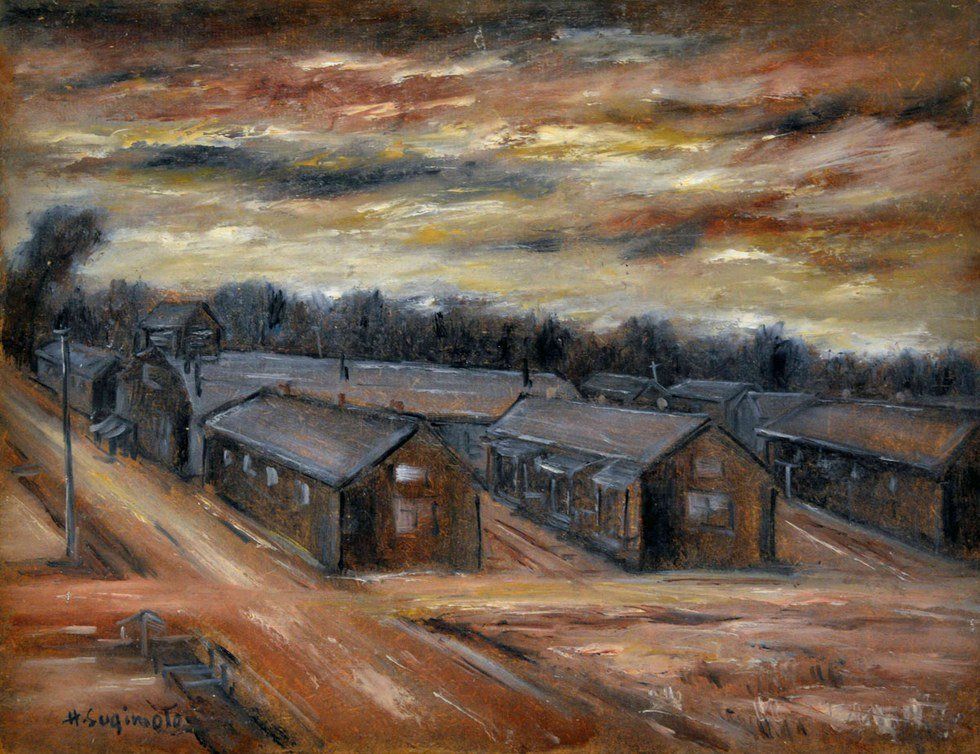
It's time for a bit of a history lesson. What comes to mind when I say World War II? Nazis? Axis and Ally powers? The Holocaust? All of the above are correct. I'm sure everyone got those immediately as they're a few of the most widely taught bullet points of a World War II unit in schools. Don't get me wrong, they're important, I'm not trying to say they're not. The Holocaust in particular is a wildly important facet of world history! It's living history, in fact, as there are still living survivors with the literal scars to prove it. But I want to focus right now on a lesser known subject of the era, one also a part of living history; Japanese American Internment Camps. After Pearl Harbor, American racism hit a boiling point across the nation that prompted the government to round up people of Japanese descent and "relocate" them - much of the recorded history on the camps uses this kind of watered down language in an effort to save-face rather than own up to it. Some people refer to this as "America's dirty secret" as it's often skipped over in history class. I myself can only remember one instance in which I was formally taught about this particular American atrocity. I can't remember a textbook that mentioned the camps at all which is an utter disgrace to this nation. There are survivors whose voices are not being heard and an important aspect of history being swept under the rug in an egregious spectacle of privilege. You know what they say: History is written by the victors. I, however, won't stand for it - and I know I'm not alone. In times like these when it is so easy to be afraid and consumed by hate it's important to remember where those feelings have gotten us in the past. History is a mirror to the world through which we see our future mistakes in the ones from our past.
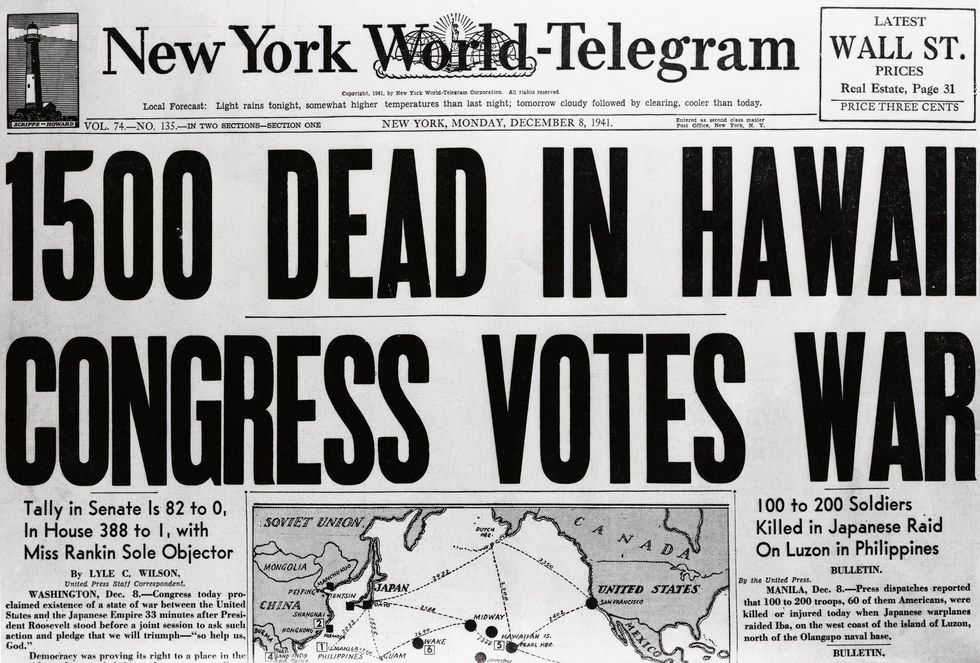
(News of War just a day after deadly attack)
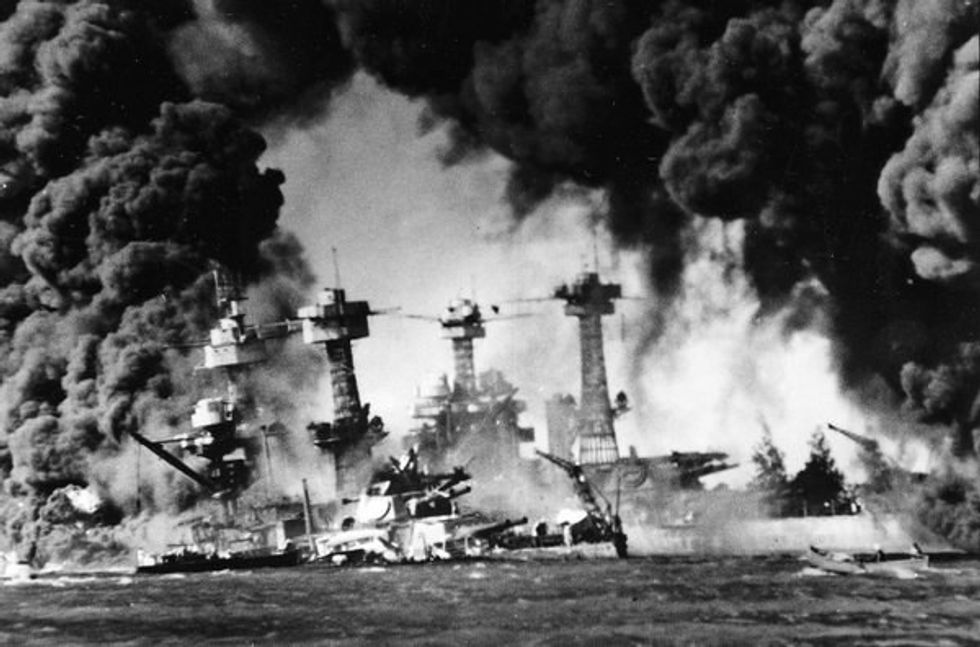
(Image of Massive Destruction During Pearl Harbor)
On the morning of December 7, 1941, an American Naval Base on the Island of Oahu was attacked by hundreds of Imperial Japanese fighter planes. The attack lasted about 2 hours, enough time for the Japanese to destroy more than 300 planes, 20 vessels, and 8 battleships. Over 3,000 American soldiers were either killed or wounded in the attack, leaving America as a whole terrified and confused. President Franklin D. Roosevelt - who was warned that Japanese forces were suspiciously focused on Hawaii 3 days before the attack - and Congress declared war the following day, officially entering World War II. After several years of attempted isolationism from the growing tension in Europe, Asia, and Africa, the United States was dragged into the fray. Needless to say war is hell! Men were sent away from home to fight, women entered the work force in numbers the nation hadn't seen before, and even children were asked to contribute to the war effort by collecting scrap metal and buying war bonds.
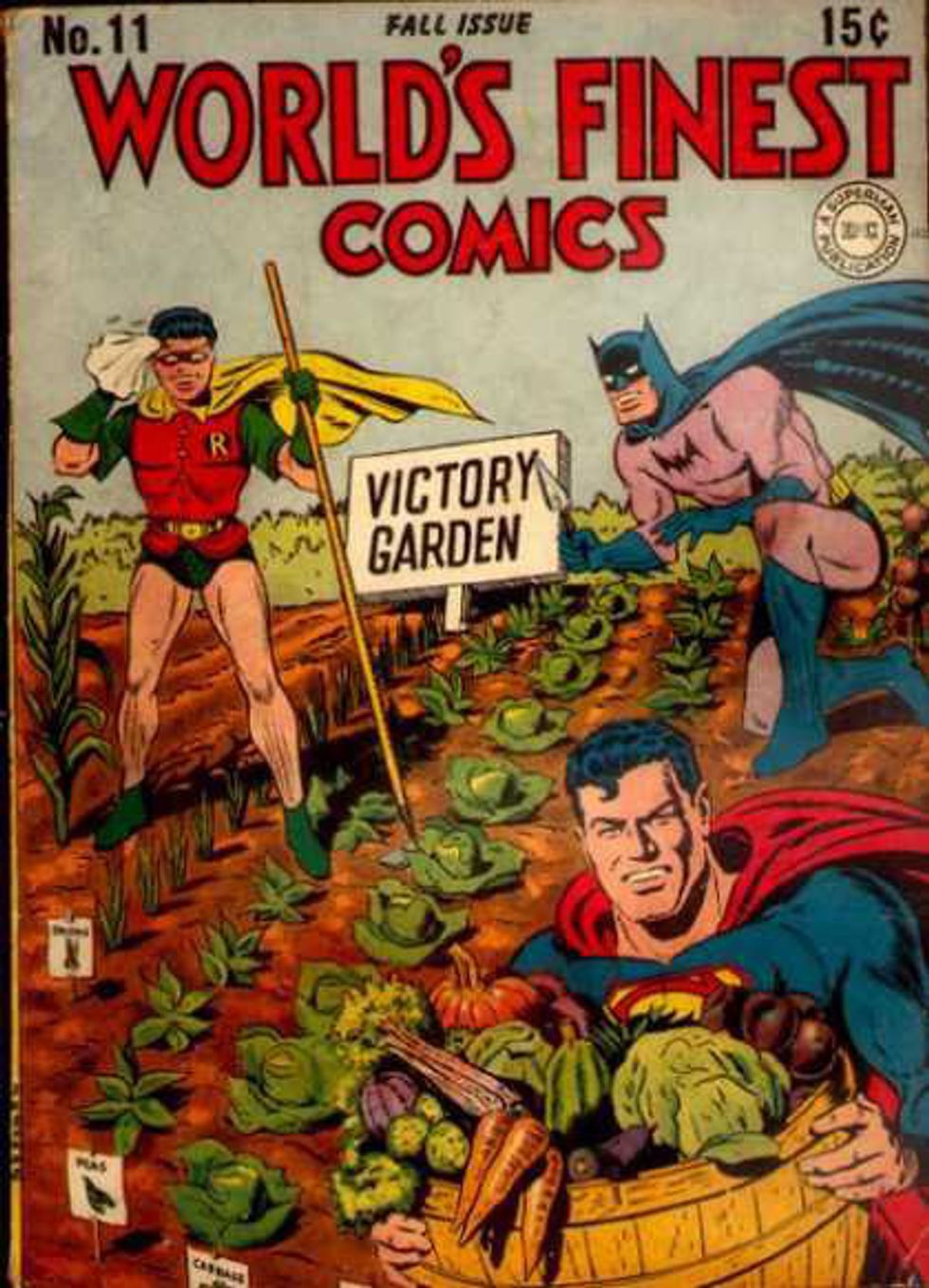
(Propaganda Aimed at Children)
At this point in the war, Germany was operating death camps across Europe. They rounded up Jewish, Gay, Romani, and Sinti Europeans as well as perpetrating continual persecution of black and "mixed" Germans. Meanwhile, America was almost no different. After Pearl Harbor, Roosevelt signed Executive Order 9066 which allowed the government to legally round up Japanese people living on the Pacific Coast in early 1942. The idea was that anyone with Japanese ancestry was a possible threat to national security. These people - 62 percent of which were American citizens - were ruthlessly uprooted from their homes, forced to sell their businesses at the drop of a hat, and were treated as terrorists for crimes they didn't commit. In fact, within the Asian American community, crime in general was always low. It truly boiled down to pure and simple racism on the part of the government.
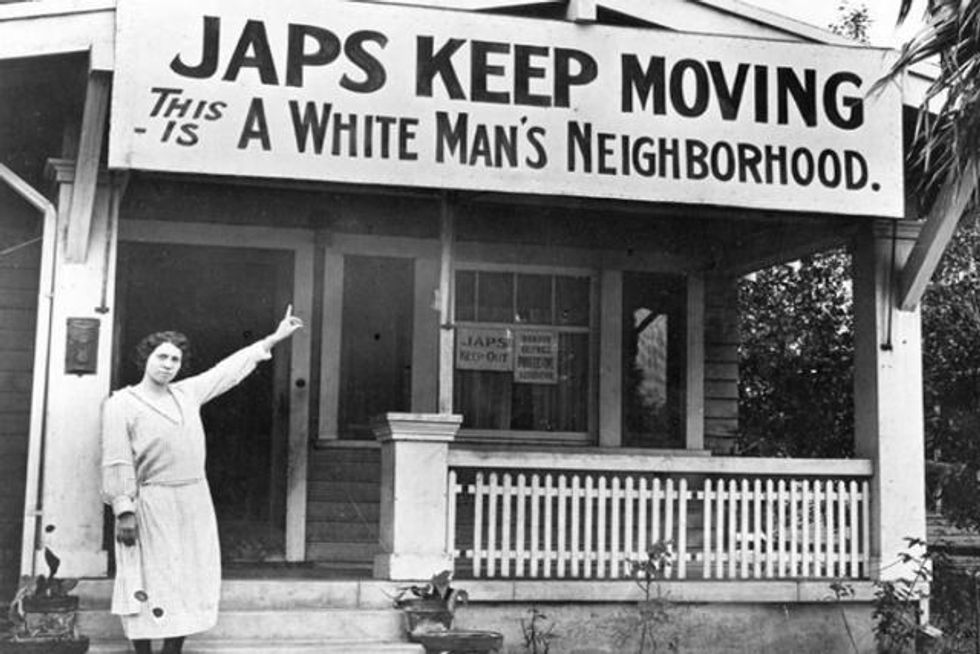
(Anti-Japanese Sentiments in America)
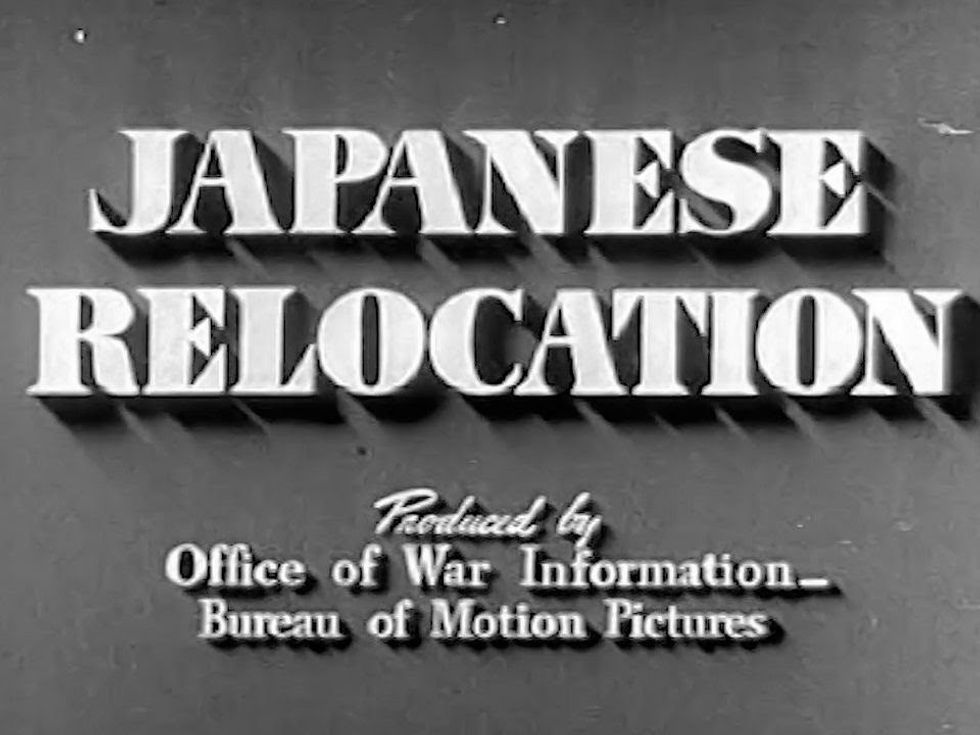
(Still from an Internment Propaganda Video)
It began with a curfew set for Japanese Americans. Then across the community stories began to circulate of male friends, colleagues, and family members being taken into custody by the FBI. There are reports that just hours after Pearl Harbor there were raids on the homes of Japanese Americans for any sign they might have loyalties to Japan. Government warnings of constantly looming threats gave a voice to racist Americans, awakened latent racism amongst co-workers and neighbors. It culminated into a plea by the American people to have "Japs" removed from their communities. 120,000 Japanese people were labeled "Enemy Non-Aliens" as a means of separating them from white Americans and dousing sympathy. Most of these people were legal citizens and those who weren't were likely family of first generation Americans. People were given a week to report to "Relocation Centers" where they were imprisoned until the end of the war. It was believed by many Americans that they were working together to sabotage the war effort or were spies working for Imperial Japan. Later investigations into the camps, however, tell us that a lot of Japanese American families who were "relocated" owned coveted farmland across the west coast. That's a pretty big deal. That means that jealousy on the part of more privileged but equally naturalized citizens was what partially prompted American allegiance to the idea of internment. There's even some evidence that the IRS was destroying documents of ownership leaving people with nothing to come back to after being released. Government officials were pushing paranoia on an already terrified nation and leaving more than 100,000 of its own people literally out in the cold!
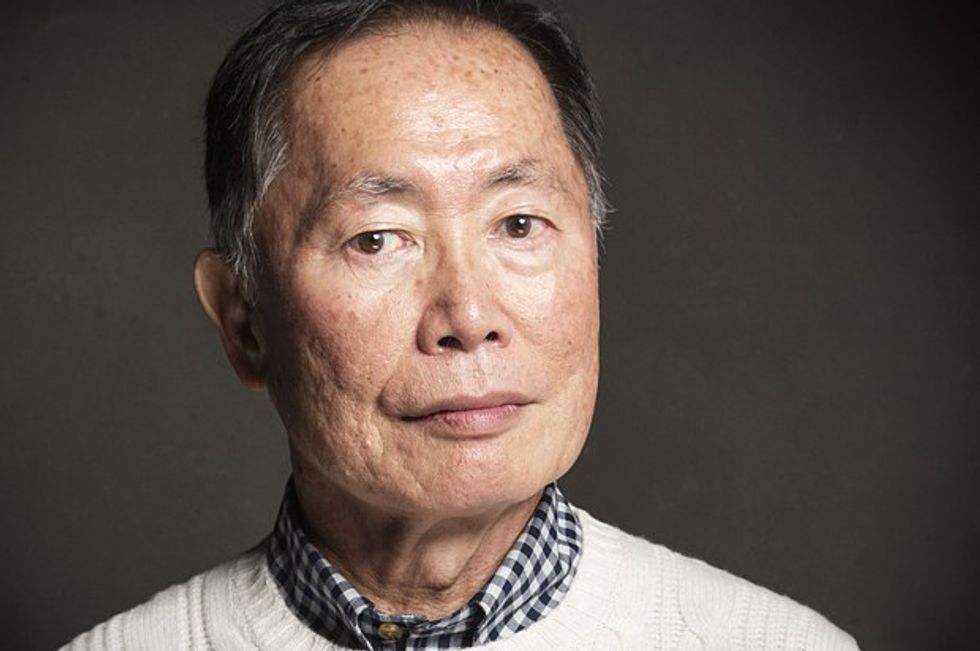
(Actor and Internment Survivor George Takei)
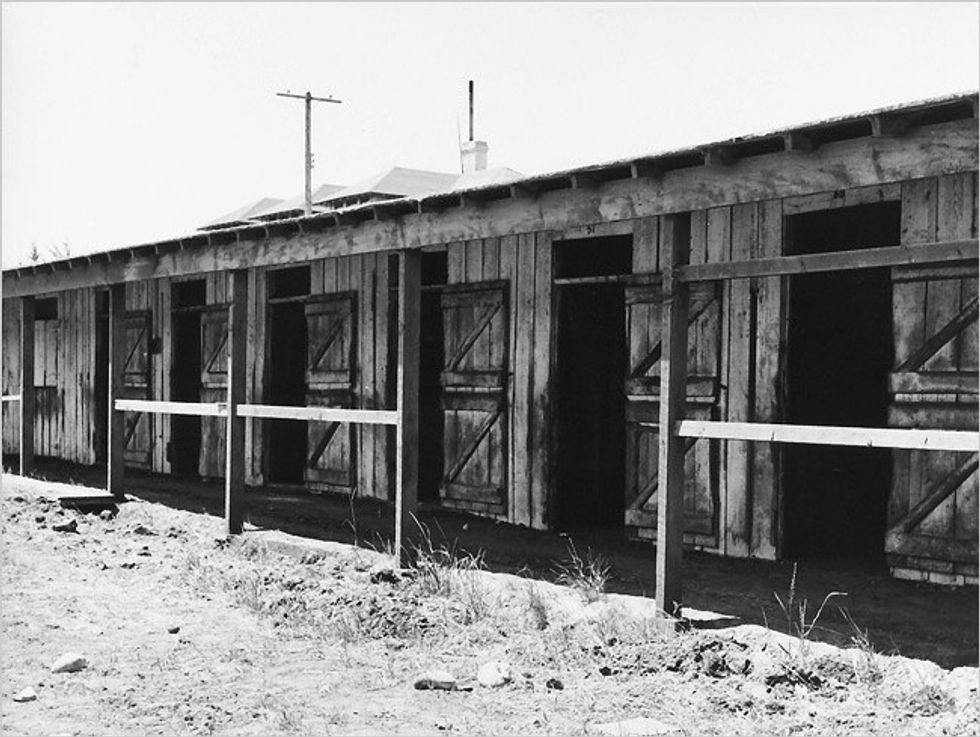 (Horse Stables Used as Housing for Internees)
While officially designated "Relocation Centers" were prepared, Internees were subjected to humiliating conditions as they waited. Families were crowded into stinking horse stalls with other families for several months. Actor George Takei recalls his own experience when his family (including his baby sister) was ordered out of their own home by American soldiers. He recalls the imposing nature of their presence saying he clearly remembers the way their bayonets shined in the morning sun. Disturbingly he also recalls thinking it was "fun to sleep where the horses sleep" when he and his family were packed tightly into their unsanitary quarters. He was a five year old child at the time who didn't understand what was happening but learned to adapt. All of this became normal very quickly for him and probably for a lot of children who had no choice but change with their situation. They were forced into a sub-par educational system taught by teachers who weren't educated well enough themselves. Malnutrition and subpar medical care became an epidemic that created lifelong struggles for internees of all ages. Almost 2,000 people died while imprisoned as a result of smallpox, whooping cough, flu, typhoid fever, diphtheria, and tuberculosis. And due to horribly unhygienic living conditions food poisoning was rampant. But when the war began to take a toll on the American workforce the manpower was found within the barbed-wire fences of 10 different internment camps erected in Arkansas, Arizona, California, Colorado, Idaho, Utah, and Wyoming.
"Enemy Non-Aliens" were forced to work for very little pay to buy necessities for their families. The camps were fairly self-sufficient with very little outside help, meaning the government really just didn't care. Workers were paid less than $20 a week (payment depending on their individual level of skill and training) as doctors, nurses, teachers, and community leaders. Only American-born citizens (Nisei) were permitted to hold positions of power which stomped on the traditions of the older generation (Issei). Religion wasn't entirely policed other than a ban on State Shinto which relied on the belief that the Emperor as a divine being. Obviously that was a big "HECK, NO!" from the Military Police watching the prisoners every move.
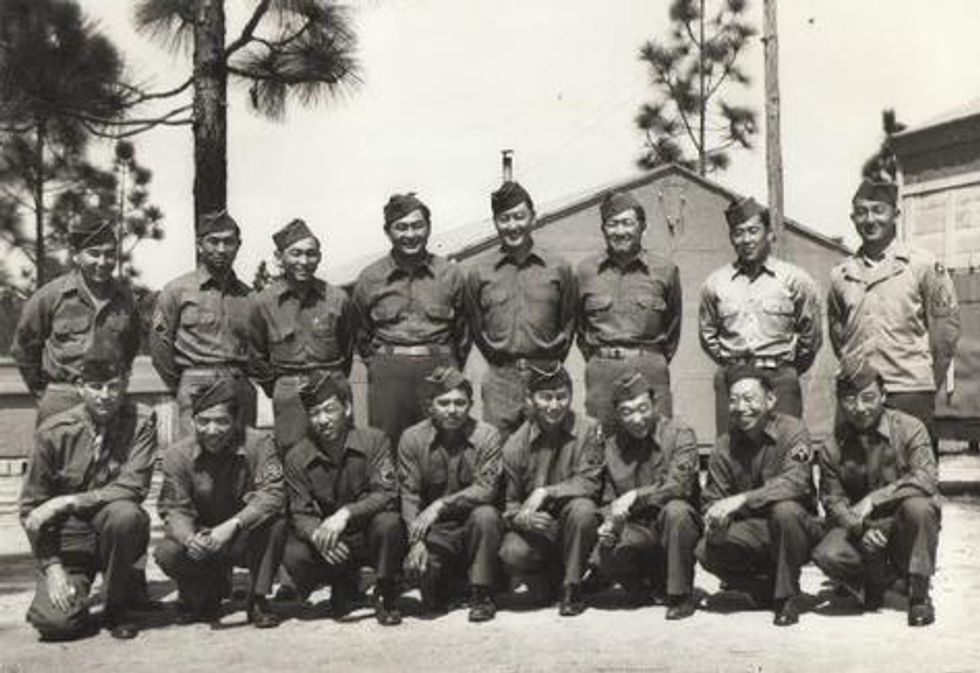
(442nd Infantry Regiment)
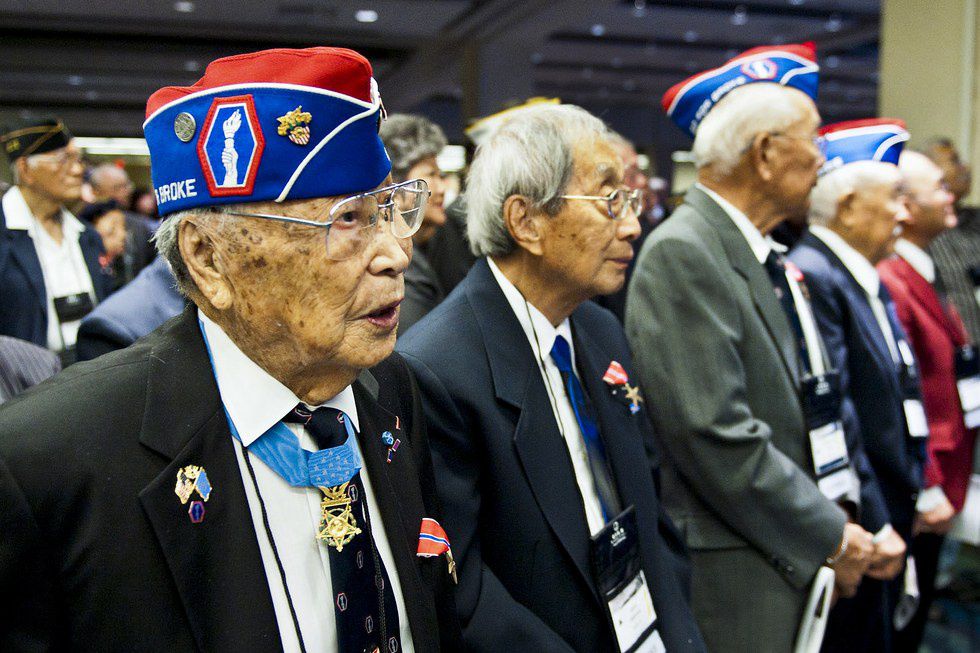
(Members of the 442nd Infantry, Nov. 2011)
Along with jobs inside the camps came the "opportunity" to walk outside the fence when more soldiers were needed for the war effort - You remember, the one the Japanese were trying to sabotage? There is a tragic irony in that both men and woman were asked to join the military and fight for a country that didn't want them walking freely down the streets. The 442nd Infantry Regiment was almost exclusively made up of Japanese Americans. The regiment fought in some of the most dangerous battles of the war and became the most decorated unit of its size and service. Meanwhile, internees were forced to make American flags both for domestic and military use, work that to me sounds more like writing "I'm a Loyal American" over and over again on a chalkboard as punishment. Mr. Takei laments the injustice of having those same flags returned to interned family members when one of those brave soldiers had fallen, fighting for a freedom none of them may ever see.
In 1945 the camps were preparing to either release or relocate internees. A questionnaire of American loyalty was given to prisoners essentially engineered to clear the American conscience. Once again Takei remembers his personal dealings with oppression. A particularly troubling two questions on the survey which asked: "Question 27: Are you willing to serve in the armed forces of the United States on combat duty, wherever ordered?
The questions were insulting! If you didn't swear to fight for your country, a question Tekei said was posed to everyone, including an 80 year old woman or a 17 year old girl, you were being disloyal. It basically left them with no other option than to "admit" inherent allegiance to Imperial Japan and thus justifying the American government in their decision to incarcerate them. People who were found disloyal to the United States were not granted freedom and were moved to a much higher security Internment facility. If that's not one of the most absurd things you've ever heard then I don't know what is! The last camp was not closed until 1946 (The actual war ended in September of 1945) and it wasn't until 1948 people saw any reimbursement for lost property. Many citizens had little to nothing to return to and were forced to completely start over. Finally in 1988 restitution of $20,000 was provided to each survivor, an estimated 73,000 people were due to receive payment for their suffering .
Today its important more than ever to look back at our history and recognize in ourselves those same ugly sentiments. It's easy to allow yourself to drown in hate and fear but it's only going to end up hurting innocent people. Look in the mirror! There are many similarities to our past intolerance toward Japanese Americans that we are currently aiming at Muslims. I encourage that people continue to educate themselves on Japanese Internment Camps, Lord knows I've barely scratched the surface. The more people see how exactly their intolerance has worsened the condition of the world the easier it will get to combat it at the source. We have Donald Trump currently calling for a ban on Muslims in the U.S, eliciting a response from one of his top supporters, state Rep. Al Baldasaro whom mention the camps as though they were some kind of success. "What he’s saying is no different than the situation during World War II, when we put the Japanese in camps[...]The people who attacked innocent people in Paris came through open borders. From a military mind standpoint, all Donald Trump is saying is to do what needs to be done until we get a handle on how to do background checks." This all according to a quote from Baldasaro taken from ABC affiliate, WMUR. In Trump's defense (I think I just vomited in my mouth a little) He, himself did not outright say that he advocated Internment Camps. But you have to admit that his fervent supporter's words are hauntingly similar to the ideas that led to both Nazi and American concentration camps. You can't imprison someone for a crime they didn't commit and you certainly can't assume that they'll commit one in the future based on race or religion. It hasn't worked in the past and I promise you it won't work in the future.
















