
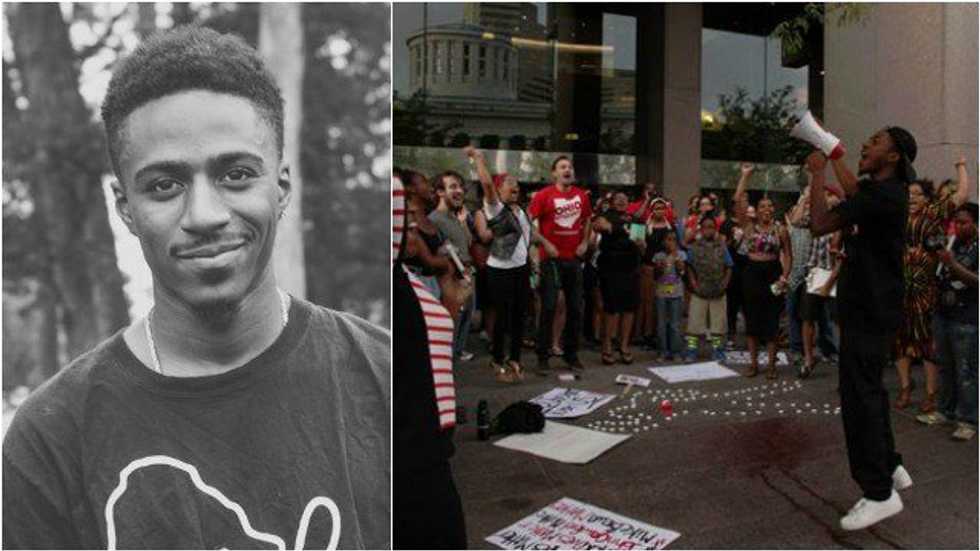
Depression is a war that you can either win, or die trying. Unfortunately this may have been the case for 23-year-old Black Lives Matter activist Marshawn McCarrel II. "My demons won today. I'm sorry." Marshawn posted on his Facebook status hours before police says he took his life on the steps of the Ohio Statehouse.
Marshawn M. McCarrel II was a founding member of Pursuing Our Dream a program created to mentor youth, and Creator of Feed the Streets an effort to feed the homeless in Columbus, Ohio which he launched in October 2013 after his experience with homelessness. He organized protest and became an instrumental part of bringing awareness to the Black lives Matter movement after the killing of teen Michael Brown in 2014. Along with all of these things Marshawn was a son, a brother, an activist, a poet, and a compassionate leader.
Kerby Jean-Raymond, the designer of Pyer Moss, in his efforts to bring awareness to depression, and mental illness used Marshawn's final words on a placard in his fashion show during New York Fashion week February 13th. He said Mashawn's tragic death is an "an example of how many mask or hide their depression because society doesn't take it serious.”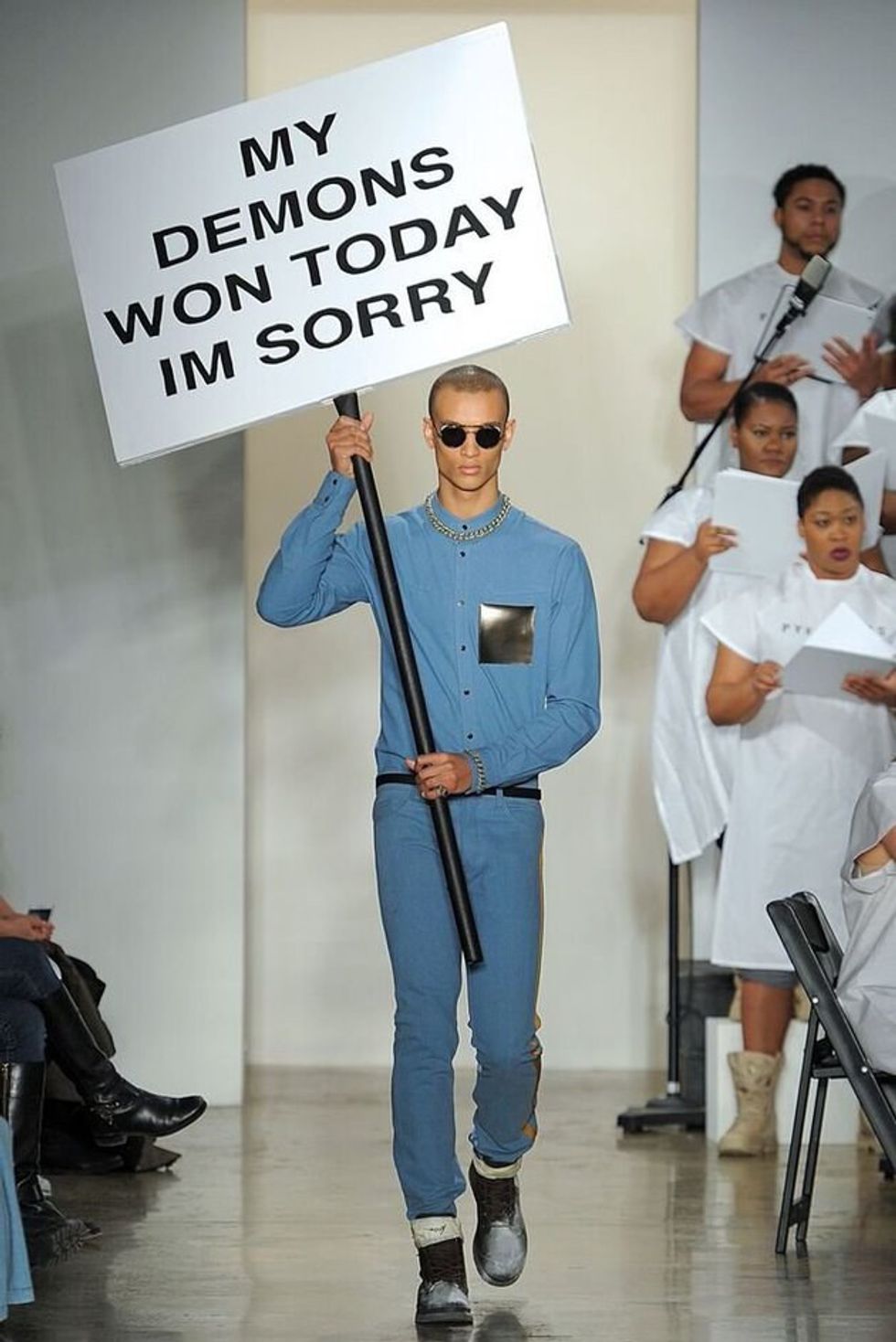
Which raises the question: how serious we take issues of depression and mental illness in the black community?
Studies found that Black Americas are more susceptible to depression and anxiety — a disparity that is believed to be a product of social stigma and lack of access in our community says health experts. Many black Americans also fail to use the resources that are given when available.
In the black community, mental health is passed off as an issue that is minuscule, or sometimes even ignored all together. So often we dismiss the signs in hopes that it will go away. We believe that depression and mental illness is not a "black thing," so don't seek help because it's frowned upon, then we turn to the church or ask for a prayer instead of getting the psychological help that is needed. Black people not committing suicide is a myth that we need to move fast. No racial group is immune to anxiety or depression. Today, suicide is the third leading cause of death among young African American men says the Suicide Prevention Research Center. While we're ignoring the signs hoping that it'll disappear people are suffering alone trying to handle the weight of there struggles all on there own.
Along with myths, stereotypes such as, "The Strong Black Woman," or "The Angry Black Man" also create a greater plight among Black Americans. These stereotypes gives false interpretations of how we should manage our problems. We're not allowed to be vulnerable or show weakness, so we ignore our demons because we're told to be tough even though the most resilient person is worn down by life and all that comes with it, but we have to debunk the myths, the stereotypes. We have get a little uncomfortable in order to move forward. We can no longer allow suicide to be the elephant in the room. We have to have these mental conversations, create dialog in our homes, in hair salon, in the barbershop, even in churches, because if not, how long until our demons win, too?
If you or someone you know needs help, please call 1-800-273-8255 for the National Suicide Prevention Lifeline.Outside of the U.S., please visit the International Association for Suicide Prevention for a database of international resources.