


Growing up, I realized two very important things about myself that would come to shape who I am as a whole and how I see myself. The first is that if you’re not my mom, then there’s a slightly above average chance that I would rather die than listen to your instructions. I detest being told what to do or how to do something unless I explicitly ask for your input. The second is that I am absolutely awful at letting go of people. I know these seem like two different conversations. Not quite a simple equation, but when put into the perspective of having to let go of someone because you’re forced to, it all comes together.
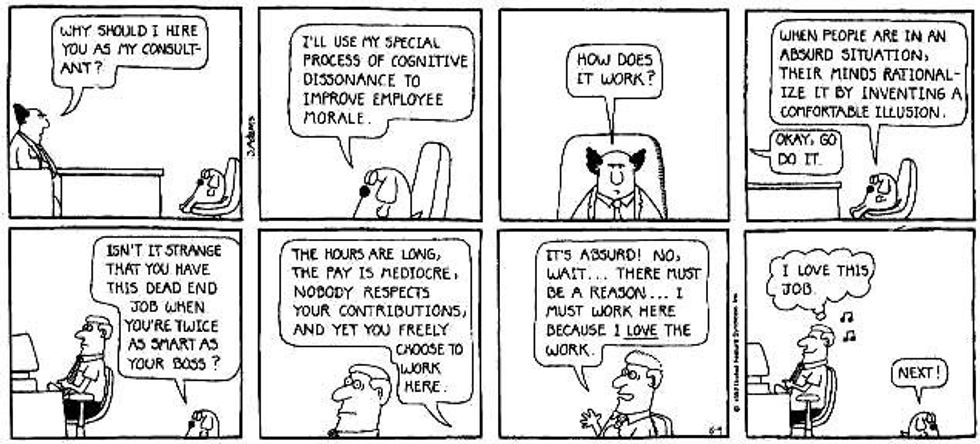
A quick education break – in General Psychology they teach you that as a collective species, humans hate to be inconsistent, which is why we have such things as behavioral patterns we can study. One of which is called the Cognitive Dissonance Theory. The theory states that inconsistency between cognitions produces discomfort (dissonance), leading a person to act to restore consistency in order to remove that discomfort. So for example, say a group of people all apply for the same job. Obviously, only one person can get the job so when the others don’t get it there’s this resentment over the job while they still have longing for it. Rather than saying that it was a missed opportunity and that they really would’ve liked the job, they act as if the job wasn’t that great and in the long run it really is better for them not to have it. The same is true if your job isn’t that great, but you’ve convinced yourself that you love the work.
People like to believe they’re in charge of their lives. They like to think that at any point when they make a decision it is wholly their decision and it is going to affect them in ways big and small. The truth is that every decision you make is already affected by the billions of choices others are making. I’ve never been good at big decisions (or small ones for that matter) I always believe that there is something I’m not seeing or a chance for change which makes it difficult to decide. Letting people go specifically is something I find difficult because I tend to look at people how I want to see them rather than how they actually are. I want to see potential and so I find it; holding out hope that one day they will make the decisions I need them to make, as selfish as that it. I will fight forever for the people I care about without questioning whether it’s the right thing to do. A lot of people will very easily tell you that if the other person isn’t trying, then you shouldn’t try either. But that’s so one sided. If both of you carry the mentality that only the other person has to try for you to try, then is anybody even trying? No.
Now for the big tie in of the Cognitive Dissonance Theory and letting people go. Unfortunately, not all the times does the other person want to stay in your life and makes the decision for you. I used to think it was somewhat unbearable and hurtful when people decide to cut you off. You could do nothing, you were decision-less. It’s a lot like being told you have to do something and as I said earlier, I’m not the best with being told what to do. But because of cognitive dissonance, when people do cut us off our minds are more readily to accept their leaving. In the same fashion as accepting we didn’t get the job, we are accepting this person’s decision to leave. So when someone leaves and you’re OK, you don’t have to feel bad. You don’t have to think your previous feelings weren’t real. Chances are your love and caring were legitimate feelings, but to continue this balance and get rid of the dissonance you’ve created a new reality where you’re better off. Whether you’re truly better off will take time and is once again based on circumstances that are entirely out of your control, but you have to admit it’s a little reassuring to know that if nothing else, your body is there to help you when you feel helpless.