
Demi Lovato once said, “Love is louder than the pressure to be perfect.” But what is perfect? How do you define perfect? Social media has fostered the idea that “nothing tastes as good as skinny feels.”
About 8,000,000 people in the U.S. suffer from eating disorders, 1,000,000 of them being men. These disorders are caused by a plethora of reasons. Traumatic situations such as personal problems at home or perhaps even bullying can pose as triggers to these illnesses. Society overall pressures many teens to “be skinny,” and we see this through social media.
Don’t deny it; there are plenty of adverts, social media platforms and commercials that promote weight loss and dieting, and I know you’ve seen one. How many times have you seen an Instagram account dedicated to being pro-anorexia (also known as “pro-ana”), or a Weight Watchers commercial, or even those sketchy diet pills (which don’t work)? How many times have you heard of celebrities having to go through extreme diet regimes for a role (i.e., celebrities like Anne Hathaway, Matt Damon and Alexander Skarsgård)?
Of course, it’s difficult to avoid seeing “perfect” figures since they are all over your phone, your TV and magazines.
Yes, we are doing better as a country by hiring more plus-sized models in the modeling industry, but how often do you see a curvy woman on TV, catalogs or in magazines? Not often, and that is something that needs to change. Eating disorders don’t seem like that big of a deal, right? False. It is so hard for those with eating disorders to come forward, so if you notice something different in one of your friends or family members, do not be afraid to talk to them. If possible, get them the help they need.
It isn’t easy. People cannot just brush off an eating disorder as “a small issue.” You cannot say “just eat” because it is more than that. Eating disorders consume the mind and can distort the way these people look at themselves. Four out of five women look at their reflection in the mirror and are unhappy with what they see.
Dealing with an eating disorder affects more than their eating habits; it affects them as a person in different ways. These adolescents deal with thoughts of “feeling fat” and try to solve this problem by fasting, starving or skipping meals. This is not the way to deal with your body. Exercising can take you so far on this journey to healthiness, whereas refusing food that is available to you gets you nowhere but downhill.
Self-harm is just one of the many symptoms that teenagers with eating disorders have. Approximately 41 percent of teens that suffer from eating disorders engage in self-harm. The issues that come along with eating disorders are not brought up and are not being solved. If help is needed, talk to someone first.
When I was in fifth grade, I was happy up until the day that a boy had called me fat at recess. Half a year later, in sixth grade, my self-esteem had plummeted and I found myself in a situation that would spark my emotional turmoil: self-harm. Self-harm was my release, my way of dealing with the pressure I felt to be perfect in middle school. This would continue to be my routine until I told my mom one day in the middle of October 2012: my freshman year. For the first time, I was opening up about my insecurities and how I wanted to look like the women on the covers of magazines. Currently, as a first-year, I am healthy and I am proud of the person who I became after going through this experience. I felt happier after every time I went running with my friends or working out at the gym. I didn't feel unhappy with myself or my body because I knew I was healthy.
If society pressures the beautiful women that we are to simply become skinny, we are being set up for disaster. We as a nation need to fix this issue among us. People are killing themselves slowly, and we need to work as a country to change the image of “the typical beautiful and skinny American woman” because that does not define who we are.
If “skinny” is the image that the U.S. wants us curvy women, us plus-sized models, us average American women and men to portray, then this is not the America that I thought would unite everyone.
America, please stop shoving images of slim women in our faces. We are not like them, and even if we work as hard as we can to get there, we are not them. America, do not treat us like we are nothing just because we don’t fit your “standards” or a size zero.
America, please allow more clothing companies to include our sizes. To Abercrombie and Fitch’s CEO, whose stores only sell clothes to “cool, good-looking” people (stated by him), and whose stores do not carry sizes over a L in women’s or an XXL in men’s, please make these sizes larger for us bigger people. As overrated and expensive as they are, we’d still like to fit into your clothing.
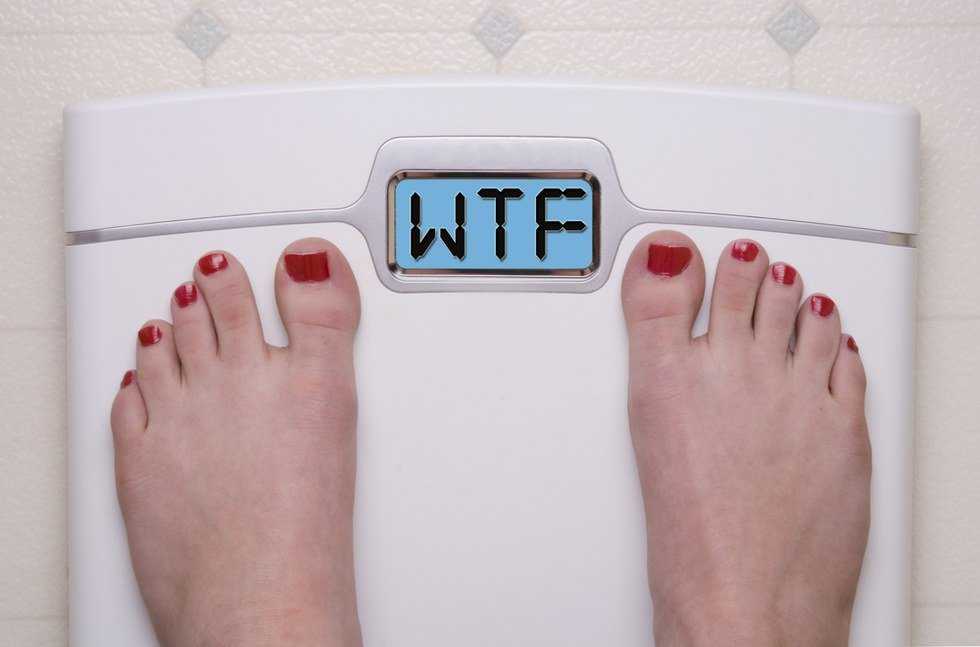
Ladies, please don’t be discouraged by the models you see on TV like Victoria’s Secret Angels or the women you see on those weight loss commercials. The number that appears when you step on the scale does not measure your inner beauty which is most important. That number could never define how beautiful you really are, inside and out. It does not tell you who you are as a person.
And men, don't you for a second think that all that women want are six-packs or chiseled arms (heard of the "dad bod," anybody?). This generalization has blown up out of proportions, and I'm telling you now that not all women want you simply for your body. We love you for you, we want you to love us for who we are, too.
So tell me, how do you define perfect? The way I see it, I believe that all of you men and women, of all ages, heights, body types, skin colors, are beautiful inside and out.