
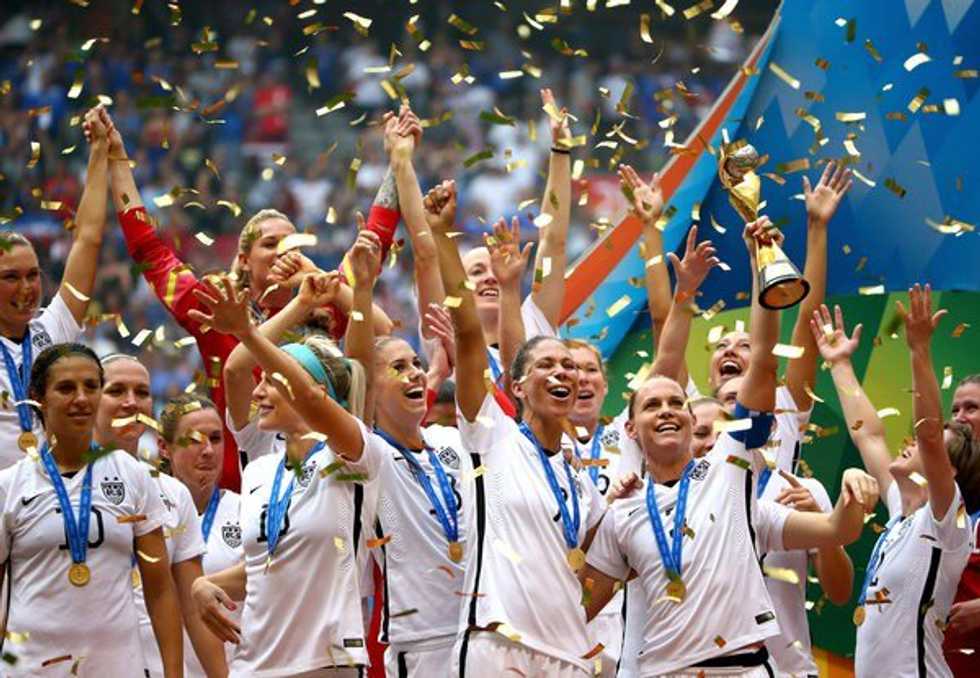
As you may or may not have read, on Thursday, March 31, 2016, five U.S women's national team players (Carli Lloyd, Hope Solo, Becky Sauerbrunn, Megan Rapinoe and Alex Morgan) announced that they had filed an action with the Equal Employment Opportunity Commission (EEOC). Their suit is a file for discrimination based on sex. The women posted about the differences between their team and the men's team on various forms of social media.
Alex Morgan wrote this on her Facebook page Thursday morning, "Today, I joined my teammates to file an action with the Equal Employment Opportunity Commissions, accusing the US Soccer Federation (USSF), of wage discrimination on behalf of our entire US Women’s National Team. This is not only about equal pay – we get paid less than half of our male counterparts – but also equal treatment. We deserve to play in top-notch, grass-only facilities like the U.S. Men’s National Team, not dangerous turf fields. We want to have decent travel accommodations. We have dedicated our lives to this sport and our country and we love soccer and our fans. We think it’s high time for employers to truly address the inequality and do not only what is fair, but what is right. We decided to do this for all of the little girls across the country and around the world who deserve to have a voice, and if we don’t leverage the voice we have, we are letting them down. We hope you’ll join us in learning more about the issue and supporting us as we push forward. #equalplayequalpay ." Morgan, like her teammates, cites gendered discrimination not only in their pay gap, but also between the caliber of facilities and travel accommodations.
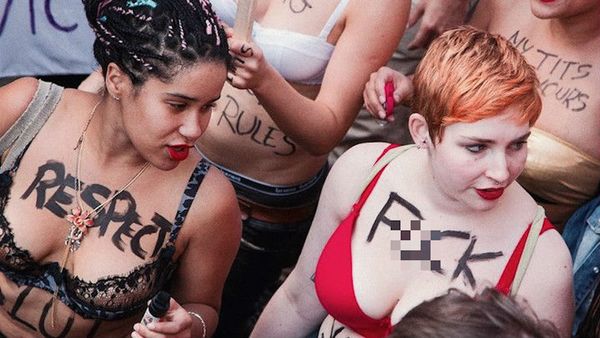
These five women are taking a huge stance against sexism in sports. While professional athletes are on a different a playing field than collegiate athletes, it is important to note that sexism in the sports world is occurring at every level.
While Title IX does its best to create equal opportunities and programs for both men and women, there are still some very obvious differences between male and female sports at the collegiate level. At NESCAC schools specifically, it can be observed that women's sports typically play before men's sports. While this may not seem like a big deal, the men's sports are typically getting the "prime time" spot. This does NOT mean that female athletes are attacking their fellow male athletes and blaming them for this issue. This does mean, however, that this problem is coming from sources of much higher power.
My DI, DII, and DIII female friends have told me stories about their teams being told to leave the weight room so that male teams could do their workout. Others have said that their women's club teams are not televised, but that the men's club teams are. These are issues that should not exist. Women, like men, should be able to lift at their given time without being told to leave. All club sports should be televised or live streamed, regardless of gender. These are reoccurring issues that are happening at colleges all over the country.
As an athlete, I encourage female and male athletes to pay attention to the culture around them. Pay attention to the differences and make note of them. As an athlete, you have the ability to talk to your coaches and even the athletic director about these problems. It starts with the recognition of inequality to find ways to make fair the playing field. It is so important that men's teams not feel at fault for these problems. Female athletes just ask that you start questioning the actions that take place, and not feel like we are trying to bring you down but rather gain access to what you already have been awarded.