
Soccer has been a major part of my life since I was first introduced to the sport at age five. From the start, I was drawn in by the players, specifically those representing the United States Women’s National Team (USWNT).
Even at a young age, I knew and understood the challenges these women faced — fighting the wage disparities between their salaries and the men’s, the lack of acknowledgement or coverage of their games by the media, and the very sexist notion that, because of their gender, they did not deserve to even be considered athletes — just to play the sport they loved.
As a young athlete, their drive pushed me to be better than what I was. As a young woman, their determination to not only be the best at their sport but also to inspire young female athletes inspired me as well. What I failed to notice, watching these players at such a young age, was the lack of diversity on the team or how this same absence was reflected in the racial and ethnic make-up of my own teams, especially as I got older.
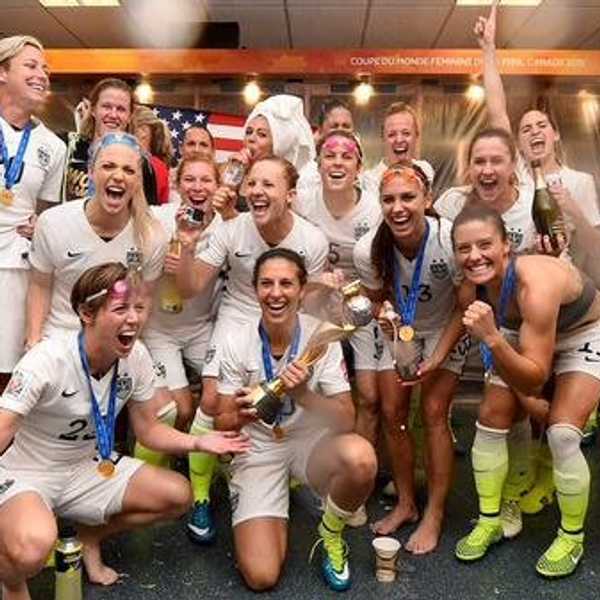
Watching the USWNT hoist their World Cup trophy in the air on July 5, 2015, that absence could not be more noticeable. In fact, the overwhelming whiteness of the team was so glaringly obvious that I couldn’t help but ask myself in the midst of all the celebration, “Who exactly are these women supposed to be representing?”
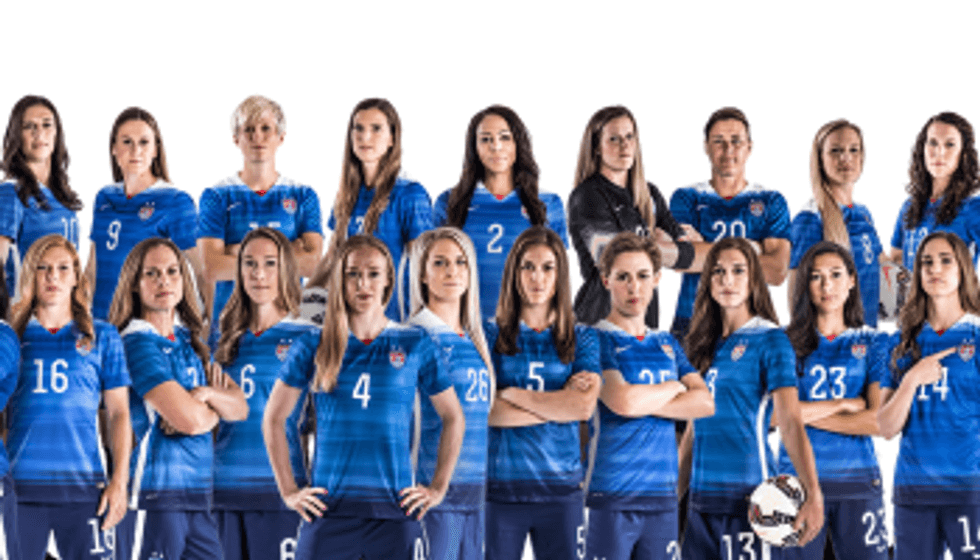
Because in a sport as universally played as soccer, in a country as ethnically diverse as the United States, a team made up of twenty white women and only three women of color surely could not be considered “America’s Team.”
This is not a new occurrence for the USWNT either. Since its inception in 1985, only a small percentage of the team’s roster has been comprised of women of color. And why exactly is that? If soccer has become one of the most popular youth sports in the country, what factors contribute to the skewed demographics that exist at the sport’s professional level?
The answer to this question seems to lie in the pay-to-play model that exists in many elite youth teams. These programs, which train young players and prepare them for future careers in professional soccer, require parents to shell out thousands of dollars a year in fees to cover the cost of uniforms, tournaments, and travel.
Looking at the racial breakdown of median income in the United States, it becomes obvious who is actually able to afford this expensive endeavor. According to a 2013 report released by the Census Bureau, White and Asian households have the highest average incomes in the U.S., while Hispanic and Black households have the lowest. It is no surprise then that these youth teams are filled mostly with young women who are white and upper middle-class, or that it is these players who go on to be recruited by professional clubs and eventually the national team.
Those looking to sidestep this situation might try to write off the USWNT’s diversity problem as nothing more than an unfortunate coincidence. Perhaps the team’s roster is simply made up of the best women for the job — the majority of which just happen to be white. But this excuse, which has been used to justify racial discrimination so many times before, feels like nothing more than a cop-out – especially considering recent evidence showing that members of the USWNT’s coaching staff may very well be discouraging women of color from even trying out for the team.
This evidence all points to a very harsh conclusion about the current state of women’s soccer in the United States: that the culture of the sport is largely a racist one, centering on wealthy, white players while leaving their marginalized counterparts out of the conversation completely. Whether intentional or not, the current system is a harmful one — not only to the future of the sport, but to the young players devoting their time to it — and it must be dismantled.
For me, the dream of playing for the USWNT has long since passed, but the same cannot be said for the thousands of other young women of color who still harbor fantasies about lifting their own championship trophies above their heads. There must be a vigilant effort on the parts of coaches, scouts, and players alike to seek out and advocate for these young women. Only then will we move closer to realizing my new dream: turning on the television and thinking to myself, “Ah yes, this is America’s team.”