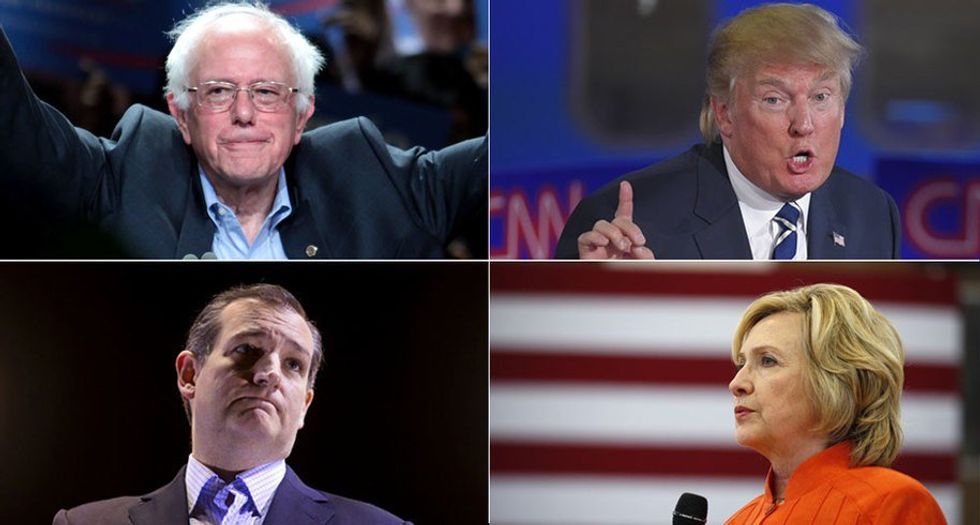
While we like to think that we decide who will lead our country based on each candidates' ability and past experience, we are often drawn to comparing their personalities as a way to judge them. And, to be fair, a candidate's personality can say a lot about their strengths and weaknesses as a political leader.
One way of categorizing and understanding the personality traits of most of the population is with Myers-Briggs personality types. While this system is not scientifically based, studies have shown that it is decently valid in terms of internal consistency and can predict through statistical correlation whether someone is likely to perform well academically, make a lot of money, have certain personality and mood disorders and even have certain political attitudes.
The actual underlying theory behind Myers-Briggs personality types is rather complicated, but fortunately, it can be simplified to four divisions: whether someone is a reflective Introvert (I) or a gregarious Extravert (E), whether they are an intellectual Intuitor (N) or a practical Sensor (S), whether they are an emotional Feeler (F) or a no-nonsense Thinker (T), and whether they are a flexible Perceiver (P) or an organized Judger (J). This creates 16 total personality types. Admittedly, this simplification loses a lot of the depth of the full Myers-Briggs theory, but it does make it easier to understand.
So, with that said, here are the personality types of the candidates who have been running for the highest office in the land. Let's start with a couple of the Republicans.
Donald Trump: ESTP.
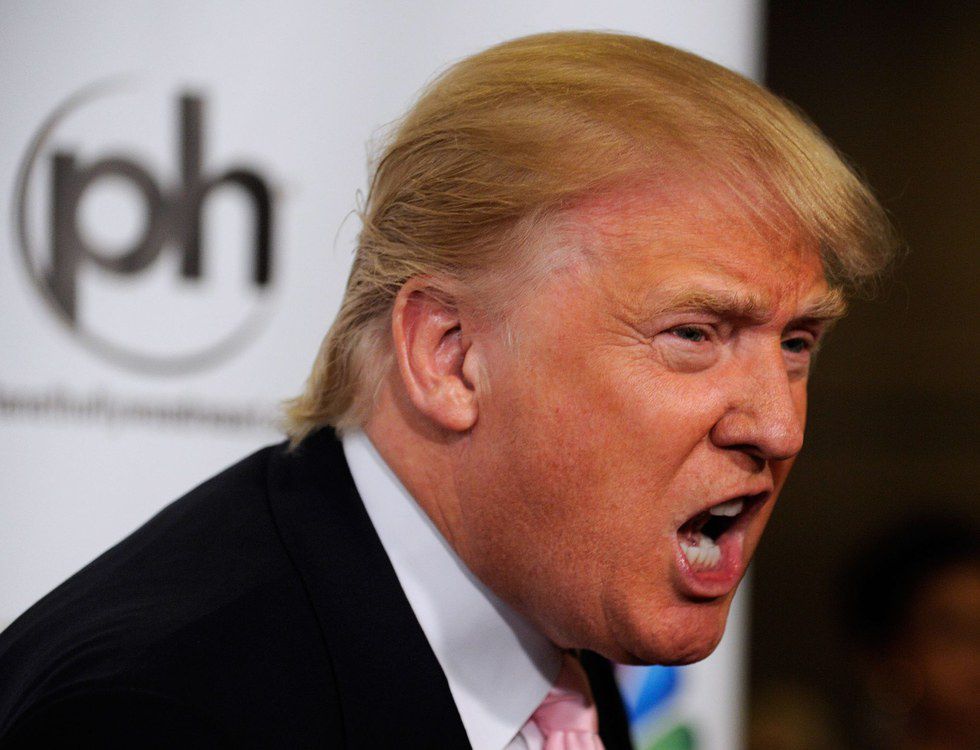
ESTPs are blunt, decisive and highly aggressive. Rather than understanding everything in terms of abstract theory, they try to keep it simple. Maybe that is why Donald Trump uses the simplest language of any of this year's presidential candidates -- he speaks using fourth-grade vocabulary, while candidates like Bernie Sanders use 10th-grade language. This allows him to connect better with the general population than those high-falutin' schmancy intellectuals that people can have a hard time relating to. ESTPs are also the most competitive and aggressive of the personality types, and they are not afraid to show it. Politeness is rarely their highest concern, and they are not above using insults to attack or degrade others -- as Jeb Bush said, it often appears that Donald Trump's strategy is to "insult [his] way to the Presidency."
Some of their strengths include that they are quick-thinking, realistic and highly confident. Some of their weaknesses include that they are poor long-term strategic thinkers and they often appear to have no filter when it comes to using respectful and socially acceptable language. Previous ESTP presidents include Andrew Jackson, James Buchanan, Teddy Roosevelt, Lyndon B. Johnson and George W. Bush.
Ted Cruz: ENTJ.
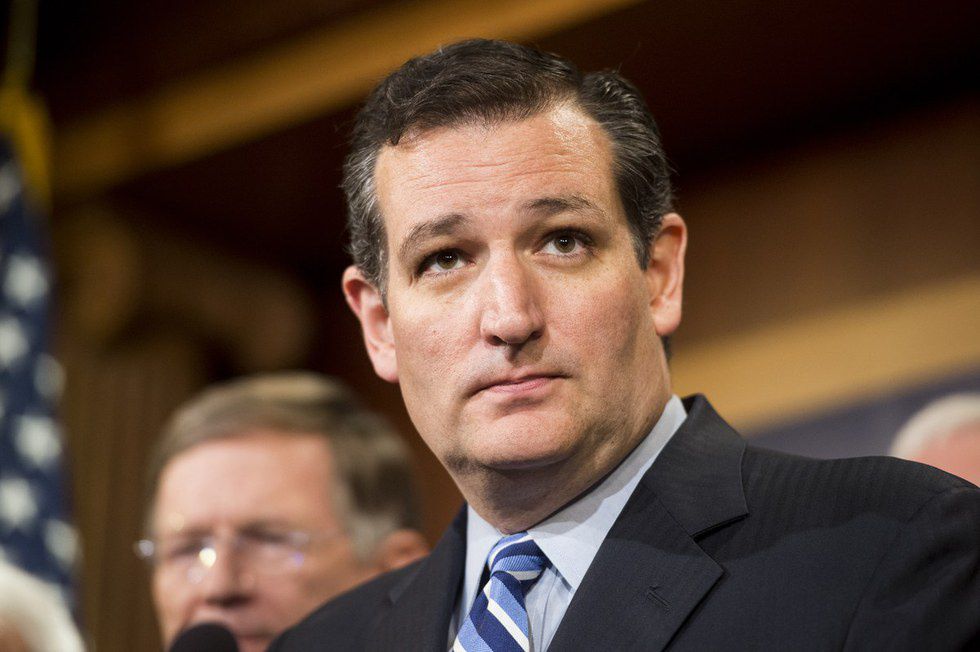
Like ESTPs, ENTJs are no-nonsense and all business, but unlike the ESTPs, they are much less impulsive in what they do and what they say. Indeed, they can appear so calculating and strategic that others have a hard time trusting them compared to other personality types. This comes with its own benefits and drawbacks -- while ENTJs are certainly one of the best types at making hard decisions, since they are not held back by deference to tradition, lack of foresight or emotional attachments, they are often seen as ruthless in the pursuit of power and of their goals. And that reputation could be argued as well-deserved, since like Napoleon Bonaparte, an empty throne almost always tempts them. But again, they bring the most practical combination of intellectualism and realism to the table compared to almost any other type.
Their strengths include very high confidence, long-term thinking and pragmatism. Their weaknesses include a desire for power and that they have a very hard time convincing others that their convictions are sincere. So far, there have not been any ENTJ presidents that I am aware of, although some have argued that Franklin D. Roosevelt was one.
Alright, let's take a look at a couple of the Democrats!
Bernie Sanders: INTJ.
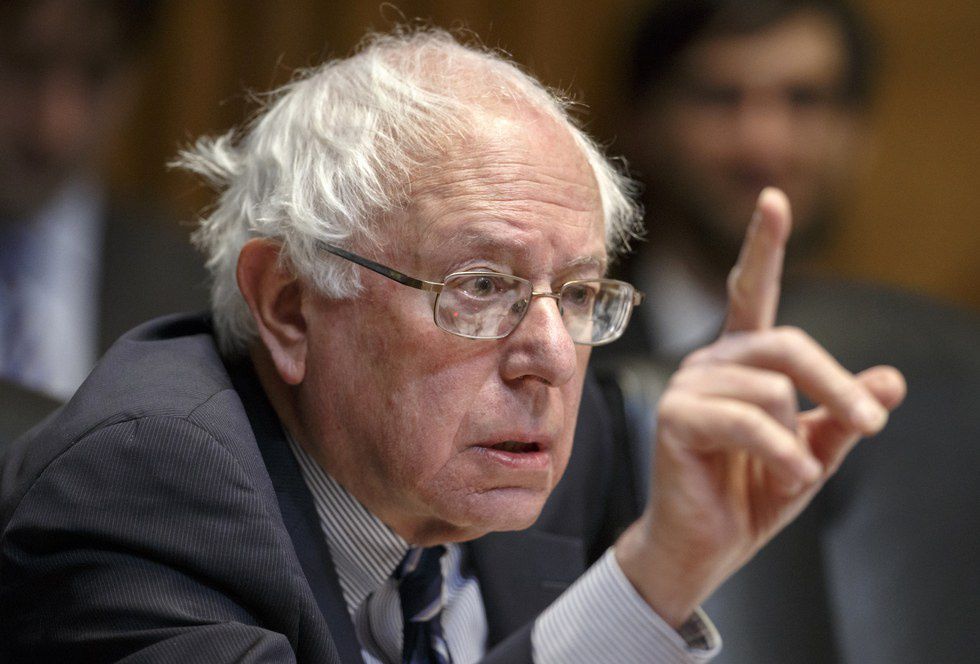
Similarly to the ESTP, the INTJ is a blunt and no-nonsense person. But, for the most part, that is where the similarities end. Where the ESTP is a fast-talking, simplistic realist who prefers to think on his feet, the INTJ is in every sense a deep thinker and intellectual. As mentioned above, Bernie Sanders uses the most complex language of any of the popular candidates, speaking to the American people at a 10th-grade level. He is also highly consistent, holding the same positions now on controversial issues that he held 10, 20 or even 30 years ago. This reflects INTJs' tendency to stick to a single long-term plan or vision rather than shifting and adapting. The INTJ's vision is not only a personal passion but often what he sees as the best solution for everyone, whether or not others think that it is realistic. Bernie Sanders is a Democratic Socialist, which means that he has ideas that others think of as radical and too idealistic to be practically implemented even though he has consistently worked to implement them for decades.
Some of their strengths include their consistency, long-term thinking and ability to see the "big picture." Some of their weaknesses include that they are often too focused on the future to pay attention to the present and that they can sometimes develop tunnel vision in the pursuit of their goals. Previous INTJ presidents include John Adams, John Quincy Adams, James K. Polk, Woodrow Wilson and Calvin Coolidge.
Hillary Clinton: ESTJ.
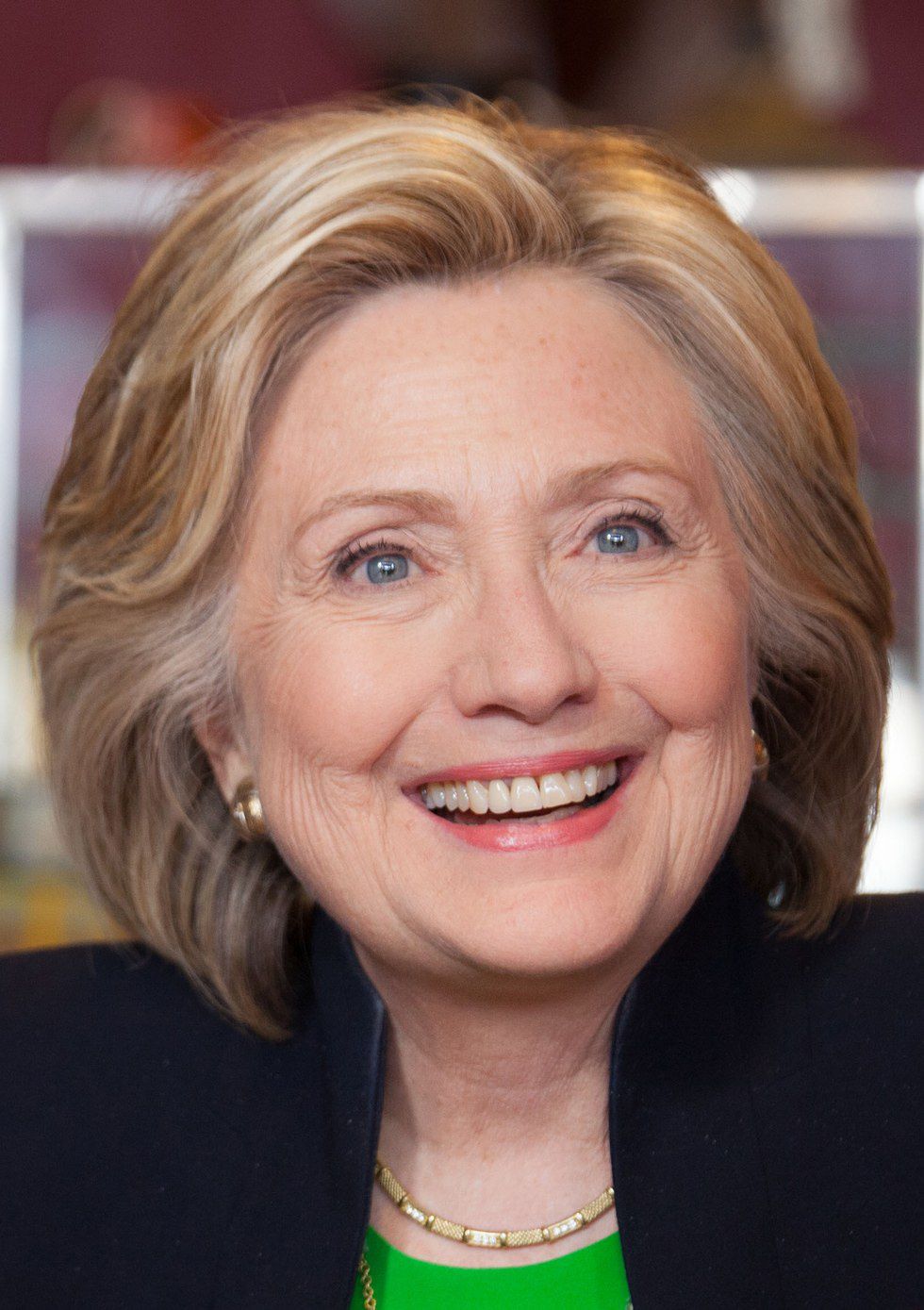
Like the ENTJ, the ESTJ is a no-nonsense and practically minded person with an affinity for power. The main difference between the two is that, whereas ENTJs tends to be more independent, long-term thinkers who march to the beat of their own drums, ESTJs often prefer to work within traditional institutions. Working with rather than against the system is often the best way to get things done in the short term. In this respect they are somewhat similar to the ESTP – both types know how to get things done in the short term without working towards some higher, harder-to-achieve grand ideal. Still, their traditionalism does not always work in their favor. People who are suspicious of "the institution" and want "something new" often dislike their tendency to not fix what ain't broken.
Their strengths include high confidence and pragmatism in the sense of getting things done and knowing that newer does not always mean better. Their weaknesses include rigid adherence to traditional structures and that they have a very hard time convincing others that their convictions are sincere. Previous ESTJ presidents include James Monroe, William Henry Harrison and Grover Cleveland.