

Before I begin, I’d like to preface with a reminder: my thoughts about suffering from anorexia are my own. Although there may be similarities between my experiences and someone else’s, they are, at their core, different. Mental illnesses are deeply personal (they are literally harmful thought patterns) and because everyone’s brain is different, each experience of mental disorder is different. I can’t and don’t intend to speak for anyone but myself.
Simply, these are my thoughts about living in recovery. I am incredibly happy and proud of where I am today, and my goal in this article is to convey the food- or eating-disorder-related thoughts that still bounce around in my head and color my daily experiences. Hopefully, reading this will offer a little insight into what it’s like to recover from mental illness.
As I write this, I have just topped off dinner with a large spoonful of chocolate ice cream. I love desserts; in fact, I had a few Oreos an hour or two ago, and a bit of Cadbury chocolate with lunch.
I don’t know whether that sounds like a lot or a little to you, person who clicked on this article, and it’s probably better that I don’t. I can still get a little anxious over comparing my food intake to that of other people.
I don’t generally worry about food anymore, though. I mean, I do my best to eat balanced meals with enough protein, carbs, and veggies. I don’t stress over serving sizes, but I have a general idea of appropriate portions. “A piece of meat the size of a stack of cards” plays in my head as I chop chicken for a stir-fry.
Are other young people (who aren’t trying to lose or gain weight) always aware of how many servings of carbohydrates they eat a day? Because I am.
I saw a few nutritionists over the course of three years, from the end of high school through my first two years in college. Mostly, they were just trying to convince me to eat more, but I picked up a bit of useful knowledge. Food is Function. There are no “good” or “bad” foods to your body, there are just sources of energy. Your brain needs sugars and fats to function; your muscles need protein to recover from exercise.
But I don’t know whether I really have more helpful knowledge about healthy eating than someone who has never suffered from an eating disorder or regularly seen a nutritionist. I am never sure whether my brain’s note to “Make sure you eat at least six servings of carbohydrates today!” is healthy or anxious and compulsive.
So I’m always on my toes. Ready to determine whether I am really full or if I’m just anxious about finishing a meal. Ready to convince myself that yes, it’s okay to eat that delicious-looking cupcake. Ready to tell myself to go to sleep, rather than stay up and exercise.
I’m solidly in recovery, though, despite my worries about relapsing. I have gained back the weight I lost, mostly kicked the habit of reinforcing unhealthy thoughts, and am well-enough in shape that my bones have (hopefully) recovered from the damage I did to them by losing so much weight while still growing.
I don’t think I will ever be completely out of the shadow of my eating disorder, though. There are activities in which I participated in high school that I still cannot bring myself to join because they remind me of the physical and mental stress I endured during those years. I may always be anxious about eating particularly large meals, even for special occasions. I will forever wonder about whether I’m actually feeling hungry, having trained myself to ignore hunger, then retrained myself to actually acknowledge it.
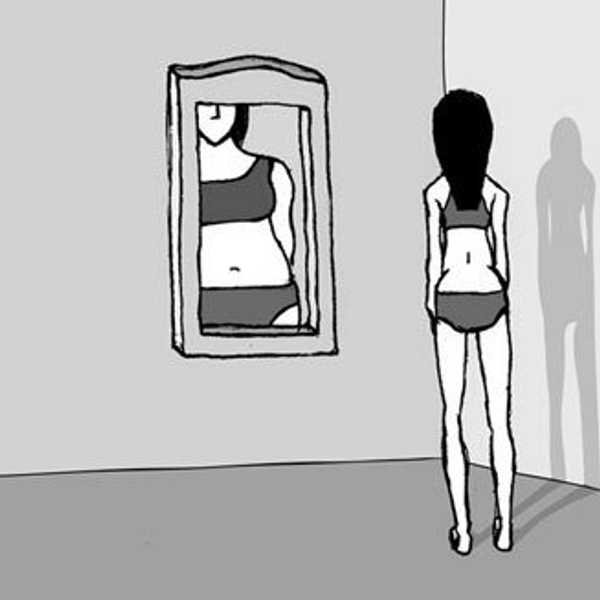
More generally, I will always doubt my ability to judge my own thoughts; Is what I’m telling myself healthy or one step back into disordered thinking? If I randomly alternate between calling my stomach area “my abs” and “my pudge,” is it healthy or not that I’m still paying it so much attention? I don’t know but, for now, it makes me laugh.