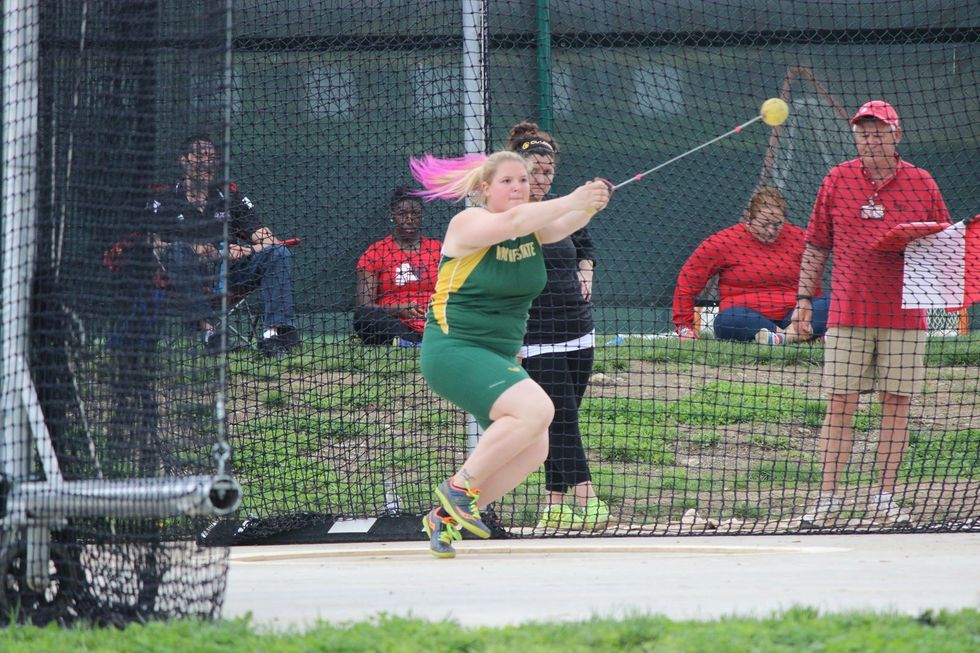
Being a college student is stressful enough, but when you add in all of the elements of being a responsible student with the responsibilities of also being an athlete, basically every minute of every day is systematically planned. As a student-athlete, you are expected to excel in your academics as well as your sport. WSU requires athletes to be enrolled full-time in classes as well as maintain a certain GPA and a certain average of volunteer hours per week.
Erika Perry, 21, a senior psychology student and captain of the Women's Track and Field team at WSU, says despite the extra discipline, she wouldn't trade being a college athlete for anything.
"Even though my body aches often from workouts, and even though I have a lot less free time to the do things I enjoy, I wouldn't give up the experience of being an athlete in college," Perry said. "I got really lucky to have this opportunity and it has given me so much and taught me a great deal about myself."
Women's Track and Field has two seasons, Indoor, from January to March, and Outdoor, March to May. Practices are six days a week and three hours long. During the fall, the team focuses on conditioning which includes running stadium stairs, tractor tire flipping, and power lifting.
"I really had to sacrifice my leisure time. I love reading novels and I just cannot do that during the school year, there's no time in my schedule," Perry said. "I also have to pass up the occasional fun campus event either because of practice or traveling to meets."
While most college students have flexible schedules, go on epic spring break trips, and partake in campus activities, student athletes often have practice, training, or travel conflicts. Time management is crucial for balancing academic work, practice and game schedules, and social activities.
Because of the time commitment and physical exhaustion of being on a sports team, WSU provides resources for athletes including study hall, tutoring, and advisers that are always available. The athletic department also holds an academic banquet at the end of the year for athletes who maintain high GPAs.
"I'm really grateful for our athletic department because without them, I know I wouldn't be as disciplined in many aspects of my life than I would have been if I weren't an athlete," Perry said.
Perry plans to pursue her Masters Degree in higher education and student affairs and says being a student athlete has contributed to her success.
"Because of athletics I have more confidence, I've learned valuable leadership skills, I've learned to listen more, and it's shown me I can do whatever I put my mind to," Perry said. "Because nothing can be worse than fall conditioning my freshman year!"