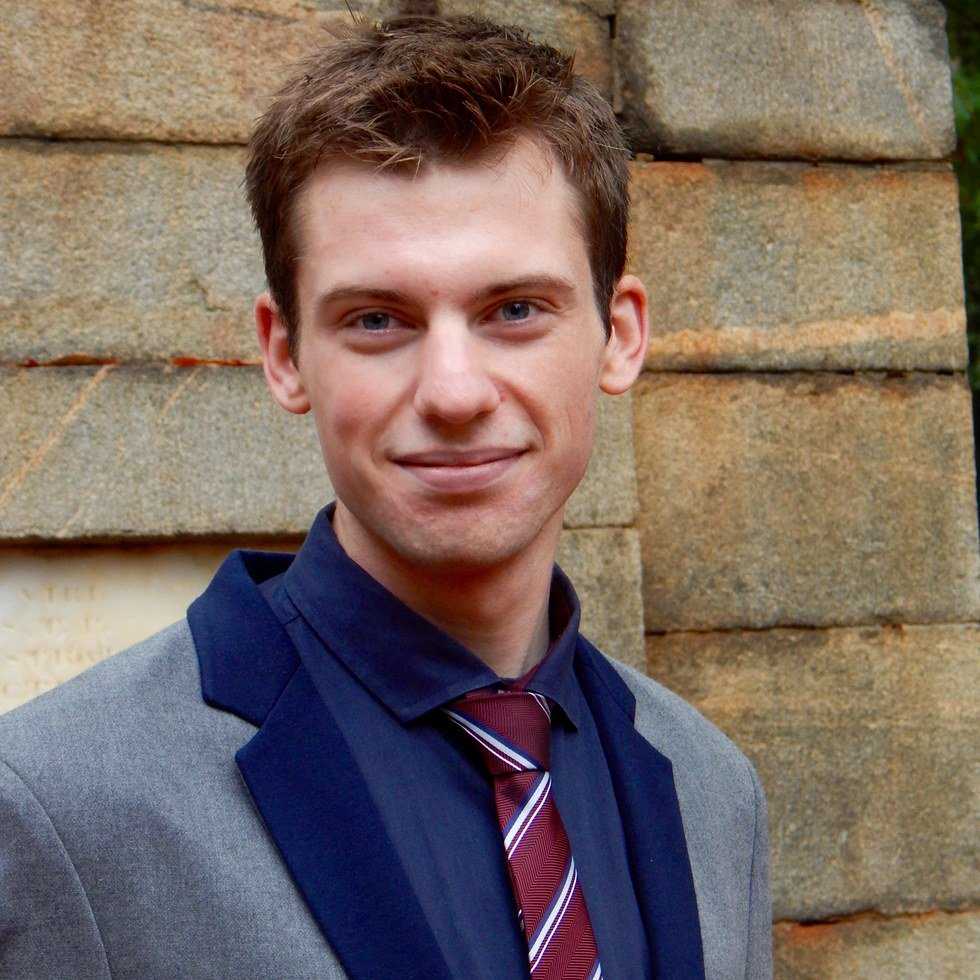
Just an hour before his hearings, student body presidential candidate Cory Alpert strolled into the lobby of the Honors Residence Hall. He sat down with me to answer 10 questions about himself and his campaign.
1. What made you decide to run?
“The thing that really sparked me to run was when during the flood relief, I was able to see a massive movement of the student body come together and help each other and help their community. Seeing that spirit of action and spirit of selflessness is what really inspired me. Knowing that’s what this community is capable of was really powerful. That’s something I think the student body really deserves—to have leadership that will help move them in that direction."
2. Favorite memory as a Gamecock?
“My freshman year I lived in Capstone Hall. There were forty of us on my floor. We called ourselves ‘Flourteen.’ We were the trouble makers of the building and had a reputation as such. But I think some of my best memories were when we would all pile into the study room, and it was just this small community coming together. It was finding a family. Those nights in Capstone, I think I’ll remember for a long time.”
3. What would your first order of business be if elected?
“The first order of business would be creating a significant partnership with the city. So that would be the thing I think is lacking in recent years, a significant and structured partnership with the city of Columbia. Obviously I’ve grown up here. I’ve spent a lot of time with the community and with business and civic leaders. In meeting with them in recent weeks and recent months, that’s one thing they’ve also noticed a significant divide between the student body and the rest of the city. So, the first action will be sitting down with the Mayor, sitting down with City Council, and setting up meetings with business leaders to establish those connects. One of my major planks is town-gown relations: to make sure your time at USC doesn’t stop benefitting you once you get a diploma, to make sure we can set you up in long-term careers that will help you down the road. By simply creating those avenues, creating those dialogues, and integrating our communities together, that makes our city and our university stronger.”
4. What's your favorite thing about being a student at USC?
“There are so many resources on this campus that I keep finding. I did a voter registration drive in September and just getting ready to do that, I found three different offices on campus that helped me push that out. We had Governmental Relations that helped get us partnerships with both major political parties. We had Off-Campus Student Services help that and promote that and get off-campus students involved. So what I really love about USC is the focus on student services and how many resources are available to students.”
5. What personality traits of yours make you the best candidate?
“One major thing is a spirit of action. One thing that I constantly go over with my staff and my friends is that I have a three-step process for whenever I see a problem: It’s identify the problem, figure out what you can do about it, and act. You don’t wait. You don’t complain. You do what you can with what you have. That’s a lot of what I’m bringing. I’m bringing realistic ideas. To me, it’s pragmatism, spirit of action, and a willingness to cooperate and compromise.”
6. What's your go-to Netflix series to binge watch?
"House of Cards, Orange is The New Black, How to Get Away with Murder.”
7. Chipotle or Moe's? Choose wisely.
“Chipotle. Even with the E. coli.”
8. If you could have dinner with any U.S. President or Presidential Candidate, dead or alive, who would it be?
“I’d be really interested to meet Harry Truman. He’s had an interesting reputation recently because he’s the one who had to make the decision to drop the nuclear weapon on Japan. I’d be interested to talk to him simply because I think that’s the most important decision that’s been made in world history in the last couple hundred years. Or Teddy Roosevelt. He had, to me, one of the best political ideologies—this brilliant mix of pragmatism and politics, and being able to bridge these gaps between progressives and conservatives. He made sure the country was a better place. To me, he’s one of the more successful presidents we’ve ever had.”
9. What inspires you and motivates you to run for this position? What's your biggest driving factor?
“The one major image I keep flashing to when I think about this question is the morning after we put out that initial flood relief link. I was watching the spreadsheet for five or ten seconds. In the span in that couple of seconds, I think we had a hundred people sign up to volunteer. To me, that says a lot about the community.”
10. Who is your biggest influence?
“My grandfather-- he was left on the steps of an orphanage. He had a terrible experience. He had a twin who died in the orphanage, and he was completely abandoned. He was abused through fosters homes. But at the end of the day, he found a way and ended up being absolutely brilliant. He found a way to get his undergrad for free, learned French, and became very interested in sociology. What he did, and what he was dedicated to, was the use of research in governmental policy, especially social research. He almost completely sacrificed his own political views, his own ambition to help make sure we were addressing policy and we were creating policy that was backed by science—that we were funding social science. He believed in that so much. I never met him because he died in 1977, but having someone like that to look up to and having that sort of role model in the family-- someone with that dedication to service, that dedication to your principle of making government better-- is a huge inspiration.
My other inspiration comes from attending Boys Nation. My year was dedicated to a guy named John David Hortman, who was killed in action. He was a member of the 160th Special Operations Aviation Regiment. He was a helicopter pilot. He was one of my predecessors from South Carolina to Boys Nation. What really inspired me was his dedication to service in every way he could. He saw a problem, he figured out what he could do, and he did it. He went and served no matter the risk, no matter the consequence, and tried to make his country a better place. I remember walking up to his grave and just breaking down. That was one of the few times that I’ve been very emotional about something like that. That was just someone who had this incredible dedication, this incredible passion for to make life better for everyone around him. It was so personal and so vivid. Those are the things that inspire me. I’m fascinated by people who are passionate. I love meeting those people and being a part of those people’s lives. They inspire me so much because people who are willing to dedicate their lives to the betterment of another group of people, I think, are some of the best and most rare people on this planet.”
For more information on Cory's platforms, visit his website and Facebook page. For more Odyssey election coverage, click here.