
There was never a time in my life when I had a flat stomach, bony arms or thin legs. I danced, worked out and tried to eat as well as I could. But the image I saw in the mirror never was, and still isn’t, the body that I wanted to see myself in. To me, the solution was to decrease my food intake. If there was something I wanted to eat, I would watch the calories of the product and make sure I burned that amount off later.
It got to a point where I wouldn’t eat at all if I was depressed. But even while going through anorexic behaviors, I was never extremely thin. You don’t have to be the stereotypical “stick skinny” type in order to struggle with an eating disorder. That, along with attempts at suicide and self-harm, led me to be admitted into an adolescent mental health program for two weeks in October of 2010. My food intake was monitored, and the only exercise I got all day was yoga.
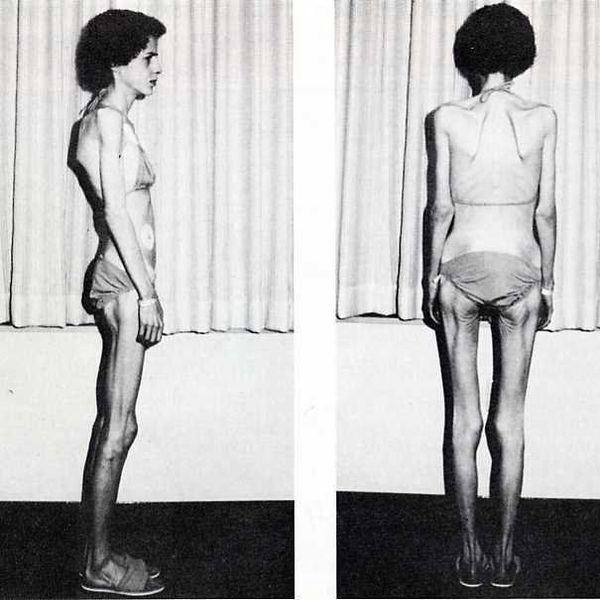
According to the Mayo Clinic, anorexia nervosa is an eating disorder that causes people, especially teenagers, to become overly concerned about their weight and the food they eat. Anorexia is most commonly developed between the ages of 13 to 17, a time of emotional and physical changes, academic pressure and a greater degree of peer pressure. As a result, every one or two students out of 100 will struggle with a severe case of an eating disorder. To prevent weight gain, these individuals might resort to excessive exercising or starvation.
Choosing to work out instead of hanging out with your friends, or continuously counting calories on everything you eat and decreasing your food intake, are all factors that can lead you down the continuum of eating disorders, eventually causing an extreme eating disorder.
Losing control in my life is a trigger that led me, and many others, to start living in a way that led me further and further down the eating disorder continuum. At all times, I needed to be in the control of something. Because my world was turning upside down due to a multitude of family pressures, my eating and my weight were something that I thought I could get a hold of. It's like being an alcoholic. You're never fully cured; you're always in recovery.
According to kidshealth.org, people with obsessive compulsive disorder (OCD) are more prone to adopting an eating disorder because of their compulsive need for control. Even more prone are athletes and dancers because of the continuous pressure put on by their coaches, instructors and overall physical expectations. There is oftentimes a need to stop or suppress growth in one’s height or weight in order to be a better dancer, or for example, wrestler.
In reality, not eating actually makes you gain weight in the long run. Your body is designed to be a safeguard to protect itself from starvation. So when you eventually eat something, even if it’s small, your body will keep all of the fat, carbs and sugar in order to store nutrients for the times that you don’t eat.
As an alternative, eating small, healthy snacks every few hours and working out will increase your metabolism rate and actually make you lose weight faster than starving yourself, and in a healthier way.
I learned that the hard way, gaining 15 pounds after leaving the hospital because I was back to eating on a regular basis. However, instead of going back to not eating day after day in order to lose the weight I gained, I learned to eat small meals a few times a day. Slowly the excess weight came off, and I was healthier than ever before.
Today, my family and friends know how much I love my food, and how on-edge I get when I haven’t eaten that day. Be as it may, whenever I hit a low in my life, there is a part of me that will want to skip a meal or two in order to make me feel better. Thankfully, my family and friends can see my red flags and encourage me to eat by bringing me to my favorite restaurants, or making me one of my favorite meals.
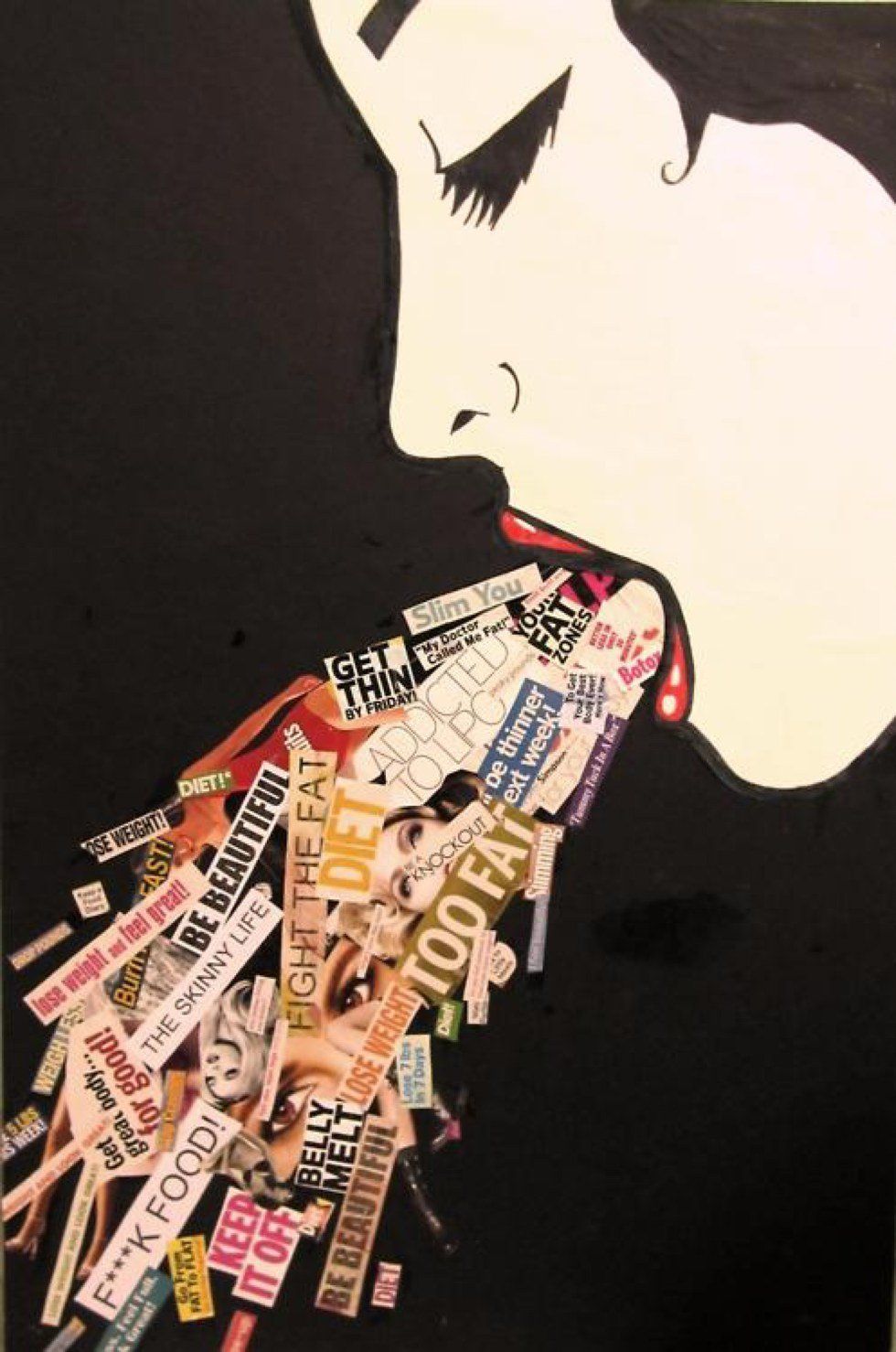
Punishing your body to be what society calls the supermodel image is not worth the long-term mental and physical damage that any eating disorder will do to your body. Strive to be healthy. It’s not about the number on the scale; it’s about the confidence you have in yourself.