
When you think of the quintessential strong female character, what image comes to mind? Is she carrying a weapon? Wearing tight clothing? In popular culture, few tropes are as wildly embraced as that of the “strong female character.” After all, she is brave! Smart! An action hero! The strong female character has been lauded as a symbol of progression and equality by literary and cultural critics alike. She is held up as a model that all young women should aspire to. But, is it possible that these “empowered” female characters are doing more harm than good to the mindsets of girls? For all the assumptions they shatter, are they simultaneously constructing a new box for women to try and squeeze into?
The answer, I would argue, is yes.
Strong Female Characters (or SFCs, as I call them) have not been without their merits, but their recent swell in cultural dominance has significant potential to do more harm than good. Here are my reasons for thinking so:
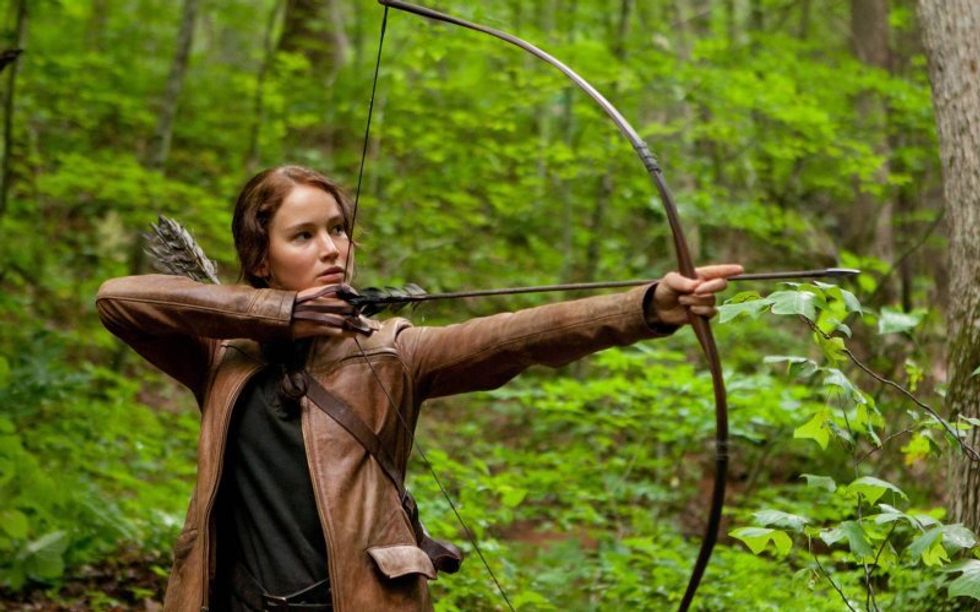
The first thing we must do is outline the primary characteristics assigned to the SFC, which include dominance, bravery, intelligence, determination, emotional distance, and combat skills. An SFC is traditionally a lone-wolf figure who does not depend on others for support and often represents the only hope for a civilization or group of people. Characters that embody these traits might include Katniss Everdeen of "The Hunger Games," Tris Prior of "Divergent," Lara Croft of the "Square Enix" video game series, and Black Widow of "The Avengers." None of the qualities outlined above are inherently constricting, of course. The problem is that they are essentially those of the male hero archetype wearing heels. Qualities more commonly associated with femininity like emotional consciousness, compassion, and a nurturing spirit are often seen as things to be repressed, if they even show up at all. As an example, we might consider Katniss Everdeen. Katniss’s qualities of bravery, resourcefulness, determination, and calculation have often raised comparison between her and her male action hero counterparts. Through this lens, it is easy to see Peeta as the damsel in distress as well, a subversion many find new and refreshing. However, by suggesting that the only women who can rise to the ideal version of “strength” are those who deny their status as women and instead move towards the traditional male narrative, aren’t we simply bolstering the gender roles that have been so prevalent in the previous decades? Showing strength through a myriad of attributes is beneficial not only to young girls, but to young people in general. Most of us fall outside the heroic ideal, and expanding our views on what constitutes heroism is a critical first step towards a celebration of all different kinds of people.
Another interesting aspect to consider is the relationship between the Strong Female Character and agency. Young Adult literature, in particular, has been largely positive in the amount of agency it grants its young female protagonists. Series like "The Hunger Games" or "Divergent" allow their heroines almost unlimited access to the worlds they live in, and surround them with people willing to help them accomplish their goals. Female agency comes in many different forms in these stories, but one of the most prominent is that of a romantic relationship. Giving SFCs the ability to chose their own mates, rather than to be chosen as they have in the past, is important and it’s good. Girls need to see more examples of women controlling their romantic lives. However, this trope comes with its own set of dangers. The idea that a female character’s story is incomplete without a romance is one girls are subliminally taught from birth, through Disney princess movies, books, and culture are large. The near constant inclusion of the a romantic interest teaches girls the exact thing that so many of these stories are attempting to subvert—that sexual desirability is still an essential component to their success.
In considering romance, we must also examine the role feminine beauty plays for the SFC. It is interesting that, though so much emphasis is placed on her adherence to typically “male” behavior, the SFCs physical form is often manipulated or exaggerated to represent idealized femininity. In forms like the graphic novel and video game this is especially prevalent. SFC’s are regularly portrayed as women who not only fight better than all the boys, but can do so while in stiletto heels and miniskirts. The addition of physical perfection to the ideal SFC is one that can be stifling for young female consumers as they struggle with their own body image issues.
When female characters fit all of the qualities examined above, they very easily reach unrealistic levels of achievement. The narrative that women can be the best at everything is a harmful notion that has gained a lot of traction in the past few years. If it’s possible for a woman to fight crime, attract multiple men, remain effortlessly cool, and still manage to maintain an ideal figure, girls ask, what is wrong with me? Obviously, consumers are capable of realizing the difference between fiction and reality, but after seeing such a depiction of women and girl’s in fiction time and again, the ideas can easily influence the mind of the reader, listener, or viewer. Gillian Flynn addresses these concerns as well in her novel, "Gone Girl," with the now infamous “cool girl” speech. She argues, “Men always say that as the defining compliment…She’s a cool girl. Being the cool girl means I am a hot, brilliant, funny woman who adores football, poker, dirty jokes, and burping, who plays video games, drinks cheap beer, and jams hot dogs and hamburgers into her mouth…while somehow maintaining a size 2, because cool girls are, above all, hot. Hot and understanding.” With this in mind it’s hard not to view the SFC as popular culture’s equivalent of the cool girl. A girl who is surrounded by men, desired by men and better than men. A girl who is the center of her own story, yet simultaneously meant to represent the capabilities all women should posses.
Ultimately, the biggest and most pressing problem of the Strong Female Character is not that she exists. It is that our culture often recognizes her as the only type of female character with the right to exist. To write a female protagonist who falls outside the “strong” narrative is to write a sexist story. To write a male protagonist who does the same thing is to write a bold, complex work. The only solution to this problem is diversifying the types of female characters we see across the board. Give us SFCs, but also give us female villains, female superstars, female agents of comic relief. Give us strong girls and weak girls and girls who fall somewhere in between.
Give us real people because that’s what we are.