Note: This is the part seven in a multi-part series. For the full series, please read part one, part two, part three, part four, part five, and part six.
I know I haven't covered all the facts surrounding guns. Just as with any social issue, there are way too many to work with, so I'm going to pump the brakes and move forward to the one thing we all want but can't agree on the solution. So as I step on toes, here's my suggestion of how to go about that.
When we talk about what the solution is, it's not cut-and-dry, but I believe in methods that strengthen the law-abiding gun owner.
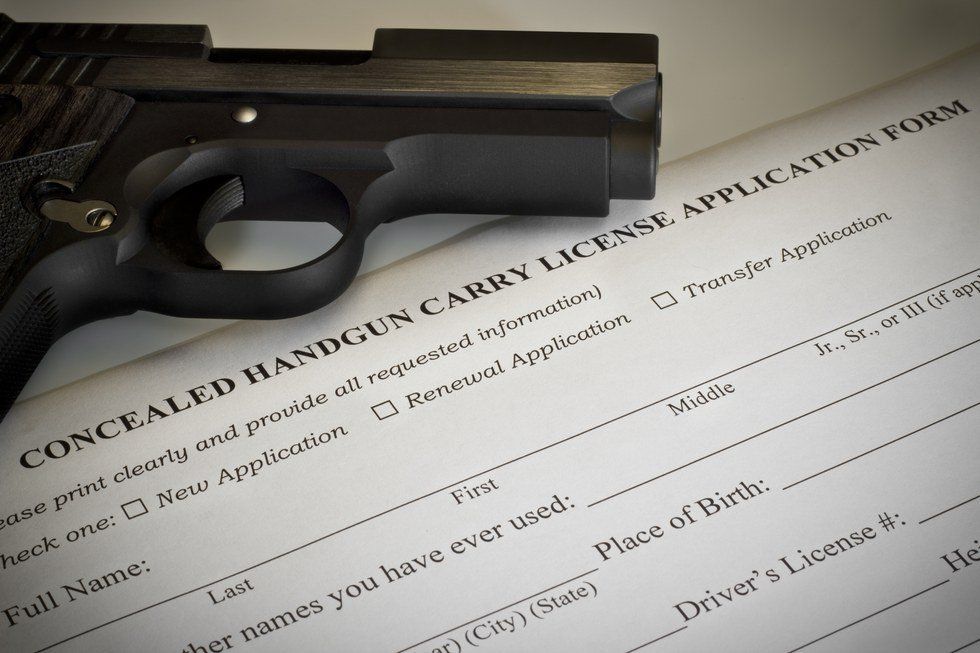
Perhaps the solution is for the gun permit. From what we saw in the last article, the entire country issues them but reciprocity (recognition of other states' permits) varies from state to state.
In all states, it's possible to obtain either a gun or gun permit by passing a background check that looks into the buyer's criminal history. This check only identifies dangerous drug use or mental disorders based on previous drug arrests or psychological counseling history. Mandatory drug tests and psychological evaluations, much like what every police officer has to go through, would reduce the possibility that these people would be able to buy weapons (various local jurisdictions across the country use this). This would also help with the gun suicide rate, which outnumbers the gun homicide rate, especially in Alaska.
Some would argue that background checks don't work, using Omar Mateen as an example (he had plenty of background checks for job-related purposes). This might be true but people fall through the cracks in any system; in part five, we saw that countries where gun ownership is next to banned still endure mass shootings.
However, also as previously discussed, those with carry permits are far less likely to commit gun crimes. To add to the case, the majority of NRA members across numerous polls support background checks.
However, it's not enough just to include all of these tests. Mental evaluations should be in-depth enough to cover stress and anger issues. After all, Mateen's ex-wife stated that he was physically abusive (why she never told police is a moot point).
Then there's the matter of training. In 25 states, being able to understand and shoot a weapon isn't a prerequisite to being issued a permit. As much as having a gun can be an equalizer, it neither makes the bearer Superman nor a Navy SEAL. Requiring permit holders to be able to pass a shooting course ought to be required in order to ensure that a gun owner can defend him or herself on a basic level.
Sounds like a driver's test, right? Well, you do need to show proficiency with a vehicle, which takes more lives than guns (those numbers are beginning to get closer).
Driver's licenses also come with various classes to denote various restrictions like learner's permits or the operation of commercial vehicles. This isn't to say that people should or shouldn't be able to open carry rifles but a multi-tier system when it comes to gun permits could allow for greater freedom regarding weapons carry.
Allow me to explain:
Many states do not require a license for a gun kept in the home. Given that most states have varying degrees of Castle Doctrine, denying a person the right to defend their home in the case of forcible felony would open up a larger can of worms than anything else I've discussed.
Current state licenses grant various degrees of freedom, restricting carry in places like bars, churches and government buildings, depending on state and business. With a modified background check system and basic training, these rights should remain. For all intents and purposes, let's refer to this as a class B license.
Now let's say an Army Ranger or Marine Corps sniper wishes to accompany his 6-year-old daughter to school but carry in the case of a school shooting. A stronger background check system involving relatives and neighbors and a more intensive training course would show that this person is highly capable both mentally and physically of engaging an active shooter without causing excessive collateral damage. We'll label this as a class A license.
Perhaps a person wishes to carry in all fifty states. This person should have to undergo a highly in-depth background check utilizing the above plus exhaustive mental screenings. In addition, the mandatory skills course ought to be extensive, covering a wide variety of tactical situations utilizing simunitions scenario training. Testing should be pass/fail with very little room for error, if at all. With all of this should come certification and some form of identifier (like a badge) in order to signify that this person has been federally trained to handle active shooters and may be of assistance to law enforcement while lacking in powers of arrest. Since my imagination fails me, let's call this as a 'federal carry' license.
This idea stems from the idea that plenty of gun owners wish to be able to protect themselves and their loved ones wherever they go. If they should prove across the board that they are capable of doing so in a responsible manner, why not let them? Then again, the idea is more complex than discussed here, so we'll have to wait until the next (and final) round.