Note: This is part two in a multi-part series on gun rights and the surrounding argument. The first part can be read here.
As we argue the purity of the Second Amendment, let’s look at where it, and other rights in the Constitution, actually came from. The right to bear arms in the United States can trace its roots back to the Bill of Rights 1689.
The Bill of Rights of 1689 provided for the rights of all British citizens, and among these was, and I quote:
"That the subjects which are Protestants may have arms for their defence suitable to their conditions and as allowed by law..."
Well, that's very specific language. If you're Protestant, you may have a gun with which you are allowed to protect yourself, especially since the Catholic King James II had previously denied the right to such folk.
Here's where we also get a glimpse at the birth of the First Amendment, which states:
"Congress shall make no law respecting an establishment of religion, or prohibiting the free exercise thereof; or abridging the freedom of speech, or of the press; or the right of the people peaceably to assemble, and to petition the Government for a redress of grievances."
We'll come back to that in a bit.
Given that Jamestown was established in 1607 as the first colony of the New World and that all colonists were viewed as subjects of the crown, the right to have weapons (and every other right listed in that bill) should just as well have been afforded to the colonists as to the Englishmen back home. For a while there, it was.
Now we swing back to the part about Protestants, in particular, regaining the right to bear arms and how it connects the First Amendment to the Second. With the end of King James II's reign and the beginning of King Charles II's, the pendulum swung from Catholic rights to Protestant rights and effectively flipped the coin of religious persecution (which created the colony/state of Maryland). Even the Puritans came to Massachusetts seeking to worship freely after disagreements with the Anglican church. Religious freedom brought many people here, but the rest of the First Amendment came as a result of what happened as the colonies developed.
Various levels of speech were considered criminal in the colonies; in fact, one person was sentenced to death in Virginia in 1612 for violating the colony's "Laws Divine, Moral and Martial" by denying the Holy Trinity, and most famously, John Peter Zenger was put on trial in 1735 for publishing a criticism of New York Governor William Cosby (Zenger was accused of seditious libel but later released because his critique was honest, thus pleasing my Media Law professor because I learned something). Many attempts made to petition the crown throughout the history of the colonies failed and many protests were met with violence (see: The Boston Massacre).
In addition, there were various taxes levied upon the colonies which led to outcries of, "No taxation without representation!" Let's not get it twisted. Most colonists weren't upset with taxes being high (they were actually rather low) or the idea of being taxed at all, but without proper representation in Parliament, they wouldn't be able to have a say in any issues that passed through.
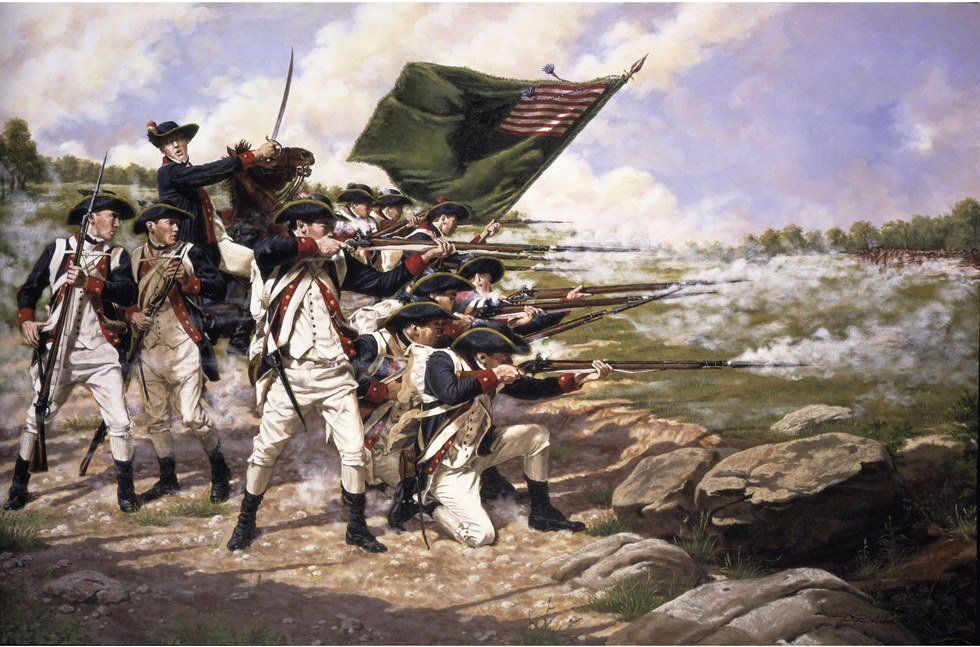
As time went on in the colonies, people became more and more dissatisfied with their rights being trampled upon, driving the Declaration of Independence and the American Revolution. Early in the war, in the local militia (the Patriots) began stockpiling arms in independent armories out of mistrust for British troops and Loyalists, or militiamen with allegiances to the crown. The British and the Loyalists saw this as a potential for an uprising and made efforts to disarm these stockpiles, while many Patriots cited the Bill of Rights to regain their arms. War fully bloomed not long after, but the causes behind the Second Amendment firmly had a place in history.
Some believe the Second Amendment was meant for self-defense, while others believe it was meant to protect the First Amendment. I agree with the latter -- nothing, not even a right, belongs to you if it can easily be taken away. After all, the intent of the Constitution was to grant rights and protect them against the government.