As we watch the news today, we are led to believe that gun violence is a greater problem than ever in the United States. Confirmation bias (the tendency to interpret new evidence as confirmation of one's existing beliefs or theories) drives polarization of opinions so we argue more and more, cherry-picking data to make our arguments that much stronger while blatantly ignoring any flaws or downsides we might create.
For example, in the 2008 presidential election, the NRA boldly stated that then Sen. Barack Obama (D-Ill.) would impose handgun bans. Were they right about that?
Well, from 1994-2002 Obama served on the board of the Joyce Foundation, a grant foundation which has provided millions in grant money to pro gun-control organizations and in 1996 a questionnaire was filled out in his name in which he supported handgun bans (he's since blamed an aide for filling out that form which includes handwritten notes that are allegedly his). He's also stated support for reinstating the Federal Assault Weapons Ban and magazine size restrictions. Perhaps Obama has anti-gun sentiments, after all.
But what's actually happened during his presidency is a different story. Let's revisit the Town Hall meeting held last month and briefly mentioned in part four. A gun owner asks President Obama why he believes in restricting gun owners and manufacturers and points to Chicago as a failed attempt at gun restrictions. Some of the main points that Obama makes in return are that more guns have been sold during his presidency than at any point in U.S. history and that he's never proposed legislation to confiscate guns.
And guess what? He's right -- about both.
It takes some special effort to be criticized by both the Brady Campaign Against Gun Violence and the NRA but Obama's done it. In 2010, the Brady Campaign gave Obama an F rating in five categories: background checks, gun trafficking, guns in public, federal assault weapons ban and standing up to the gun lobby. To add fuel to the fire, Obama repealed more gun laws in his first four years than predecessor George W. Bush did in eight, including a post 9/11 ban on carrying guns on Amtrak, and signed off on legislation allowing for carry into national parks.
Misinformation is what causes widespread fear of weapons bans or confiscation which constantly drive sales up. Huge spikes are seen in the wake of either Obama (re)taking office or after mass shootings presented in the media. The numbers would almost suggest that it's easier now to legally buy a gun than ever before, a theory supported by this:

What we have here is a map showing the evolution of concealed carry laws in the United States. What's significant is how the number of red states is currently non-existent. These were states that banned weapon carry and surprisingly, that list included Texas. Most of the map had turned blue by the time Obama got into office, while Illinois (sans Chicago) and Wisconsin joined the club afterward.
As such, legal acquisition is a hot topic. Many like to point out the so-called 'gun show loophole,' but that name is misleading: while a private seller could rent a table at a gun show and sell without a license, most dealers are licensed and perform a background check. The loophole also deals with private sales between citizens or to friends and family, but selling to a known felon is itself a felony. This is separate from the also-misleading 'internet loophole,' which doesn't require a background check upon immediate purchase. However, all guns sold online must be transferred through a licensed dealer where the background check is mandatory.
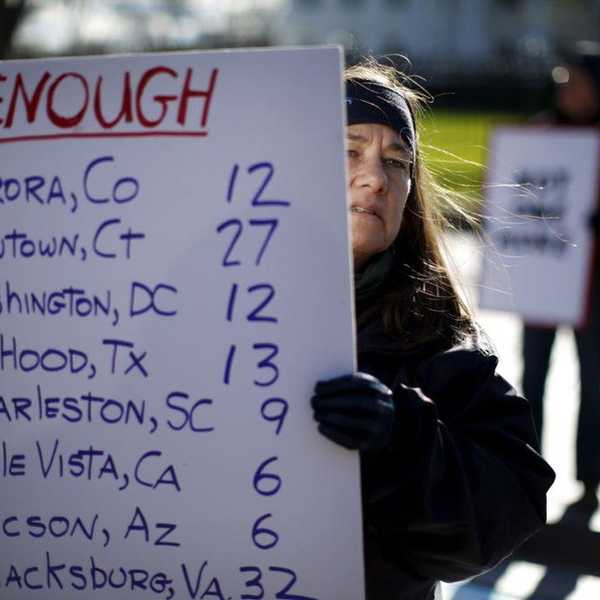
These things lead to the arguments regarding mass shootings; after all, most Americans believe gun crimes are up, mostly due to more frequent media coverage of mass shooters.
To be fair, the FBI noticed an increase in active shooter incidents between 2000 and 2013; however, the Bureau of Justice Statistics noted that violent crimes, including homicides, are at an all-time low. Strangely, criminologists don't know why this is happening. Many people have noted the impact of modern medicine in preventing gun deaths but that doesn't change the falling incident rate in the country.
One of the things we need to do in order to come to a better conclusion is face the facts. Only by doing so can we stop telling people that you're most likely to get murdered by handguns in Alaska (the author misleads the reader, it's suicide that's the issue) or that concealed carriers are likely to commit mass shootings (next to null chance). Even the idea that good guys with guns stop bad guys with guns is still gray: it does happen but it can come with severe consequences due to lack of training. When we accept the full truth, we can begin to change how we handle guns in America.