In a day and age when we often throw wording out of the window, most people label all TV and movie villains who are deranged, lack sympathy, and commit atrocious acts as psychopaths. They are wrong. In fact, most TV and Movie villains are sociopaths. This confusion is caused by the fact that both psychopathology and sociopathology fall under the umbrella of a psychological disorder called Antisocial Personality Disorder. So the question is what is the difference between a psychopath and a sociopath?
The biggest difference between psychopaths and sociopaths is nature versus nurture. There is strong evidence that suggests that psychopathy has a strong link to genetic predisposition, while sociopathy is more likely to be caused by environmental factors. This being said it is easier to create a villain who is a sociopath than a psychopath because villains are often given pitiable backstories. Characters are misdiagnosed with psychopathy because psychopathy is said more often than sociopathy. Common examples of this are The Joker ("Batman"), Slade Wilson ("Arrow"), and Norman Bates ("Psycho"). The Joker and Slade Wilson both became villains and committed crimes because of circumstances in their life that caused them to break, while Norman Bates is diagnosable with another disorder entirely.
Another way to distinguish psychopaths and sociopaths is their usual course of action. Psychopaths are calmer and more calculated. They seem more normal; however, they push you down if you get in the way of what they want. Sociopaths, on the other hand, are more erratic and compulsive: they do not give off a vibe of normalcy, but can actually form true connections with people. The Joker, for example, has a connection with Batman, even though the relationship is as an enemy. No one understands Batman’s psychology better than The Joker, which makes him the ideal villain as he knows how to counter Batman’s every move.
A true example of a psychopath in popular culture is Hannibal Lecter. He is calm, collected, and calculated. Though he has suffered tragedy in his past, his complete lack of erratic and random behavior suggest psychopathology rather than sociopathology. Another example is Dexter. Again, we see childhood trauma, but his complete lack of empathy and his charm strike as more psychopathic than sociopathic. Psychopaths are more likely to torture and kill animals as children; Dexter and Luther were both known to do this.
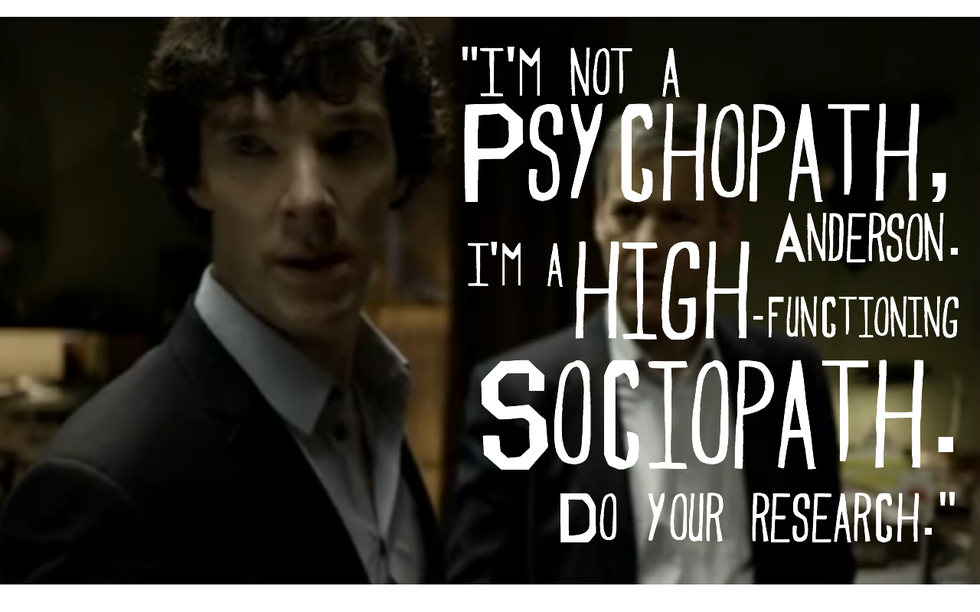
Not all psychopaths and sociopaths are bad people, however. In pop-culture, Sherlock Holmes is a classic example of a sociopath; however, he catches criminals rather than being a criminal. Sherlock is classified as a sociopath because he has the ability to form personal connections, as shown by his relationship with John Watson, and because he acts impulsively when it comes to solving crimes. Likewise, V ("V for Vendetta") fights for what he believes is right. V’s sociopathy is caused by his trauma of being experimented upon and displayed by his compulsion to always save Evey. In the real world, a psychopath with a good education might end up a CEO or lawyer because they are predisposed to charm and scheme to get what they want.
It is important to understand the difference between a psychopath and a sociopath because this will help keep you from mislabeling not only fictional characters but the people around you as well. You do not want to brand someone a psychopath or a sociopath because of the negative associations formed with the word. I believe that with knowing the difference between and understanding the two terms, we can come to a point where we try to help psychopaths and sociopaths receive treatment rather than condemning them.
Citations:
http://www.psi.uba.ar/academica/carrerasdegrado/ps...
http://psychcentral.com/blog/archives/2015/02/12/d...
https://www.theguardian.com/culture/2013/jul/28/ps...