
Developing a competitive sports program can be argued to be a top priority of many Division I universities. Typically, the better the sports program, the more amount of support it receives. Having a supportive fan base adds to the exciting atmosphere of a stadium on game day, especially when the opponent is a college rival. But how do these college rivals even begin?
Last week, BIG TEN Division rivals, the Michigan Wolverines and the Michigan State Spartans met in Ann Arbor, Michigan for a rivalry football game. Michigan’s stadium is the largest stadium in the nation with the capability of hosting 109,901 people. Michigan State was able to pull off the upset and defeat the wolverines by four points after recovering a fluke snap to Michigan’s punter. Michigan fans were devastated and some took it harder than others.
Various hateful messages were sent to Michigan’s punter following the game through social media sites such as Twitter. Michigan fans said things like “kill yourself you just cost us the game and any chance at a national title” and “hope you know half of Michigan want to kill you.” These type of messages should never be sent to anyone, but especially not over circumstances like the loss to a collegiate rival. No one wants to lose to a college rival, but did fans really have to take it that far? No one deserves to experience something like this and it is our responsibility as fans and supporters to do our best to prevent it.
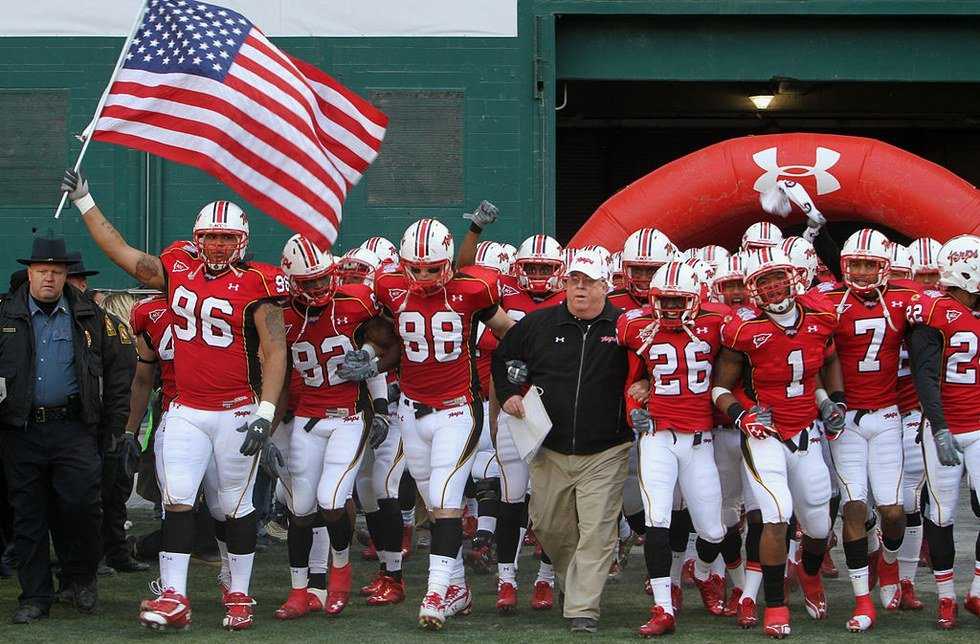
College rivalries especially affect the players. Last year was the University of Maryland’s first year in the BIG TEN Conference and the meeting with a familiar foe was long anticipated. On November 1, 2014, the Terrapins took a trip to Beaver Stadium in University Park, Pennsylvania to visit rival Penn State University. During warm-ups a fight broke out between the two teams, anticipating the intense game that was about to be played. At the coin toss, the University of Maryland captains refused to shake hands with the captains of Penn State and from that day forward a rivalry would be known. That game would be one to remember by both teams as the Terrapins defeated the Lions by one point.
But what kind of message were these two teams trying to convey? Was a physical fight necessary to bring attention to this rivalry? It is imperative to give college rivalries a good name and that is just not the way to do it. This past weekend, the teams met again and thankfully got their acts together. There was no fight during warm-ups and there was a handshake exchanged between the captains. The only problem this time was that Penn State defeated Maryland by, might I add, one point.
College rivalries should be enjoyed by everyone and do not have to result into bad things like verbal abuse or violence. Whether you are a fan or a player, you are responsible for representing your team with respect and proper sportsmanship. We need to move forward and get over the immature ways of resolving a rivalry that is not going extinct. Rivalry game days should be some of the most enjoyable and exciting games of the season, so tailgate as you wish and try to appreciate the unwelcomed company.