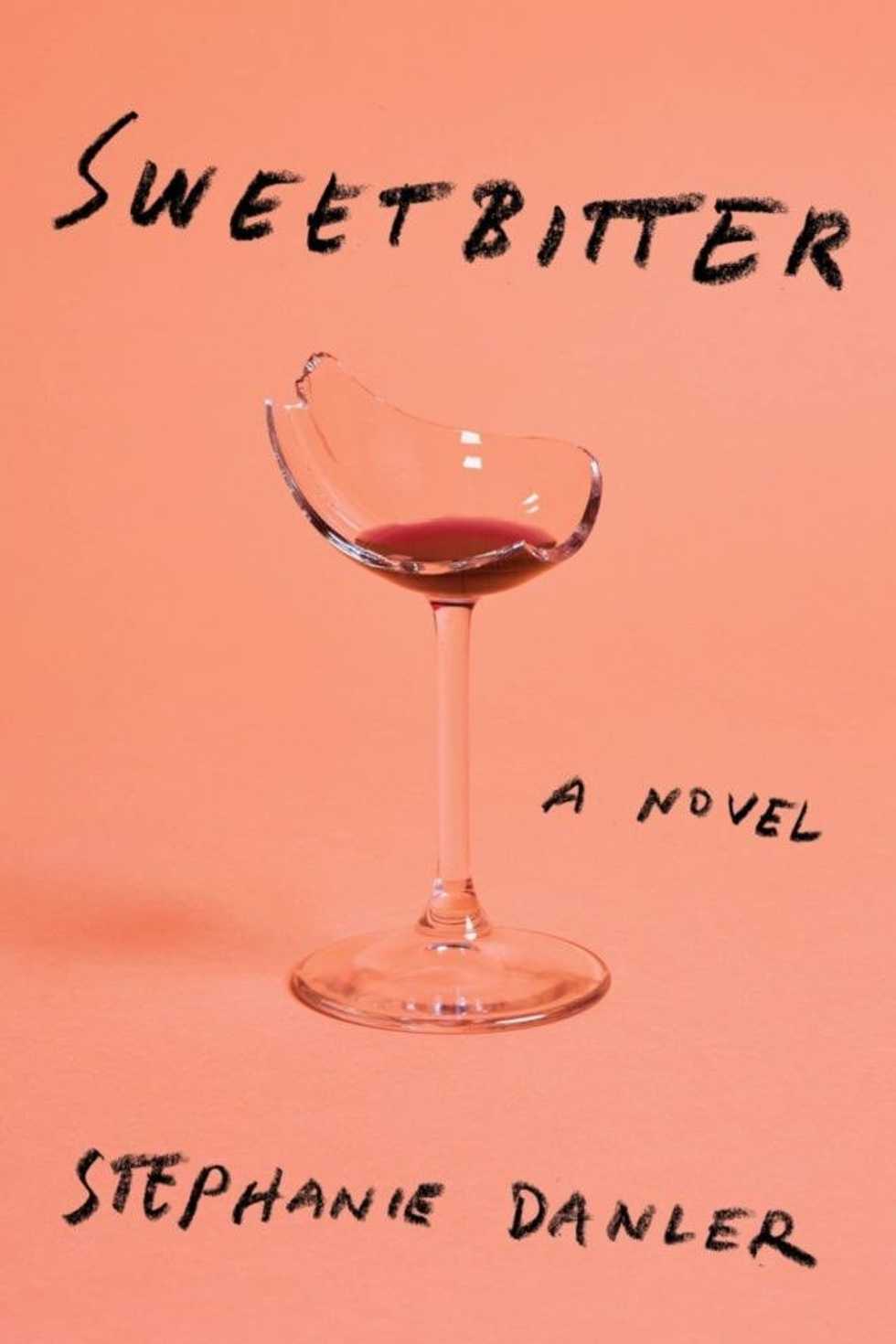
I was drawn in by the half broken wine glass (because wine, duh) and messy font, committing the ultimate sin of judging a book by its cover. After the usual glance at the back, moving then to the sleeves, I was excited about a newly published author and a real time story about waitressing. Two days later, I was done with the novel and ready for a sequel. I was impressed.
"Sweetbitter" is the story of 22-year-old Tess and her vulnerable decision to leave it all behind and head to New York City with no plans or guarantees. She somehow, maybe even miraculously, gets a job at one of the highest paying and classiest restaurants in NYC, where some of the strongest personalities call their workplace. Simone, an experienced waitress, lends her hand for guidance, and Jake, the bartender, becomes an unconventional lover. Tess dives into all of this, not knowing the history of the staff and how her own history may alter her relationships. It’s a novel about a 22-year-old finding herself, but in a new, real way. Not in the usual “lightbulb moment” way that is too often portrayed in novels. Readers are indulged in food and wine in such a way that makes them feel like they are actually eating and drinking. It’s completely innovative writing.
The utter realness of the love story that unfolded in "Sweetbitter" left me questioning why no other author has gone as far as to portray how it really goes these days. A love that sparked from insults and avoidance that turned into something more proves that it’s not always a smooth pick up line that ignites a relationship. It was unconventional and sometimes messy, passionate; a modern day romance. I’m exhausted with stories of sweeping the girl off of her feet; Cinderella was written in 1697 and men are no longer having a dance with a women and then chasing after her, vying for her attention. It’s different, it has been different, and Stephanie Danler was brave enough to showcase that. She went on to break the barriers of romance novels in a novel that isn’t even solely romance.
I was at first annoyed of how slow the story moved. I was waiting for the climax, the peak in the mountain that we learned about in middle school language arts class. What was the point? What was going to be the big, heartbreaking moment in the middle of the novel? It never happened. After finishing though, it’s evident how purposeful the lack thereof really is. If we’re looking solely at the romance aspect of the novel, it’s realistic as hell. In modern times, we aren’t asking others on dates and not kissing on the first date and waiting at least three days to call. If the Cinderella idea is the 1600’s, maybe we would consider this the 1900’s idea. In the 2000’s, we’re avoiding each other for weeks and being purposefully rude and dodging emotions and hooking up and pretending it didn’t happen the next day at work and being secretive and not labeling and considering diners at 2 a.m. a date. We are Tess and Jake and though it’s not always ideal and fairytale-istic, it is real, modern, dating. So the anticipation throughout was thought through and meticulous. There’s not always an “I love you,” climax moment, something Danler made evident.
The way this book is written is pure genius, almost poetic at times. It’s hard not to be drawn in and hypnotized by lines like, “That was the morning I committed the first sin of love, which was to confuse beauty and a good sound track with knowledge,” and “You’re all terrified of young people. We remind you of what it was like to have ideals, faith, freedom. We remind you of the losses you’ve taken as you’ve grown cynical, numb, disenchanted, compromising the life you imagined. I don’t have to compromise yet. I don’t have to do a single thing I don’t want to.” A modern story like this is what we needed. We need to know we are normal and the love lives, work lives, life lives we live are valid and normal. We’re not crazy. Maybe it is the way lives are repeatedly portrayed in novels, media, television that’s crazy. That’s my verdict.