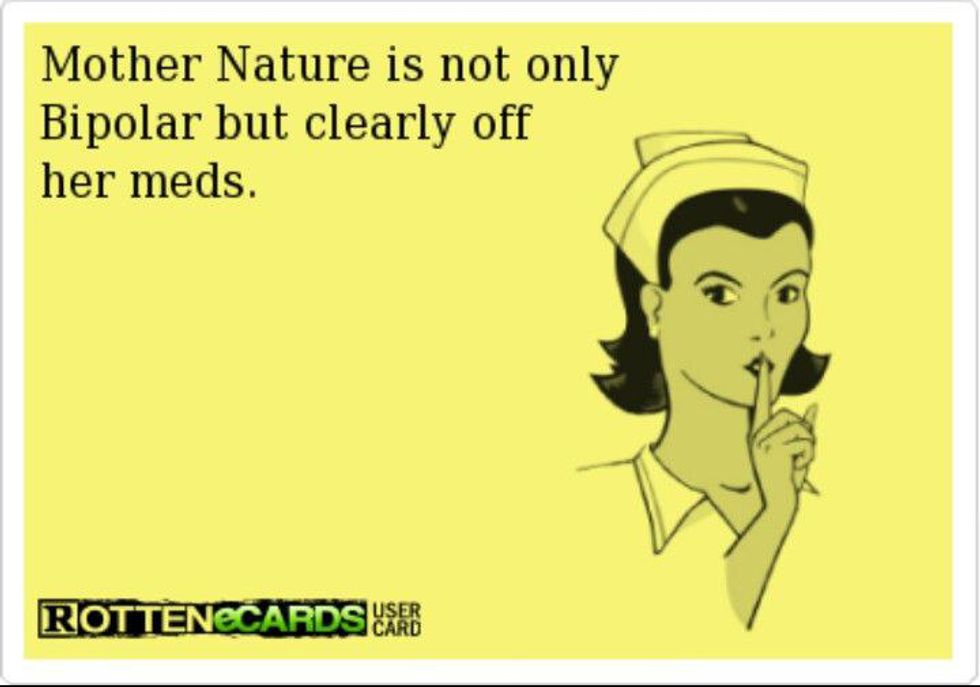
"New England weather is so bipolar." is one of those expressions that people say without even thinking. The weather can go from being 78 degrees and sunny to snow and ice a few days later.
But is the New England weather a mental illness marked by alternating periods of elation and depression? No, therefore the weather is not bipolar, it is just unpredictable.
Do you have OCD because you like your laundry folded a certain way? Do you think your professor have OCD because they require a certain format for assignments?
Do you fold and unfold your laundry until you get it right? Do you give up going out with friends because your laundry isn't folded to your satisfaction? Do you wash your hands so often that your skin is raw and dry? Do you constantly check to make sure your radio volume ends in a 0, 2, 4, 6, or 8? Do your behaviors interfere with your daily life? If not, then you probably do not have Obsessive Compulsive Disorder. Your professor probably does not have OCD if they like assignments is a certain way. It probably makes their life easier when grading the actual assignments or gives the assignment a distinguished professional look.
Did that time you thought you lost your keys literally give you a panic attack?
Did you experience shortness of breath, a uncontrollably racing heart, trembling or shaking, a choking feeling, feeing detached from your surroundings, did you sweat, and did you feel nauseous? Your heart might have started to race and you might have started to sweat, but everything else seemed in check so you probably did not have a full blown panic attack.
Mental illnesses are not adjectives. They are medical conditions that people suffer from everyday. These conditions interfere with how people live their daily lives, they aren't ways to describe the weather. When you use terms like bipolar, OCD, or panic attacks incorrectly it takes away from the people who actually suffer from these conditions. This is the same argument that could be made for not calling someone who is strict a nazi, you are taking away from the millions of people who lost their lives at their hands. You also feed into the troubling stigma in this country surrounding mental illnesses. Some people still struggle with accepting mental illness as a true illness just like cancer, MS, or Parkinson's. You don't tell someone with cancer to just shrink their tumor- and if you did it would turn some heads. But jokes about OCD, anxiety, or bipolar disorder are ok and don't really turn that many heads.
As someone who have experienced my fair share of panic and anxiety attacks, I will be the first one to say that it is not a feeling I would wish upon anyone. Everything is so tight, you feel like you have no control over you body. For each person it is different. For me the best analogy is about being in a car on the highway headed towards traffic, and your brakes stop working. You don't know if your car will run out of inertia and momentum before you crash, or you will crash into the group of cars.
With so much awareness about being "politically correct", terms regarding mental illness have not been in the spotlight. According to the National Alliance on Mental Illness, 1 in 5 adults in the U.S. experience mental illness in a given year. So the next time you are going to use a mental illness that you have not been diagnosed with as an adjective- think of all the people that could be hurt by your comments.