

I am mentally ill.
This is no secret, really. Many of the people in my life know this already. I don’t try to hide it. Like many mentally ill people, I have co-morbid disorders. I’ve been dealing with mental illness for over 10 years now, so I’ve had time to work through and accept this part of me – except for one.
I have obsessive-compulsive disorder.
I rarely speak about it. Even typing those words feel strange.
My OCD doesn’t look like what I was taught OCD is “supposed” to look like. I’ve been officially diagnosed by OCD by a therapist. I’ve gone on drug regimens directly geared towards having it. Yet, I still struggle to accept it’s a “real” diagnosis because the stereotype has stayed with me so strongly.
People with OCD are portrayed as being obsessively neat – everything in order, everything cleaned, never touching things or shaking hands. They clean constantly. Sometimes, they do the same thing over and over – counting is a common one. These are certainly valid manifestations, but they aren’t the only ones.
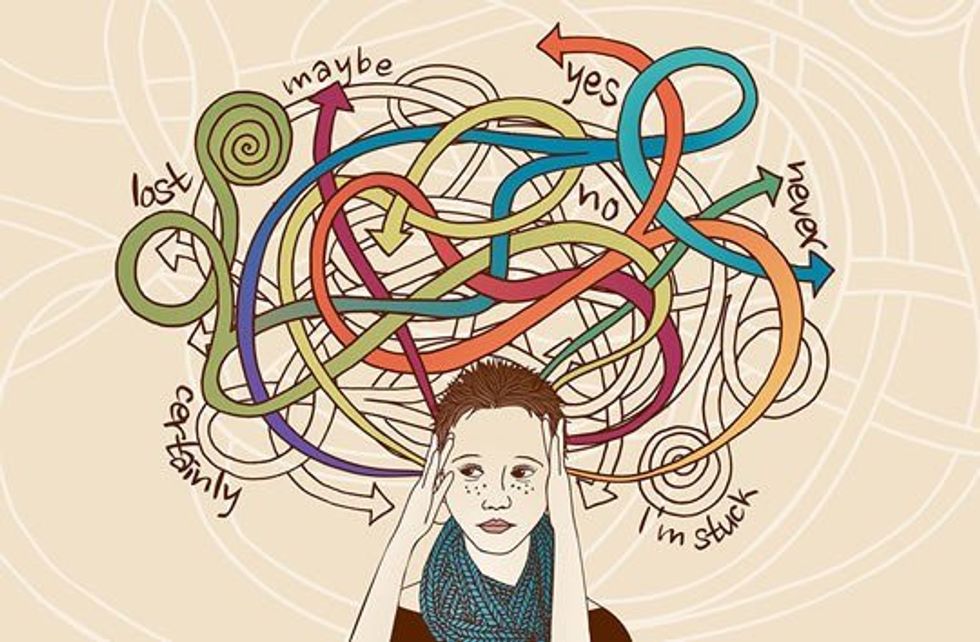
My particular OCD is called primarily obsessional obsessive compulsive disorder, or “Pure-O.” It gets its name from being “purely obsessional” – there are a few observable compulsions with Pure-O. Whereas the more well-known OCD rituals can be observed – someone washing their hands or checking their locks – Pure-O is almost entirely cognitive. You get “stuck” on thoughts – usually intrusive thoughts, which are horrific. Intrusive thoughts are often violent, sexual, or both. One worries they will act on these thoughts, which are actually quite common. OCD takes hold when one begins to fixate on these thoughts.
An important disclaimer: intrusive thoughts do not mean people with OCD want to do the terrible things. The ritual is in the worry. It’s like this: do not imagine the sweetest old woman you know masturbating. Don’t do it. You already did it. Intrusive thoughts work in the same way, except they aren’t triggered by a sentence like I helpfully provided. They just come to you, and the more you try to not think about them, the more you think about them. With OCD, you become obsessed with the why – why are these thoughts happening? What does this say about me? How do I get them to stop? Am I going to hurt someone? The good news is, the more worried the thoughts make you, the less likely you are to actually act on them. Intrusive thoughts tend to represent our deepest fears, not fantasies.
I do have intrusive thoughts that are violent and frankly unspeakable that I fixate on. My fear can be paralyzing and impossible to express. However, my most prominent and horrific intrusive thoughts focus on loved ones dying. I am almost constantly worrying about the death of my loved ones. I have nightmares about it several times a week. I go over the calls I would get in my head. I fear to be responsible somehow. I find it difficult to shake the images from my mind. Tied to this is a compulsion to “check in” – to text or call and ensure all is well. Sometimes, people I haven’t talked to in years will get “stuck” in my head, and I have to either deal with the thoughts or try to figure out some way to explaining this situation and get the reassurance I need. Stress makes it worse.
Hoarding – which I have early signs of, because my mental illness cocktail hasn’t peaked yet – is also a form of OCD. Most people have seen an episode of "Hoarders," or at the very least, know the premise. A person (male or female, never conventionally attractive) is ruining their own lives and their families by keeping everything. Extreme cases include animal carcasses and obviously destroyed objects. Their homes are hazards. They cry, and so does their family. It’s captivating because it’s so destructive and disgusting. It’s obsessive compulsive disorder at its messiest, literally. The differences between someone who washes their hands until they bleed and the hoarder paraded on primetime TV are minor details. The dysfunction behind it is the same.
When you have OCD, you know what you’re doing doesn’t make sense. It’s not like delusions, where your view of reality is incorrect. It’s like losing control of your body and your mind. You have to complete the ritual, or the anxiety does not go away. You’re a machine being piloted by a very scared external force.
Stereotyping can feel instinctual – as human beings, we look for patterns. Stereotypes are one way of trying to identify patterns, even if they aren’t reliable. With mental illness, this is even easier to do. Misinformation and misrepresentation abound. Stereotypes about mentally ill people being violent make it hard to talk about my intrusive thoughts. Even within OCD, there are certain stereotypes of what this disorder is like, and I fit none of them. I’m disorganized and messy (though I do check my locks several times before leaving home); I rarely strive for perfection. By detangling ourselves from stereotypes, we allow ourselves to broaden our perspectives and become more understanding.