
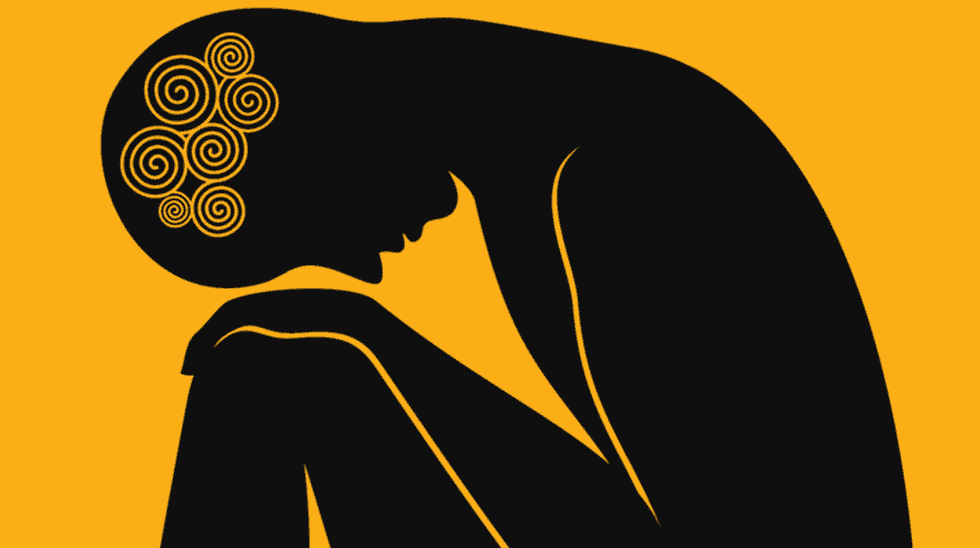
I have struggled with both anxiety and depression for as long as I can remember. Ever since I was a child I have battled with these cruel forces to maintain control of my life, but the hardest battle seems to be with the lack of knowledge and awareness that people who don't suffer with these problems have. With this, I hope I can shed a little bit of light on what it's like to have anxiety and depression and combat the stigmas against mental illness that threaten to knock us down every day.
1. Why don't you just calm down?
In the midst of a panic attack or something similar, I can assure you that telling someone to calm down will only heighten their anxiety. It is never just as simple as taking a few deep breaths - at this point our anxiety has taken the reigns. In a situation like this, try asking what you can do to help. If someone wants to be left alone, leave them be and check back up on them in a little bit. If someone just wants someone to sit with them while they ride it out, sit with them. If they just want to be held, hold them. An anxiety attack isn't something you can just snap out of and people need to understand that. If it were as easy as that, I'd have to assume most of us would choose to snap out of it right there.
2. What's so hard about being happy?
It's not that we don't want to be happy or that we're incapable of being happy - it's just hard to be happy when depression and anxiety take away the pleasure in things we used to love doing. Imagine a thunderstorm. You're out in the sun and all of a sudden huge rain clouds are headed your way and thunder starts rumbling. The rainclouds are like a negative sentiment that's so strong that it blocks all of your positive emotions, or in our example, the sun. It's hard to grasp if you've never personally experienced this and I don't expect anyone to fully understand, but all I ask is that you try.
3. Why do you have anxiety/depression?
It could range from a past trauma to genetics to no definite reason at all. You're not necessarily born with a mental illness or not - while there can be a genetic component it can also develop later in life. What you need to know is that anxiety and depression are chemical imbalances in the brain that are not all in people's heads. While treatments can be incredibly successful, the actual onset of these illnesses is completely out of a person's control.
4. How do you cope with anxiety/depression?
There are many different treatments for anxiety and depression. For me, I take a medication called Lexapro and see a therapist regularly. I find that just taking medication doesn't do the trick for me, and I am a strong believer in learning coping mechanisms through behavioral therapy so that I won't have to rely on medication for the rest of my life - but it definitely does help me for the time being. A lot of people avoid the medication route because of side effects or therapy because of the stigmas surrounding it. My best advice is not to be afraid of getting help. Medication is not for everybody and that is completely understandable, but there is nothing to lose by going to talk to somebody. They want to help you. Talking to somebody on the outside can be incredibly freeing, too.
5. What can I do to help?
It's as simple as asking someone what you can do to help, and listening. Anxiety and depression present differently for everybody who struggles with it. For one person, just hanging out with them will do the trick. For another, leaving them alone might be what makes them most comfortable. If you know somebody who is a danger to themselves or others though, please contact somebody who knows how to help them in a situation like that. Ignoring signs of serious mental illness is never helpful, so use your best judgment. If you can't help someone, find another person who can. Most importantly, only do as much as you are comfortable with. You need to take care of yourself as well. Don't be afraid to ask for help with helping someone.