
Competition drives us to succeed, and it is everywhere. In everything that we do, we wonder if we can do it better or quicker or more efficiently. With sports like soccer, football, tennis, basketball, et cetera, the element of competition separates the good from the bad, the best from the good and the best of the best from the best. With the truly talented individuals at the top, we are entertained to watch them battle each other with all of their ability. The entertainment is so good that we pay for it, and it funds the player’s lives, making them professional athletes.
E-sports (electronic sports) are fast growing in the United States and the entire world. They come with the age of online gaming, as we are now utilizing technologies to hook people from all around the world into one online game. Video game companies are currently competing to produce the best format of online competition, and are putting out fantastic games. These games are drawing in millions of people, and, from these people, talented gamers are emerging in specific games.
The first thing you might be wondering is, "How are video games considered sports?" The answer is that sports generally specify anything that people compete against each other in. If you hold a contest to see who can eat more hot dogs in a minute, you are making it into a sport. The next thing you might wonder is, "It must be easy to be good at video games." That’s not true. The gamers at the top of the millions and millions who are competitive in the professional leagues of their games are truly incredible. They have noteworthy reaction times, exceptional abilities to make quick decisions and often have incredible muscle memory. Professionals must also have a strong ability to read their opponents and be able to plan and strategize.
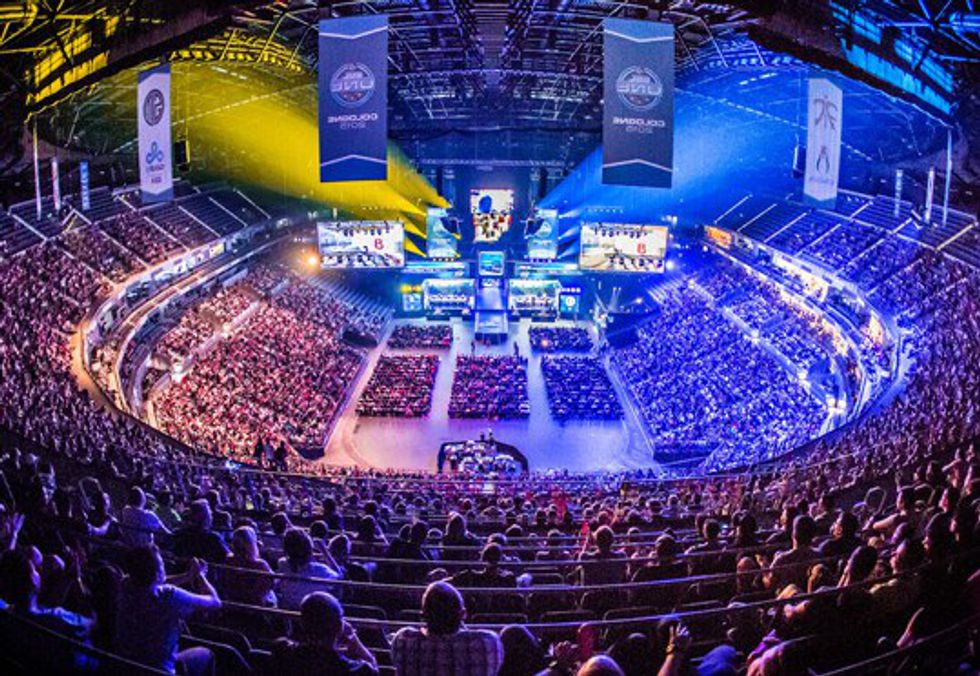
Fans watch ESL One Cologne 2016, a Counter-Strike: Global Offensive tournament with a $1,000,000 prize pool.
What kind of money is in professional gaming? Though these may be assumed to be small and niche, they are anything but that. In about a month, The International 2016 will be played in Dota 2, a tournament handing out somewhere around 20 million dollars. This tournament brings in gamers from all around the world, with teams from Asia, Europe, North America and players from dozens of countries. Dota 2 tournaments have already given out a total of over 65 million dollars to the 1,512 professional players in over 600 tournaments. Dota 2 isn’t the only game, however. According to www.esportsearnings.com, the top five most lucrative games for pro-gamers — including Dota 2 — have hosted tournaments totaling over 140 million dollars. The next 95 games on the list of the top 100 games in this respect total to over 70 million. Combined, the top 100 games for e-sports have given out, already, over 210 million dollars to their teams.
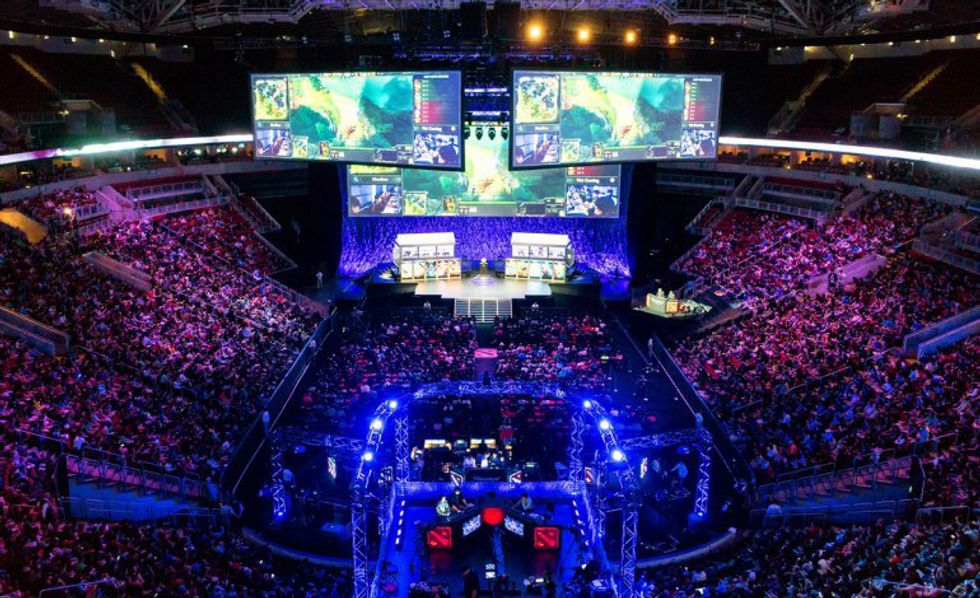
Thousands watch The International 2015,’a Dota 2 tournament with a $18,429,613 prize pool.
Now this may not seem like a lot of money when you consider the fact that each game is dishing out an average of 2 million dollars to its likely thousands of professional players, but you must consider the fact that these e-sports are relatively new. Taking a closer look at Dota 2, out of the 65 million dollars given out in tournaments, 47 percent of that money was awarded in 2015 alone, with only around 7 million dollars total having been given out by 2013. The growth of money in professional Dota 2 tournaments is incredible, with the total winnings in 2014 being four times higher than that of 2013, and 2015 being twice as much as 2014.

A graph displaying the growth of money in e-sports tournaments over the years.
The growth of cash in professional e-sports can be seen by simply comparing the top 100 earning gamers in 2015 with the top 100 in 2010. In 2010, the top 100 professional gamers brought in a total of over 2.9 million dollars, averaging 29,000 dollars each. In 2015 — in just the year alone — the top 100 gamers brought home a total of over 32 million dollars, averaging over 320,000 dollars. In just five years, the top gamers’ earnings increased over 1000 percent.
Not only do the professional teams involved in e-sports bring in increasing amounts of cash every year, but they also bring in increasing amounts of diversity every year. The 25 most lucrative gamers in 2010 represented only four countries, while the 25 in 2015 represented eight.
With competition comes entertainment. With entertainment comes money. With the massive entertainment that is video games, professional gamers are becoming more and more common and more and more skilled. In decades to come, it very well may be that professional e-sports are televised (they already are beginning to be) and widely accepted as sports.
All of the stats on the earnings and the money in e-sports came from http://www.esportsearnings.com/. They wonderfully break everything down to prove their numbers, and you can click the link and check out the website if you don't believe me.