
Amid the atrocities committed during the Syrian Civil War in 2012, the international community became concerned with the use of chemical weapons during the conflict. Syria had always been suspected to have a chemical weapons arsenal, and that was confirmed in August of 2013 when the Assad regime dispersed chemical weapons in the Damascus suburb of Ghouta. According to the UN, sarin gas was used in the attack, and U.S. intelligence services estimated that 1,429 were killed in the attack. In August 2012, amid fears of a chemical weapons attack, President Obama issued the following statement: “We have been very clear to the Assad regime, but also to other players on the ground, that a red line for us is we start seeing a whole bunch of chemical weapons moving around or being utilized. That would change my calculus. That would change my equation.” Despite the President's proclamation, he failed to intervene directly after the Ghouta attack in Syria.
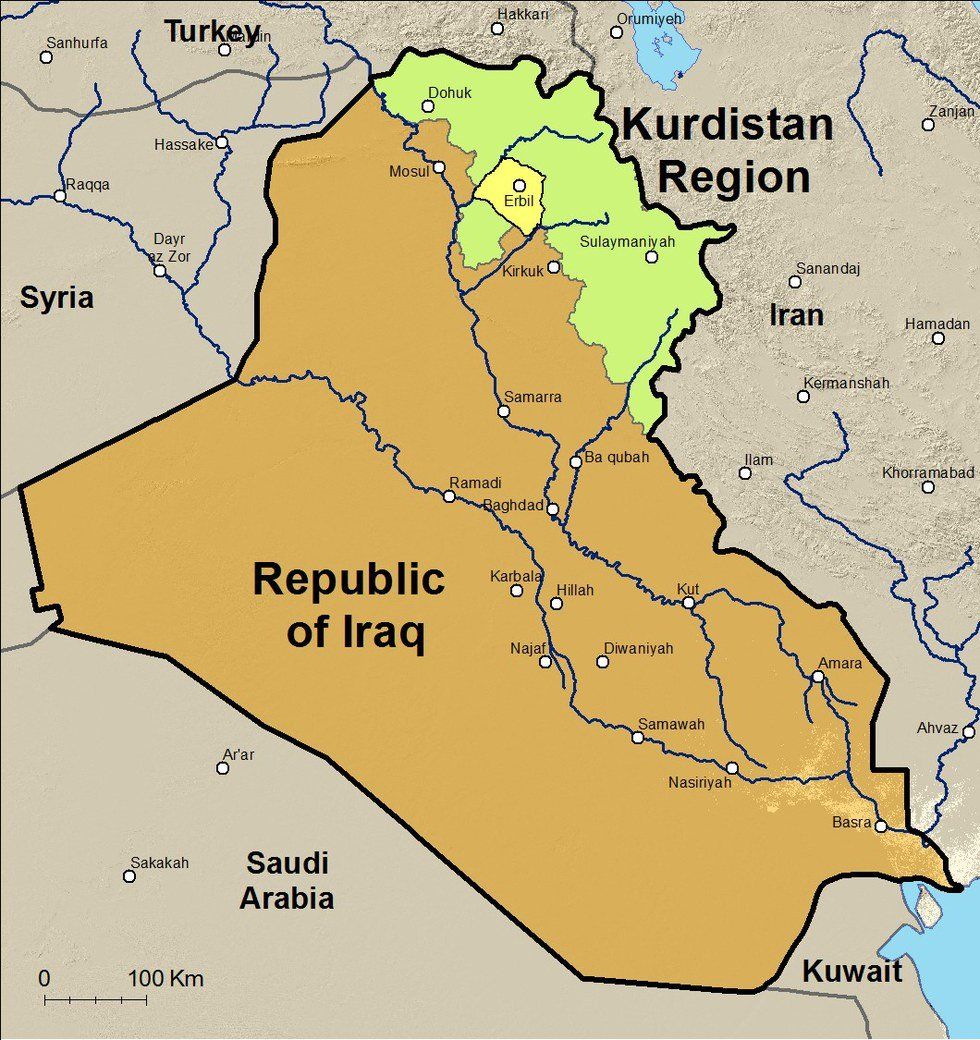
About two years after the Ghouta attack, another chemical weapons attack occurred, this time in Makhmur area of Northern Iraq. According to local officials, "mortar rounds fired at Kurdish positions in Makhmur may have contained mustard gas because the wounds to injured Peshmerga (Kurdish) fighters were different from those in a conventional attack." The Makhmur attack could be the third chemical weapons attack on Kurds in Northern Iraq in 2015. The chemical agent suspected of being used in both attacks was mustard gas, which causes severe blistering of the skin and internal hemorrhaging. In the worst case, the agent can burn a victim's lungs, causing them to drown in their own body fluids. Mustard gas is banned under the Chemical Weapons Convention of 1993 along with nerve agents, blood agents, choking agents and other blister agents. Syria has signed and ratified the CWC, but their arsenal may have been comprised. Alternatively, Syria may be blatantly disregarding the CWC's mandates. Western intelligence agents have suspected that ISIS militants have stolen chemical weapons or the Assad regime has supplied them with them. Either way, chemical warfare is not only illegal under international law, but cruel and inhumane.
The victims of the recent attacks, the Kurds, have faced widespread violence throughout the Middle East, most notably in 1988. On 16 March 1988, Iraq dispersed mustard gas into the city of Halabja, located in Iraqi Kurdistan. The attack began when Iraqi helicopters flew over the city in order to provide close air support to fighter aircraft, which dropped bombs containing mustard gas and other nerve agents. The attack lasted approximately five hours and leveled the city, which had little military or strategic importance at the time. One survivor described the attack as "a situation that cannot be described—birds began falling from their nests; then other animals; then humans. It was total annihilation." The exact death toll was never determined, but international observers believed that somewhere between 3,000 and 5,000 were killed in the attack. Fortunately for the victims, justice was served. Following the invasion of Iraq and the subsequent manhunt, Saddam Hussein was executed by the Iraqi Interim Government after being found guilty for crimes against humanity. Hussein's cousin, Ali Hassan al-Majid (dubbed Chemical Ali for his ruthless chemical attacks) was executed on January 25th, 2010, after being found guilty of genocide, crimes against humanity, and war crimes.
Now the question remains: Has the red line been crossed again? Has his calculus been changed? Will President Obama neglect his promise to the world again? Moreover, the Kurds have had their rights routinely abused by Iraq and Syria, and the global community needs to not only protect their territorial autonomy, but stabilize Iraq and Syria as well.